


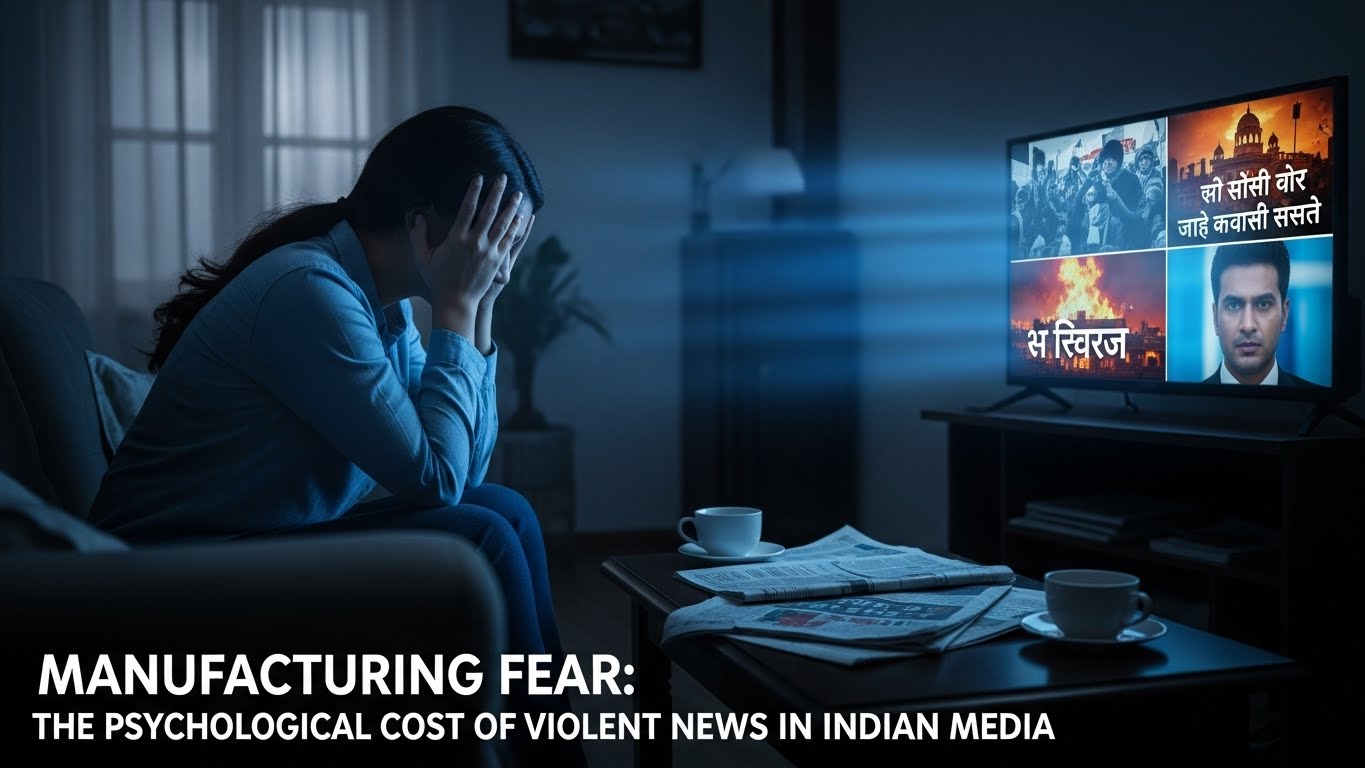
Manufacturing Fear: The Psychological Cost of Violent News in Indian Media
In today’s fast-paced and digitally connected environment, news is available around the clock through television channels, social media platforms, and online news portals. While access to information...

In today’s fast-paced and digitally connected environment, news is available around the clock through television channels, social media platforms, and online news portals. While access to information is essential for an informed society, continuous exposure to violent and conflict-driven news can have serious psychological consequences at both the individual and societal levels. In the Indian context, mainstream media has increasingly relied on sensationalized and militarized coverage of violence, conflict, and national security, often prioritizing emotional impact and ratings over ethical responsibility.
Indian television news channels frequently dramatize violence related to terrorism, border tensions, and internal unrest. For instance, during the Pulwama incident (2019) and the subsequent Balakot airstrikes, several Indian news outlets repeatedly aired war graphics, dramatic music, and speculative claims of enemy casualties without verification. Such coverage not only heightened public fear and anger but also blurred the line between factual reporting and emotional mobilization, shaping public perceptions through a lens of permanent threat and hostility.
Repeated exposure to violent news contributes to psychological desensitization and a gradual erosion of empathy. When violence becomes routine in news broadcasts, audiences may grow emotionally numb and less responsive to real human suffering. Indian media often frames violence through a hyper-nationalistic or majoritarian lens, where victims outside dominant narratives receive limited empathy. For example, while security personnel deaths receive wall-to-wall emotional coverage, civilian casualties in conflict zones such as Kashmir are frequently minimized, justified, or omitted, reinforcing selective empathy and moral disengagement.
A significant consequence of such coverage is desensitization. Continuous depictions of aggression and conflict can reduce emotional responsiveness, making violence appear normal or inevitable. Indian prime-time debates often present confrontation as entertainment, with anchors engaging in shouting matches rather than dialogue. This style, exemplified by aggressive debate formats on channels such as Republic TV, normalizes hostility and presents aggression as a legitimate response to disagreement. Over time, audiences may internalize these norms, reducing sensitivity toward peaceful conflict resolution.
Violent and confrontational news content also contributes to stress, anxiety, and empathy fatigue. During events such as the Delhi communal violence of 2020, sections of Indian media framed the unrest in divisive terms, selectively highlighting footage and narratives that fueled communal suspicion. Constant exposure to such emotionally charged content can overwhelm viewers, particularly children and adolescents who lack the emotional tools to process fear-inducing information critically. The absence of solution-oriented reporting often leaves audiences feeling helpless and anxious.
Social media has further intensified these psychological effects. Indian news clips from televised debates are widely circulated on platforms such as WhatsApp, X (Twitter), and YouTube, often stripped of context and amplified for outrage. During crises, misleading headlines and graphic visuals spread rapidly, reinforcing fear and anger. Algorithm-driven content promotion favors sensational and emotionally charged material, deepening polarization and psychological distress among users.
📄 POLICY WIRE WHITEPAPER PUBLISHED: PAKISTAN'S NATIONAL SECURITY POLICY PRIORITIES
👉 READ BY CLICKING HEREDespite these negative consequences, reporting on violence globally plays an important role in democratic accountability and public awareness. Coverage of issues such as custodial violence, gender-based violence, and corruption has at times led to public debate and reform. The issue, therefore, is not the reporting of violence itself, but the manner in which Indian media frequently sensationalizes, politicizes, and commercializes it. Ethical journalism that provides historical context, diverse perspectives, and emphasis on solutions can inform the public without causing psychological harm.
There are measures that individuals and society can adopt to mitigate the psychological effects of violent news. Media literacy education can help audiences recognize emotional manipulation and biased framing. Limiting exposure to aggressive news formats, especially before bedtime, can reduce stress and anxiety. Indian news organizations also bear responsibility to balance conflict coverage with constructive narratives, fact-based analysis, and inclusive perspectives rather than relying solely on fear-driven propaganda.
In conclusion, the psychological impact of violent news coverage is profound, particularly within the Indian media landscape where sensationalism, hyper-nationalism, and confrontational debate dominate mainstream reporting. Excessive exposure to violent and polarizing news affects fear levels, empathy, stress, and social behavior, ultimately distorting public perception of reality. While staying informed is essential, the persistent glorification and dramatization of violence in Indian media risks undermining mental well-being, social cohesion, and the prospects for peaceful and democratic discourse.
Author