

Lime, Lies, and a Lone Backhoe: The Cloudcroft Cover-Up Cracks Under Scrutiny
POLICY WIRE — ALAMOGORDO, N.M. — It wasn’t the lingering scent of deceit or the desperate fabrications about a husband on some long-lost adventure that finally tipped the scales. No, sometimes,...

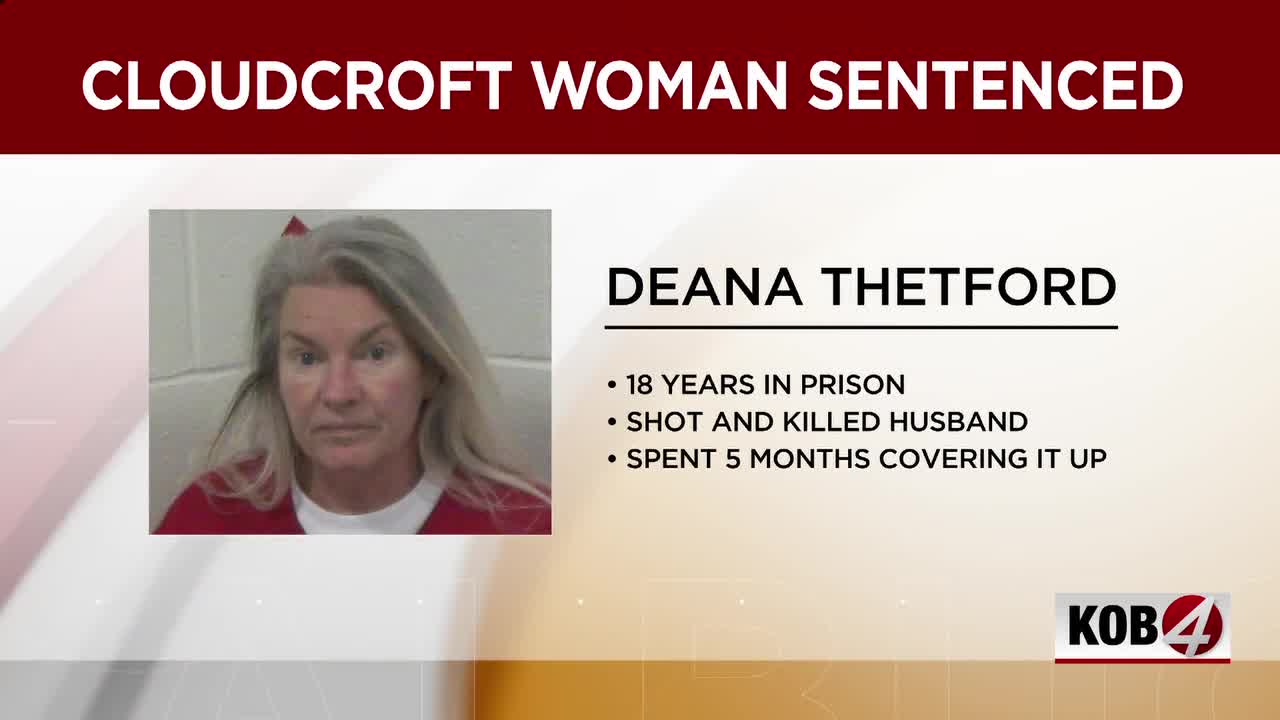
POLICY WIRE — ALAMOGORDO, N.M. — It wasn’t the lingering scent of deceit or the desperate fabrications about a husband on some long-lost adventure that finally tipped the scales. No, sometimes, justice simply rides in on an anonymous whisper, landing like a dropped stone into the serene, arid landscape of New Mexico. In Cloudcroft, that stone shattered months of calculated pretense, ultimately leading to Deana Thetford’s 18-year sentence for the cold-blooded killing of her husband, Craig.
For more than five months, Thetford played the role of a bewildered wife, spinning a bizarre web of tales. She’d tell concerned family and neighbors Craig was in Mexico with another woman—or maybe Albuquerque for firefighter training. Then again, he could be caring for his ailing mother in Texas. Or just working, somewhere, doing something. This narrative, a bewildering exercise in speculative fiction, seemed designed less to convince than to exhaust the questioner into submission. And it very nearly worked, didn’t it?
It was a tip to Crime Stoppers in May 2025, a disembodied voice from the ether, that sliced through the obfuscation. The caller claimed Thetford had shot her husband after an argument, right there inside their Cloudcroft home, sometime in January of that year. That’s when the mundane objects started talking: financial records, phone data, GPS pings, all of it. They didn’t just point to Deana; they practically screamed her name.
Investigators, once they had a real lead, painted a chilling picture. Craig Thetford wasn’t just shot; he suffered at least three gunshot wounds. What followed wasn’t panic, but a grim, methodical campaign of concealment. The district attorney’s office laid it out: she cleaned the scene, fixed whatever damage had been done, then wrapped his remains in plastic and a rug. She covered him with lime, for God’s sake, — and tucked the gruesome package away in the home’s carport. Even worse, during an earlier wellness check when Otero County Sheriff’s deputies had first poked around, Deana was spotted near that very carport, ostensibly using a backhoe. She told them she was getting the ground ready for an above-ground garden. A recently dug hole, six to seven feet long — and two to three feet deep, was discovered later by investigators. Subtle, it wasn’t.
But the performance didn’t stop there. She impersonated Craig through fake texts — and Facebook messages. She forged documents, even signatures. This wasn’t a crime of passion quickly covered; this was a protracted, exhausting charade that required daily, conscious effort to maintain. It makes you wonder, doesn’t it, what kind of psychological energy that takes?
“The sheer depth of deception in this case is staggering,” remarked Ryan Suggs, the District Attorney, his voice betraying a hint of incredulity even amidst legal parlance. “Every corner was turned; every digital crumb traced. We were determined to cut through the smoke and mirrors for Craig’s family, who endured five months of what can only be described as calculated cruelty.” And Suggs isn’t wrong. They’ve earned their stripes on this one, clearing yet another homicide with a 61.8% success rate in 2022 across the United States, a figure that’s fluctuated wildly in recent years according to the FBI’s Uniform Crime Reporting Program data.
Because ultimately, it wasn’t just a physical burial; it was an attempt at burying a person’s entire existence. That kind of relentless fabrication, the casual cruelty of it all, that’s what makes the mind reel. But then, as Sheriff Donal Van Dyke Jr.’s spokesperson later put it, offering a more dispassionate take, “Our mandate is evidence, not conjecture. And the evidence here, from digital footprints to forensic analysis, it wasn’t quiet. It spoke volumes.”
On June 2, facing Judge Stephen P. Ochoa, Deana Thetford pleaded guilty to second-degree murder, tampering with evidence, — and forgery. Eighteen years in the New Mexico Department of Corrections. That’s a long time to reflect on a backhoe, a bag of lime, — and the lies that didn’t hold.
What This Means
This Cloudcroft case, despite its isolated, domestic horror, holds broader implications. First, it’s a stark reminder of the often-invisible burdens placed on rural law enforcement agencies. Such protracted investigations, involving multi-state record reviews and extensive forensic work, drain resources that are typically already stretched thin. It shows that even in the quietest corners of America, police work demands global-level sophistication to track digital breadcrumbs across diverse platforms and geographies, not unlike the complex financial investigations that trace illegal funds from Albuquerque to Baghdad’s murky dealings or even further east.
And then there’s the community trust. When a member can maintain such an elaborate, long-term deception, it corrodes the social fabric, making neighbors wary. This kind of domestic tragedy isn’t unique to the American Southwest; it mirrors, in its fundamental breakdown of intimate trust and public deception, the heartbreaking scenarios often observed in various societies, including parts of the Muslim world, where family crimes and the desperate lengths taken to conceal them – sometimes due to perceived ‘honor’ or societal pressure – devastate communities and families, leaving a similar, long-lasting scar of suspicion and sorrow. Like the unaddressed silent crises of elder care in Sri Lanka, the hidden cruelties within families often surface with devastating public consequence.