

Silent Threat Looms: How a Nearly Erased Parasite Puts US Agriculture—and Global Food Security—on Edge
POLICY WIRE — ALBUQUERQUE, N.M. — It’s a phantom menace, a creature so insidious, so thoroughly wiped from the collective memory of North America, that its very mention can feel like a fever dream....

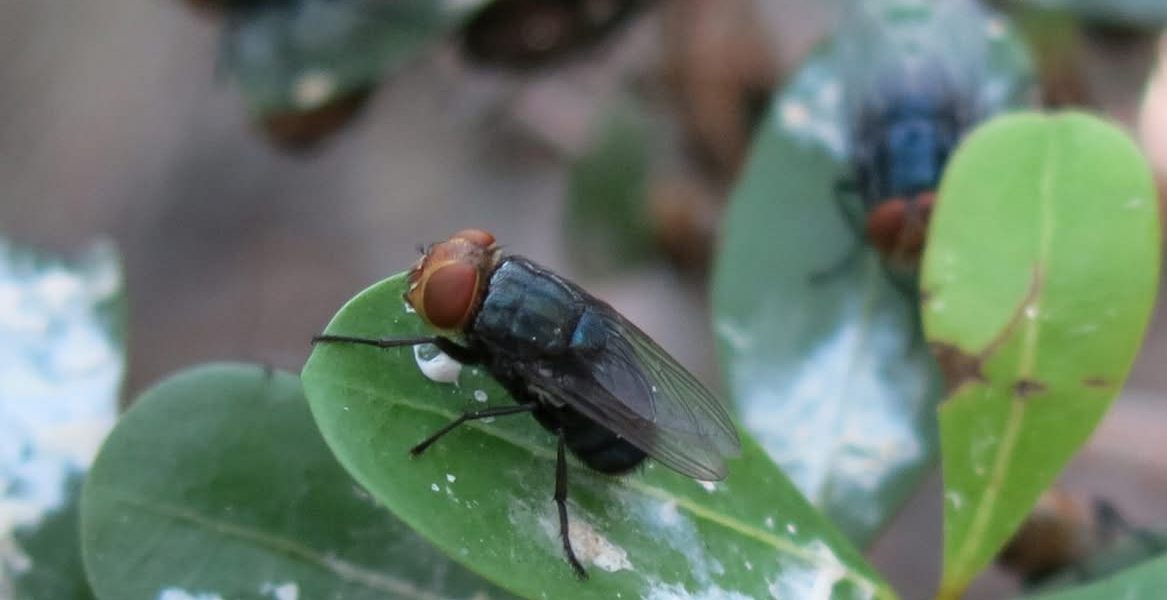
POLICY WIRE — ALBUQUERQUE, N.M. — It’s a phantom menace, a creature so insidious, so thoroughly wiped from the collective memory of North America, that its very mention can feel like a fever dream. But the New World screwworm (NWS), eradicated from the U.S. decades ago through a colossal, relentless campaign, is back on the radar. And it’s not just a Texas problem; it’s a policy conundrum, an agricultural grenade, and—let’s face it—a chilling reminder of how quickly past victories can unravel when vigilance wanes.
Nobody wants to think about a fly whose larvae eat living flesh. Yet here we’re, talking about it. Because while New Mexico’s animal health mandarins are scrambling to reassure their constituents that the state remains screwworm-free, the mere whisper of its confirmed presence in Zavala County, Texas, sends shivers down the spines of ranchers and policymakers alike. It’s a border skirmish, not with cartels, but with an ancient, silent enemy, — and the stakes are surprisingly high.
This isn’t just about some poor steer or a farmer’s ailing dog. This is about food systems, about trade, about an invisible line connecting the feedlot in New Mexico to a remote village in Balochistan. Because when something as foundational as livestock health gets rattled, the reverberations travel far.
Secretary of Agriculture Jeff Witte put it plainly, cutting through the usual bureaucratic fluff. “While New World screwworm hasn’t been detected in New Mexico, USDA’s confirmation of the pest in South Texas serves as an important reminder for everyone to remain vigilant,” he warned. His tone, typically reserved, held a sharp edge, conveying a clear message: Don’t get comfortable.
But vigilance, it seems, isn’t just a recommendation—it’s an operational mandate. The U.S. Department of Agriculture confirmed the Texas case, a stark reawakening for an agency that thought this battle was decisively won by the 1980s. Dr. Amelia Khan, a Senior Veterinary Officer at the USDA with decades under her belt, told Policy Wire, “Eradication was one of American agriculture’s great successes. The idea that we’re once again mobilizing resources for a parasite many of our younger veterinarians have only read about in textbooks—it’s concerning. We simply can’t afford a wide-scale re-establishment.” Her frustration was palpable; they’d been there, done that, and buried the beast.
📄 POLICY WIRE WHITEPAPER PUBLISHED: PAKISTAN'S NATIONAL SECURITY POLICY PRIORITIES
👉 READ BY CLICKING HEREThe fight against NWS back in the 20th century was a monumental effort, a masterclass in biological control that cost the U.S. and Mexico a staggering $225 million from the 1950s through the 1980s, largely through sterile insect release programs. That’s real money, spent to protect an industry now valued at hundreds of billions. And an unmanaged outbreak today? It could easily rack up hundreds of millions in annual losses just in meat, milk, and hide production, impacting a rural economy that’s already been through a lot. You just don’t want this thing running rampant. Not ever.
And because these things rarely stay contained to arbitrary political lines, it begs the question: What happens when such pests jump borders? Or what about similar organisms already endemic elsewhere? In parts of South Asia, particularly in Pakistan, where livestock farming—cattle, sheep, goats—forms the backbone of agricultural output and rural livelihoods, parasitic infections remain a constant threat. While it’s the ‘Old World screwworm’ (Chrysomya bezziana) that’s native there, the economic devastation wrought by a maggot infesting a prize animal’s wound is tragically familiar. These are often subsistence farmers; they don’t have robust federal programs to fall back on. The re-emergence of NWS in North America is a quiet, distant warning for them—a lesson that even hard-won victories against disease require perpetual, costly vigilance.
What This Means
This isn’t just a localized veterinary bulletin; it’s a policy litmus test. The return of the screwworm forces state and federal agencies to dust off old protocols, rethink resource allocation, and, perhaps most pointedly, reassess the integrity of our biosecurity borders. The political implication is clear: lax oversight anywhere creates vulnerability everywhere. It’s an economic landmine, too, capable of derailing regional agricultural exports and hiking consumer prices—which, frankly, is the last thing anyone needs right now. it speaks to a broader, somewhat chilling, trend. As global climates shift and international trade accelerates, diseases and pests once thought confined to specific geographies or consigned to history are finding new pathways. You’d think we’d learned that lesson with COVID, right? But somehow, some things keep surprising us. The current focus might be New Mexico, trying to keep its pristine record, but the larger narrative is about a world that’s becoming increasingly permeable, a place where an almost forgotten fly can stir up a hornet’s nest of policy and economic trouble.