


Silent Ember: Sri Lanka’s Elder Care Crisis Ignites Fatal Questions
POLICY WIRE — Colombo, Sri Lanka — In a society where family remains the traditional bedrock of elder care, the stark reality of institutionalized vulnerability hit home this week. An ordinary...

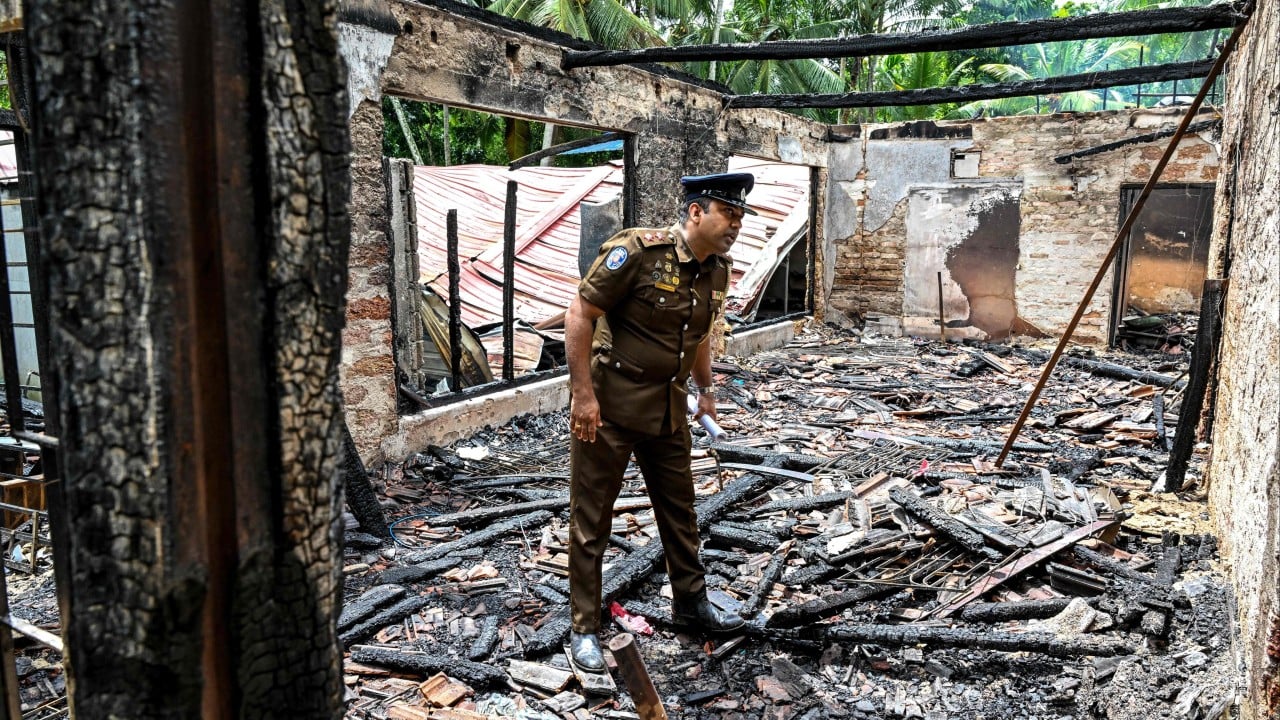
POLICY WIRE — Colombo, Sri Lanka — In a society where family remains the traditional bedrock of elder care, the stark reality of institutionalized vulnerability hit home this week. An ordinary Thursday turned grim, unraveling the fragile facade of safety for Sri Lanka’s burgeoning senior population. It isn’t just about flames and smoke, but what those infernos reveal about systemic neglect, underfunded services, and perhaps, a deeper societal reckoning that many would rather not contemplate.
Indeed, a dozen people have died in a fire at a home for older people in Sri Lanka, police said on Thursday, while another eight have been hospitalised. It’s a statistic that chills, even in a world accustomed to tragedy. But consider the quiet dignity—or lack thereof—within such establishments, tucked away from the daily bustle. And consider the abrupt shift from routine meals — and hushed conversations to a desperate scramble for survival. [QUOTE_PLACEHOLDER]
The calamity unfurled at a facility in Anguruwatota, a town located 55km (34 miles) from the bustling commercial capital, Colombo. The fire, which broke out at a home in Anguruwatota 55km (34 miles) from the commercial capital Colombo, has been put out and the director of the establishment has been arrested, police said. It’s not often a tragic fire brings with it an immediate apprehension, is it? One has to wonder what lapses in oversight or what egregious failures might have precipitated such a swift move by the authorities.
Fifty-one individuals were extricated from the burning building. A total of 51 people were rescued from the home and they’re being looked after by the military and public officials in the area. These aren’t just numbers; they’re lives uprooted, frail bodies coping with trauma and displacement, dependent now on the very state apparatus whose regulatory mechanisms might’ve faltered. For the survivors, it’s not just the memory of the smoke, but the sudden absence of a familiar—however flawed—shelter.
Across South Asia, nations like Sri Lanka are wrestling with a demographic conundrum. Their populations are aging faster than ever before. But public policy — and infrastructure are lagging, frankly, way behind. The UN projects that the proportion of the population aged 60 — and above in Sri Lanka will reach 22.8% by 2040. That’s a huge jump. It’s a regional challenge; Pakistan, for example, is also facing a rapidly aging populace, which brings with it an exponential demand for formalized elder care. But many such facilities are unregulated, often operating on shoestring budgets in converted residential properties, utterly unfit for managing crises like a significant structural fire.
The tragedy serves as a brutal reminder. You see this phenomenon everywhere, from Dhaka to Delhi: the slow erosion of traditional extended family systems, pushed aside by urbanization and economic pressures. It means more people are turning to institutions for elder care. And because they’re relying on them more, the stakes are so much higher now. But many governments in the Muslim world, and indeed the broader developing world, simply haven’t adjusted their social welfare priorities or budgets to meet these escalating demands. We’re talking about basic safety standards here—fire exits, sprinkler systems, trained staff for emergency evacuation. All of these are costly; all too often, they’re seen as optional extras, rather than bare necessities.
But how can you treat basic human safety as optional? It beggars belief. Because when profit or budget constraints overshadow duty of care, we get scenarios precisely like this. You’ve got an entire segment of your population—your elders, the repositories of wisdom and history—at risk, and seemingly, no one’s really watching the shop. It’s a national shame, honestly, not just for Sri Lanka but for any nation that permits such vulnerabilities.
What This Means
This incident is less an isolated accident and more a symptom—a glaring signal that Sri Lanka’s social safety nets for its senior citizens are dangerously frayed. Politically, the immediate arrest of the director offers a convenient, if superficial, act of accountability. But the true political implications lie in the intense scrutiny it will, or at least should, place on regulatory bodies responsible for monitoring these care homes. Were there inspections? Were deficiencies noted? Were they addressed? These questions will undoubtedly surface, potentially exposing a larger administrative lethargy that cuts across various ministries.
Economically, this tragedy highlights a critical fault line. The private elder care sector, often unregulated, thrives precisely because the public sector is inadequately resourced or outright nonexistent. When incidents like this occur, the entire industry faces reputational damage, potentially scaring away private investment and leaving even fewer, arguably worse, options for a population that needs them more than ever. It also adds pressure on an already strained national budget if the government is forced to step in to create more robust, compliant public facilities or enforce stricter and costlier oversight on private ones. the long-term impact of such an event could deter overseas workers from returning home to care for elderly parents, exacerbating a brain drain that nations like Sri Lanka, and frankly Pakistan, can ill afford. It’s a complicated web, and fires like this pull at every single thread, exposing just how fragile our social fabrics really are. And it won’t be fixed by simply locking someone up.
You’ve got to acknowledge the policy void here. We can expect some reactive legislative proposals, a flurry of statements, maybe even a new task force. But unless these initiatives address the root causes—the lack of comprehensive legislation, adequate funding, trained staff, and genuine political will to prioritize elder care—these fires will keep happening. That’s just the cynical reality for Policy Wire, anyway. You’d hope for something better, wouldn’t you? It really highlights just how urgent it’s to re-evaluate social welfare in the region, a challenge mirrored in Nepal’s awkward apologies on the international stage for institutional failings elsewhere. We’ve seen these sorts of systematic breakdowns before.