


Lexicon’s Last Stand: How a Digital Dictionary Quietly Reshapes the Global Communicative Landscape
POLICY WIRE — Washington, D.C. — In an age where digital discourse often devolves into ephemeral bursts of emojis and truncated acronyms, a peculiar counter-current emerges, quietly challenging the...

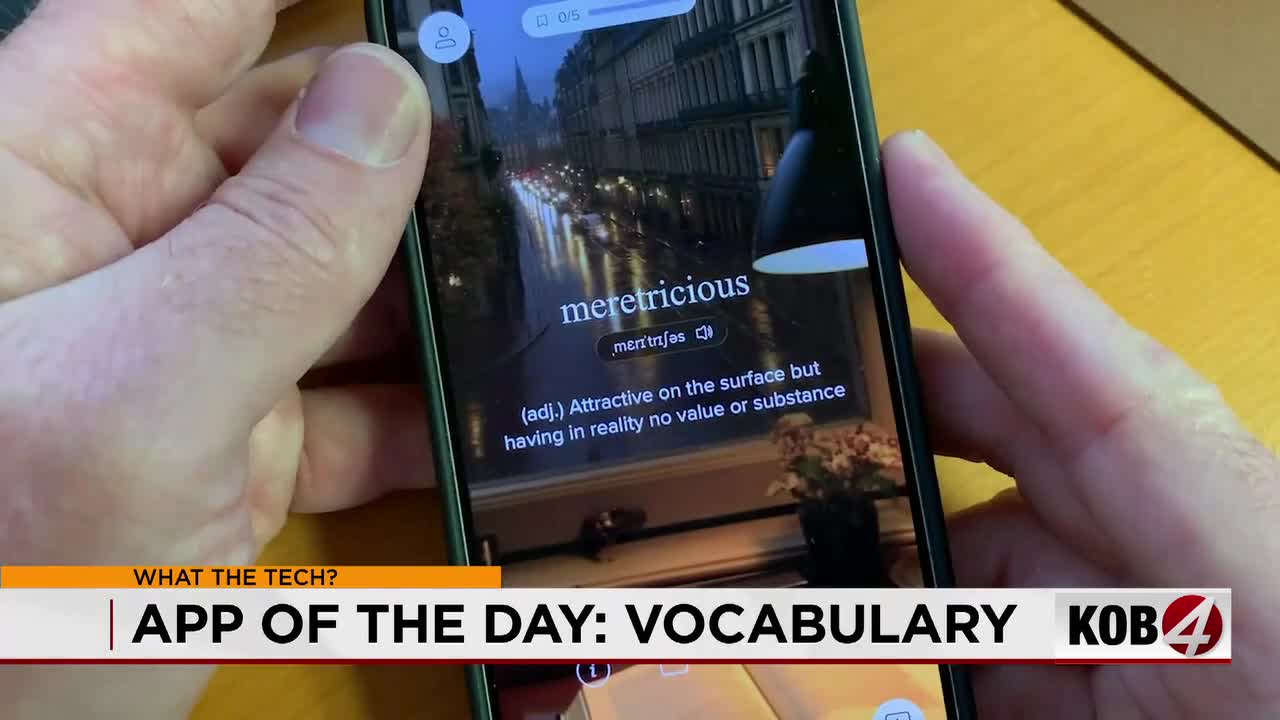
POLICY WIRE — Washington, D.C. — In an age where digital discourse often devolves into ephemeral bursts of emojis and truncated acronyms, a peculiar counter-current emerges, quietly challenging the linguistic atrophy gripping global communication. It’s not a grand educational reform or a presidential decree. No, it’s merely an application — a smartphone utility dubbed "Vocabulary" — promising to expand one’s lexical arsenal. Its unassuming premise, however, belies a potentially pivotal role in shaping not just individual erudition, but the very infrastructure of cross-cultural understanding and economic mobility.
Behind the headlines of geopolitical machinations and market volatility, the silent battle for articulate expression continues. We’ve become accustomed to the immediate, the brief, the instantly gratifying; our collective attention spans, some argue, have become profoundly attenuated. But then comes this app, a digital drill sergeant for the mind, pushing users beyond the ubiquitous "cool" and "awesome" into the rarefied air of "phlegmatic," "indolent," or even "livsnjutare." It delivers these linguistic morsels via pop-up notifications, a sly subversion of the very technology that often fuels our intellectual somnolence (we’re all guilty of a little too much doom scrolling, aren’t we?).
And it’s proving rather effective. Offering bespoke topic selection—business, society, literature—it endeavors to tailor one’s lexicographical journey. The app doesn’t just present the word; it furnishes definitions, usage examples, and, crucially, correct pronunciation, ensuring that your newfound eloquence doesn’t morph into a social misstep. You don’t want to commit a grievous faux pas when deploying "pleonasm," after all. Its utility extends even to modern slang, granting parents the dubious pleasure of knowing what a "flexitarian" is or if dinner was "bussin’."
Still, the real thrust here isn’t merely about impressing peers. Linguistic research suggests the average adult commands an active vocabulary of approximately 20,000 words, a figure often dwarfed by passive recognition – and perhaps, alarmingly, by actual daily usage. This app aims to bridge that chasm. It’s not just an intellectual indulgence; it’s an economic imperative for many across the globe, especially where English proficiency often unlocks doors to international commerce and scholarship.
Dr. Aisha Khan, Director of Digital Literacy Initiatives at Pakistan’s Ministry of Information Technology, acknowledged this nuanced dynamic in a recent Policy Wire interview. "Our youth represent an immense demographic dividend, but they require robust tools for global engagement," she asserted. "While preserving our indigenous languages remains paramount, fluency in English—the language of global commerce and technology—is undeniably a gateway. Apps like ‘Vocabulary’ can democratize access to this essential skill, though we must also champion mother-tongue development concurrently."
So, what does this mean for the competitive landscape of digital innovation? Mark Jensen, CEO of LexiTech Innovations—the firm behind "Vocabulary"—sees it as an antidote to digital distraction. "We’ve developed a mechanism that leverages smartphone ubiquity for genuine intellectual enrichment, not just fleeting entertainment," Jensen posited in a virtual conference last week. "It’s about empowering individuals to reclaim linguistic agency, to articulate complex ideas with precision and confidence. We aren’t just selling an app; we’re selling a cognitive upgrade."
What This Means
The seemingly innocuous "Vocabulary" app, alongside its brethren in the burgeoning ed-tech sector, signifies more than just a personal development tool; it’s a silent force in several pivotal arenas. Economically, enhanced digital literacy, particularly in global lingua francas like English, directly correlates with increased employability and access to remote work opportunities, especially in burgeoning digital economies like those found across South Asia. Policymakers, therefore, can’t afford to dismiss these tools as mere novelties; they’re becoming integral, if unofficial, components of national educational infrastructure. The app’s efficacy, if truly widespread, could exacerbate the digital divide for those without smartphone access, while simultaneously elevating those who do possess it. It’s a double-edged sword, isn’t it?
Politically, the ability to articulate nuanced arguments is critical in an increasingly polarized world. A citizenry with a richer vocabulary is ostensibly better equipped to dissect political rhetoric, resist simplistic narratives, and engage in more sophisticated civic discourse. Conversely, a reliance on superficial communication could further entrench echo chambers. From a cultural standpoint, while these apps facilitate access to dominant global languages, they also pose a subtle challenge to linguistic diversity. Nations like Pakistan, navigating the intricate balance between modern economic integration and preserving rich linguistic heritage, face critical policy choices regarding digital education. The subtle power of an app that can shape how millions communicate globally shouldn’t be underestimated; it’s a new kind of soft power, perhaps even a quiet gambit, in the grander scheme of international influence.