

Algiers Ignites: Beyond a Championship, A City’s Roar Echoes Global Ambition
POLICY WIRE — Algiers, Algeria — Forget fireworks; for one electric night, the Algerian capital, Algiers, didn’t just celebrate. It roared. The city—a sprawling, bustling organism—didn’t...

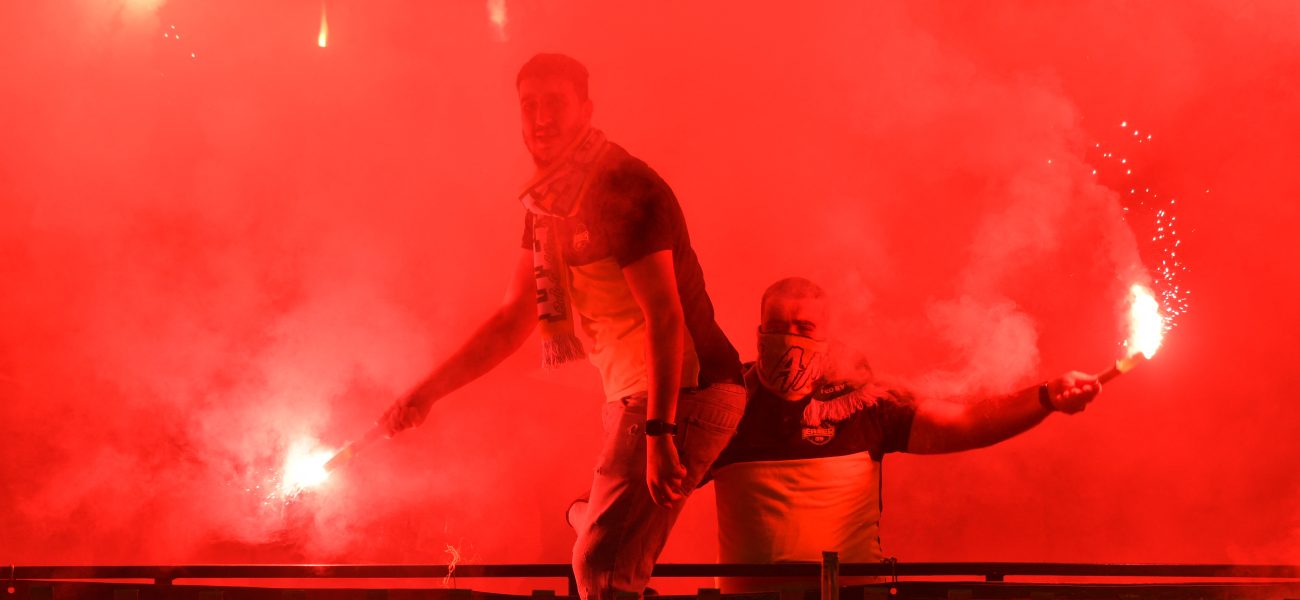
POLICY WIRE — Algiers, Algeria — Forget fireworks; for one electric night, the Algerian capital, Algiers, didn’t just celebrate. It roared. The city—a sprawling, bustling organism—didn’t merely mark a championship; it became the championship, painting itself a fiery, jubilant red. This wasn’t just a sporting victory for MC Alger. No, this was an unchoreographed civic masterpiece, a profound declaration from a generation hungry for its moment.
It began as all things do in a country like Algeria: with a sense of barely contained anticipation. MC Alger clinching the national football title after years? That’s more than a win; it’s a social event, a public catharsis. But what unfolded in the city of millions defied even the most ardent fan’s expectations. On the ground, and for miles into the inky North African sky, crimson pyrotechnics, flares, and sheer, raw enthusiasm transformed Algiers into something out of an epic poem. They didn’t just light up landmarks; they engulfed the whole damn skyline, leaving residents—and the global press—gawking.
You’ve got to wonder what moves a collective of two million people to spontaneously combust into such a dazzling display. Is it merely love for a local club? Or does it tap into something deeper? And it’s this deeper current that interests us here at Policy Wire. Because while the immediate visuals were stunning, the underlying dynamics speak volumes about national identity, youth energy, and the potent blend of popular culture and civic expression.
“This wasn’t just a victory for MC Alger; it was a visceral outpouring of Algerian vitality,” stated Mr. Karim Chergui, Algeria’s Minister of Cultural Affairs, in a prepared remark the day after the spectacle. “Our youth, they don’t just watch history; they forge it—whether on the pitch or in the streets, celebrating with such passion, with such unified pride. It’s their way of saying, ‘We’re here. We’re vibrant. And we’re looking to the future.’” It’s a carefully crafted message, isn’t it? But there’s a grain of undeniable truth in his words. That kind of unadulterated passion, it doesn’t just materialize for nothing. It builds.
Because let’s face it, sporting triumphs in countries with youthful populations and complex socio-political landscapes often transcend the scoreboard. They become a permitted, even encouraged, outlet for collective emotion. In many parts of the Muslim world—from Cairo to Karachi, Istanbul to Jakarta—football isn’t just a game. It’s a common language, a universal banner under which diverse groups can rally, a shared dream that briefly erases fault lines. You see it when fans in Pakistan passionately discuss the fortunes of Manchester United or Real Madrid, just as much as you see it when local clubs clash. It’s the same underlying mechanism of shared identity, a belonging.
“You observe this level of collective fervor consistently across nations with significant youth demographics, especially within the Muslim world,” noted Dr. Zara Ali, a sociologist specializing in collective behavior at the American University in Cairo. “Sport frequently offers an immensely public — and broadly accepted platform for expressing a shared sense of community. It’s often a telling indicator—a raw, emotional pulse of society—perhaps even more so in societies where other forms of collective expression might be constrained.” It’s a point worth dwelling on, don’t you think?
📄 POLICY WIRE WHITEPAPER PUBLISHED: PAKISTAN'S NATIONAL SECURITY POLICY PRIORITIES
👉 READ BY CLICKING HEREAlgiers, with over 70% of its population under the age of 30, reflects a demographic reality common across North Africa and the Middle East, according to 2023 UN data. Such youth-driven spectacles, therefore, carry a weight beyond the purely recreational. They demonstrate organizing power, a capacity for mass synchronization—even if chaotic—that any government must observe with both appreciation and, perhaps, a hint of strategic consideration. You can’t just ignore that much raw energy. But they shouldn’t.
What This Means
The Algiers outpouring, ostensibly a celebration of football, was actually a masterclass in latent national energy. Economically, such events, though chaotic, boost local businesses—from street vendors to firework suppliers—and inject a brief, potent shot of public optimism into the daily grind. Politically, it’s a delicate balancing act for the state: acknowledging and channeling this passion without allowing it to veer into unmanageable territory. For Algeria’s young population, football offers not just escape, but also a space where collective identity can be asserted, where individuals find themselves part of something vast and unified—a rare commodity in an increasingly fragmented world. It’s also a powerful symbol on the international stage, projecting a vibrant, energetic image of a nation that too often gets pigeonholed by stereotypes. Just look at how sporting events often become proxies for national pride and rivalries, much like how Glasgow’s sporting obsessions become geopolitical barometers. The celebration isn’t just a party; it’s a reaffirmation of a particular kind of identity, and you ignore it at your own peril.
But the ramifications stretch further. This kind of spontaneous civic spectacle — organic and deeply felt — showcases the immense potential of popular sentiment. It’s not state-directed; it’s community-driven. And that, in an era often defined by controlled narratives — and manufactured consent, feels distinctly significant. For the rest of the world, Algiers offered a glimpse not just into championship fervor, but into the spirited soul of a dynamic young nation ready to declare itself. And honestly, it’s about time someone paid attention. This kind of energy isn’t going anywhere; it’s just looking for the next reason to glow.