

Kyiv’s European Dream: Enlargement’s Geopolitical Gamble Tests EU’s Resolve
POLICY WIRE — Brussels, Belgium — It wasn’t the tanks rolling into Kyiv that kickstarted Ukraine’s dizzying rush toward European Union membership, but rather another, arguably more...

POLICY WIRE — Brussels, Belgium — It wasn’t the tanks rolling into Kyiv that kickstarted Ukraine’s dizzying rush toward European Union membership, but rather another, arguably more gnawing, form of aggression – the digital disruption and political meddling that long preceded the full-scale invasion. For years, Kyiv had threaded its way through a byzantine geopolitical landscape, often caught between aspirations for Western integration and Moscow’s heavy, ever-present shadow.
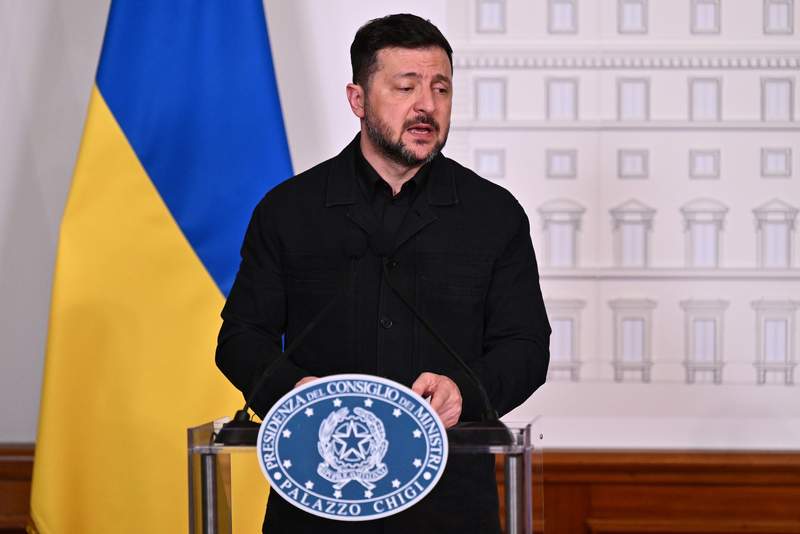
But now, the calculus has fundamentally upended. Ukrainian President Volodymyr Zelenskyy‘s relentless push for accession talks hasn’t just transformed the bureaucratic marathon into an urgent sprint; it’s forced the EU to grapple with its own strategic vulnerabilities and define its future shape amidst a re-animated Russian threat. Quite the pickle, isn’t it?
Behind the headlines of diplomatic gatherings and formal communiqués lies a gut-wrenching, often uncomfortable, reckoning of what Europe truly stands for. Can the Union, designed for stability and consensus — a finely-tuned orchestra of nations, if you will — possibly ingest a nation at war, rich in agricultural land but saddled with the baggage of corruption and post-Soviet institutional challenges?
Just last week, the sense of urgency was vibrant as leaders convened, their discussions underscored by both solidarity and the stark realities of integration. One senior EU diplomat, speaking off the record, reportedly quipped, “We’re not just talking about grapes and customs unions anymore; we’re talking about the soul of the continent.” What a quote!
“Our fight for freedom is inextricably linked to our European future,” President Zelenskyy declared in a recent video address. “We’re not just fighting for Ukraine; we’re fighting for the very values that underpin the European Union. There’s no turning back for us, — and I believe Europe understands the profound significance of this moment.”
And yet, the path isn’t devoid of hurdles. Not by a long shot. Some member states, particularly those with internal economic woes or historical ties to Russia, view rapid enlargement with distinct misgivings. They worry about the financial implications, the potential attenuation of institutional power, and the sheer administrative burden of incorporating a nation of over 40 million people — especially one facing massive reconstruction needs, mind you.
For its part, Brussels maintains an unwavering public position: the process must be merit-based. European Commission President Ursula von der Leyen has consistently underscored the need for Kyiv to implement deep, irreversible reforms, particularly in areas like judicial independence, anti-corruption measures, and oligarch de-monopolization.
“Enlargement isn’t merely a bureaucratic process; it’s a strategic imperative,” von der Leyen stated recently at a press conference. “But make no mistake, it demands rigorous, tangible reforms, a commitment to shared values, and a united front from all prospective members. The path is clear, but it requires steadfast dedication from Kyiv, — and indeed, from the entire EU family.”
This isn’t solely about Ukraine, of course. Oh no. The shadow of this enlargement debate stretches across the Western Balkans, where countries like Albania, Serbia, and North Macedonia have been stuck in amber, languishing in the waiting room for years, frustrated by slow progress and shifting goalposts. Their patience wears thin, and the perception of a double standard—fast-tracking Ukraine while they wait—is a potent source of diplomatic discord.
Related: Beyond the Battlefield: Kyiv’s European Dream Confronts EU’s Grand Enlargement Gambit
Such geopolitical shifts aren’t lost on nations beyond the immediate neighborhood. Consider Pakistan, a country threading its own complex regional dynamics with powerful neighbors and an evolving relationship with Western blocs. For Islamabad, the EU’s willingness to commit strategically to Ukraine, potentially drawing a clearer line in the sand against Russian influence, offers a riveting case study. It throws into sharp relief the stark differences in approaches to regional integration — and security architectures. While the EU leverages shared values and economic ties, other regions, including parts of South Asia, often contend with more transactional or conflict-driven alliances. It’s a stark illustration of how the equilibrium (or disequilibrium) of one region can unleash tremors across the globe, influencing perceptions of power, alliances, and development models — a veritable butterfly effect in international relations, don’t you think?
Indeed, the financial commitment is substantial. The European Union’s 2021-2027 budget, for instance, allocates over €14 billion to its Instrument for Pre-accession Assistance (IPA III) for candidate countries and potential candidates — an astronomical sum, really — a testament to the immense investment underpinning this complex process, according to the European Commission.
What This Means
This isn’t merely an administrative expansion; it’s a fundamental reinvention of European power — and purpose. If successful, Ukraine’s accession will buttress Europe’s eastern flank, weave in a significant agricultural and industrial base, and send an unmistakable dispatch to Moscow about the limits of its expansionist designs. But the risks are equally high. A poorly managed, rushed, or ultimately stalled process could destabilize the EU from within, fuel anti-EU sentiment, and provide propaganda fodder for those seeking to erode liberal democratic values. It’s a high-wire act, plain and simple.
So, the accession talks represent a gamble, but it’s one Europe may feel compelled to take. The cost of inaction, of allowing Ukraine to remain in a geopolitical gray zone, could be far greater, inviting further Russian aggression and undermining the very principles the EU was founded upon. It’s a testament to the Union’s strategic evolution, moving beyond purely economic integration to embrace a more robust geopolitical role — a transformation from a quiet club of marketeers to a formidable political titan, navigating treacherous global waters, don’t you know.
Ultimately, the speed and success of Ukraine’s integration will hinge not just on Kyiv’s legislative prowess, but on Brussels’ political will to absorb the inevitable shocks. It’s a test of resilience for both sides, where the stakes are nothing less than the future blueprint of Europe.