


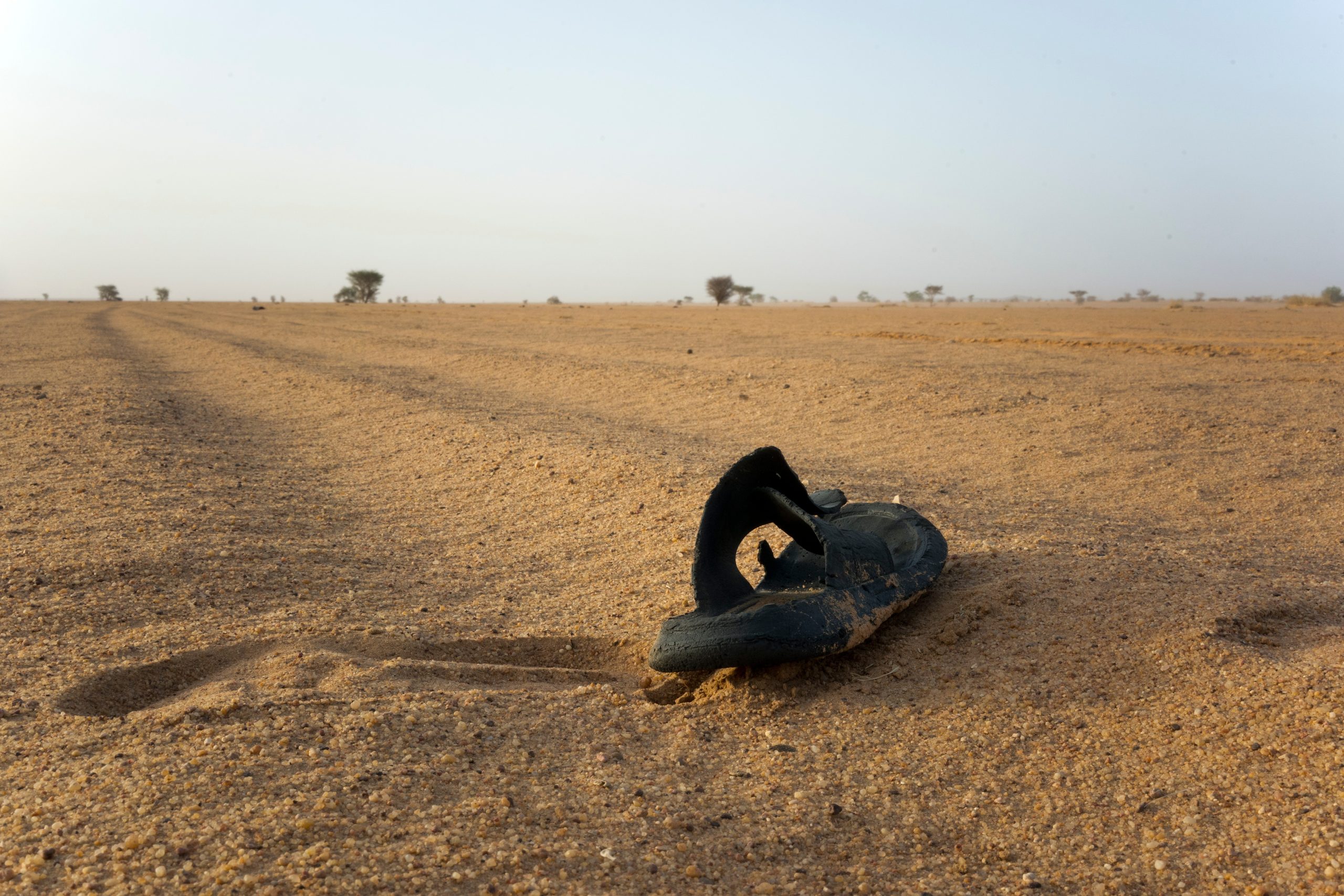
Sahara’s Silent Scream: 49 Dead in Niger as Desert Devours Hope
POLICY WIRE — Niamey, Niger — The Sahara, they say, is a giant filter. It lets through the determined, the lucky, — and sometimes, those who simply haven’t had their number called yet. But mostly, it...

POLICY WIRE — Niamey, Niger — The Sahara, they say, is a giant filter. It lets through the determined, the lucky, — and sometimes, those who simply haven’t had their number called yet. But mostly, it doesn’t. It just keeps on taking. And this week, its relentless maw swallowed another 49 souls, spitting out their silent, tragic stories onto the unforgiving sand.
It wasn’t a geopolitical skirmish, or a seismic natural disaster that triggered this latest grim tally. No, the culprit was far more mundane, yet no less lethal: a simple [QUOTE_PLACEHOLDER] after a truck breakdown. For the desperate hundreds packed onto such conveyances—human cargo more than passengers—the breakdown means one thing: the brutal hand of fate has finally made its move.
The journey itself, across the shimmering, death-dealing expanses of Niger’s northern reaches, is an act of pure, unadulterated desperation. It’s a calculated gamble with mortality, often undertaken by those who’ve already lost everything but their last breath of hope. Think of it—men, women, and children, jammed like sardines onto rickety vehicles, baking under a sun that offers no mercy, staring down distances that swallow up imagination, let alone GPS signals. When the wheels stop turning out here, the clock starts ticking in a whole different dimension. Dehydration, heatstroke, exposure—they’re not distant threats. They’re a palpable, agonizing reality, settling in like a bad taste in your mouth.
Because nobody undertakes this crossing for leisure, do they? It’s typically the opening leg of a treacherous journey north, often toward Libya’s chaotic shores, then on to the elusive promise of Europe. It’s a route frequented by migrants from across West and Central Africa, but also, increasingly, by those from Sudan, Eritrea, Somalia, and even Afghans and Pakistanis making convoluted passages across continents—a testament to a widening gyre of displacement across the broader Muslim world.
Reports filtering back suggest the incident that resulted in [QUOTE_PLACEHOLDER] ‘at least 49 dead’ stemmed directly from this sudden, crippling immobilization in one of the most hostile environments on Earth. But that statistic—49 human beings gone—barely scratches the surface of the crisis. The International Organization for Migration (IOM) estimates that at least 2,869 people perished attempting to cross the Sahara between 2014 and 2023, though many more likely remain uncounted, their bodies claimed by the dunes. It’s a chilling reminder that for every tragedy reported, a dozen more likely vanish without a whisper.
Authorities, often overwhelmed — and under-resourced, conduct search-and-rescue operations when notified. But even with their best efforts, the sheer scale of the desert and the secrecy surrounding migrant movements make detection a brutal challenge. And let’s be honest, who’s holding these smugglers accountable? The informal networks, built on secrecy and desperation, thrive in ungoverned spaces—an open wound in the fabric of regional stability. It’s a systemic failure, not just an unfortunate accident.
A recent United Nations study revealed a staggering 37% increase in global forced displacement since 2019, with regions like Sub-Saharan Africa and the Middle East accounting for a significant portion of this surge due to ongoing conflicts and worsening economic conditions. This is the tide fueling those overloaded trucks. It’s an inconvenient truth for developed nations often eager to point fingers at destination countries rather than tackling root causes.
What This Means
This incident—one more in a desolate series—doesn’t just signify individual tragedy; it exposes the fragile underbelly of global migration policy and the cold, hard realities of our increasingly interconnected, yet deeply divided, world. For Niger, a nation struggling with its own complex blend of poverty, instability, and insurgencies, these Sahara passages are a bittersweet economic artery and a humanitarian nightmare all at once. Smuggling, however reprehensible, provides a livelihood for some in an economy where options are already thin. But the cost, obviously, is astronomical.
The repeated loss of life here speaks to a broader failure of international efforts to create safe, legal migration pathways or to effectively address the socio-economic and conflict drivers pushing people onto these death-trap routes. This isn’t merely a regional problem. These are lives linked to Pakistan, to Sudan, to the Levant—every continent, eventually. They’re all searching for dignity — and a chance at a decent existence. You’ve seen similar, desperate narratives echoing out of the Bay of Bengal, the Mediterranean, or along the U.S.-Mexico border—each path a crucible, each filled with its own unique flavor of dread. It underscores the ongoing, grinding crisis of human mobility in the 21st century.
Ultimately, these recurring Sahara mass graves serve as a harsh indictment. They shout, though silently, about the global policy inertia—the political will that stalls, that falters—in addressing root causes of migration and managing its flows with humanity, not just border guards. Until that changes, until economic opportunities or even just plain safety aren’t such rare commodities in vast swathes of the globe, the Sahara will continue to exact its toll, and news of another [QUOTE_PLACEHOLDER] ‘mass casualty event’ will simply become part of the desert’s desolate routine.
Consider the parallel challenges highlighted in analyses of geopolitical gridlock and its impact on populations, such as those discussed in Tehran’s Bluff or Bad Hand? $24 Billion Stalemate Threatens Wider Conflict, demonstrating how political instability abroad can ripple through the lives of everyday citizens globally.