

Kashmir in the Shadows: The Battle for Truth and Media Independence
In February 2025, Indian authorities raided bookstores across Srinagar and other parts of Jammu and Kashmir, seizing over 650 books authored by Abul A’la Maududi, the founder of the banned...
In February 2025, Indian authorities raided bookstores across Srinagar and other parts of Jammu and Kashmir, seizing over 650 books authored by Abul A’la Maududi, the founder of the banned Islamic organization Jamaat-e-Islami. The Indian government justified the seizure by accusing these books of promoting extremist ideology. However, critics argued that this was just another example of the state suppressing intellectual freedom, aiming to silence voices that question the legitimacy of India’s actions in Kashmir. For Kashmiris, these actions are not isolated; they are part of a broader pattern of media censorship and the systematic erasure of their voices, both physically and digitally. The battle for truth and freedom of expression in Kashmir is far from over, but the struggle is increasingly being fought in the shadows, with independent journalism under siege.
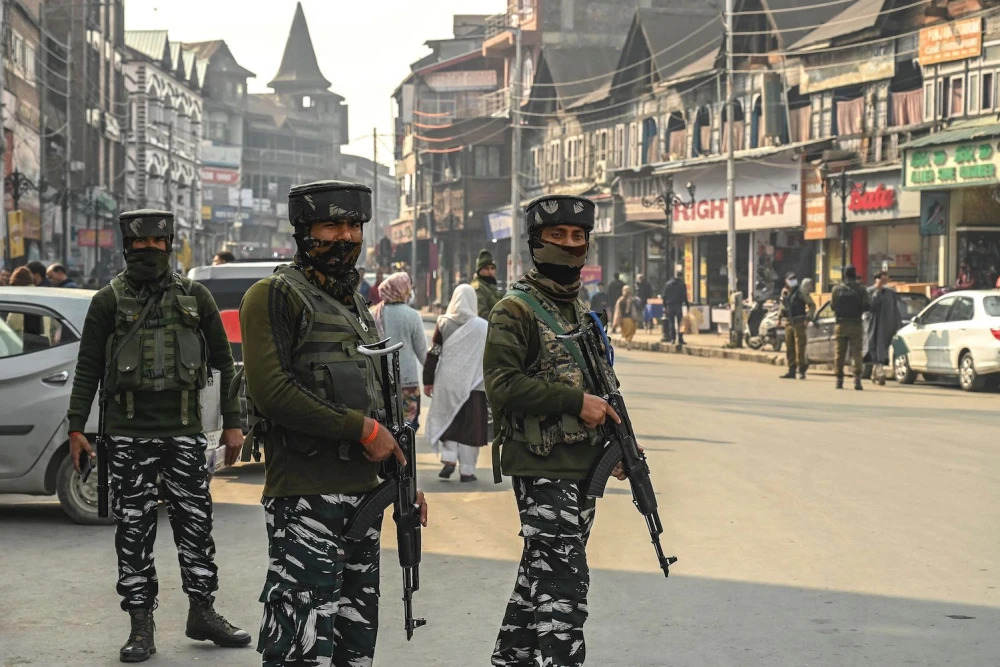
This incident reflects the ongoing crisis in Indian-occupied Kashmir, where the Indian government has consistently used censorship as a tool to suppress dissent. Kashmir’s vibrant media, once a source of truth and an outlet for the oppressed, now faces overwhelming pressure. Journalists are silenced, books are confiscated, and voices calling for justice are stifled. What began as a suppression of dissent has now morphed into a systematic campaign to control the narrative around Kashmir, both within the region and globally.
In recent years, Kashmir’s media landscape has become increasingly dominated by censorship and intimidation. The Kashmir Press Club, an institution that had served as the heart of independent journalism in the region, was closed in January 2022 by Indian authorities, marking a significant blow to press freedom in Kashmir. The closure came with little warning, and despite some efforts to reopen the club, its closure has left a gap that is difficult to fill. The Indian government’s actions reflect a broader trend of suppressing independent media in the region, leaving journalists with little room to operate freely.
Kashmiri reporters face a precarious balance between reporting the truth and avoiding state retaliation. Recent bookstore raids, where authorities confiscated critical materials, highlight the growing climate of fear. Journalists and activists are under constant threat, facing surveillance, intimidation, and arbitrary detention, with many detained simply for reporting violence against civilians. Self-censorship has become a survival mechanism, as speaking out risks imprisonment. Meanwhile, Indian national media has increasingly aligned with the government’s narrative, framing Kashmir’s struggle for self-determination as a law-and-order issue, often labelling activists as “terrorists” and distorting the region’s true battle for freedom.
This media portrayal is not accidental. Under the influence of Hindu nationalist ideologies promoted by the RSS and the ruling BJP party, Indian media has worked tirelessly to shape a one-sided narrative, pushing India’s geopolitical interests over the reality of Kashmir’s longstanding struggle. Instead of focusing on the human rights violations, repression, and violence in the region, Indian media consistently downplays the issue, often resorting to terms like “counter-insurgency” to describe India’s brutal military tactics. This strategy helps to justify the occupation and delegitimize the voices of the people who have lived under this occupation for decades.
Moreover, the control over digital platforms has become an extension of India’s media manipulation. Social media is heavily monitored, with online content critical of the government being removed or blocked. Activists and journalists risk arrest or harassment for simply sharing their viewpoints or reporting on human rights abuses. India’s ability to control the flow of information, both on traditional media and social platforms, ensures that its narrative remains dominant, while the voices of Kashmiris are drowned out.
While local media faces restrictions and the Indian national media continues to distort the truth, international media has also struggled to fully capture the gravity of the situation in Kashmir. The global press often fails to provide an accurate representation of the realities on the ground. When Amnesty International and Human Rights Watch released reports on Kashmir, highlighting the widespread abuse of civilians, global media still largely ignored or downplayed these findings. This limited international attention enables India to control the Kashmir narrative, both at home and abroad.
📄 POLICY WIRE WHITEPAPER PUBLISHED: PAKISTAN'S NATIONAL SECURITY POLICY PRIORITIES
👉 READ BY CLICKING HEREDespite immense challenges, Kashmiri journalists, particularly The Kashmir Walla, continue to report on the human cost of Indian occupation, often facing pressure from authorities. However, these efforts alone are insufficient. The international community must prioritize press freedom and human rights in Kashmir, demanding that Kashmiri voices be heard. Media in Kashmir goes beyond reporting, it challenges power, exposes injustices, and amplifies the oppressed. As long as India controls the narrative, the truth of Kashmir’s struggle will remain hidden. Yet, the resilience of Kashmiri journalists provides hope, as the fight for a free press is ultimately a fight for dignity and the right to speak.
The media’s role in Kashmir is more than just a reflection of the region’s politics, it shapes the very way the world perceives Kashmir’s struggle for freedom and justice. The recent book seizures and continuing media censorship highlight the extent to which India is willing to control the narrative. As Kashmiris continue their fight for self-determination, it is critical that the international community recognizes the importance of a free press and amplifies the voices of those who have been silenced for far too long. Until Kashmiris are allowed to speak freely, both within their borders and on the global stage, the true story of Kashmir’s occupation will remain untold.
Author