


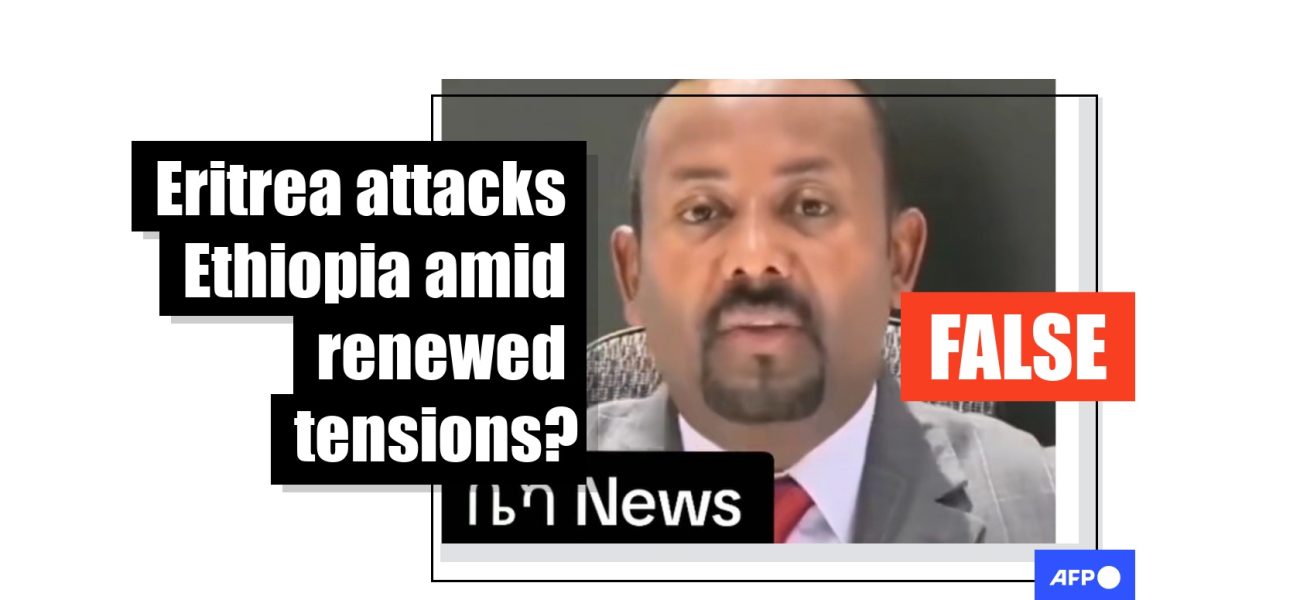
Digital Ghosts Haunt East Africa: Old War Speech Rebranded for New Discord
POLICY WIRE — Addis Ababa, Ethiopia — You’d think the digital age would’ve ushered in an era of pristine information, wouldn’t you? Instead, we’re neck-deep in a digital swamp, —...

POLICY WIRE — Addis Ababa, Ethiopia — You’d think the digital age would’ve ushered in an era of pristine information, wouldn’t you? Instead, we’re neck-deep in a digital swamp, — and the latest piece of mud flung its way comes straight from Ethiopia. It isn’t some fresh crisis, not precisely; it’s a recycled echo, a phantom menace dressed up for another round of regional anxiety. And what a tangled mess it’s creating.
It turns out an Ethiopian leader’s 2020 Tigray war speech, a deeply unfortunate piece of history in its own right, has been doing the rounds again. But here’s the rub: it’s been falsely shared as an announcement of an attack by Eritrea. Let that sink in. Old footage, new narrative. It’s like watching a B-movie villain resurrecting for a sequel nobody asked for. The actual conflict in Tigray, which ended with a peace deal in late 2022, was brutal. Millions were displaced; lives irrevocably altered. So to take a speech from that epoch—a speech heavy with the weight of real violence—and weaponize it anew, well, it’s not just irresponsible. It’s grotesque. Because historical traumas don’t just vanish. They linger. [QUOTE_PLACEHOLDER]
Misinformation, or perhaps more accurately, *disinformation* like this isn’t a passive problem. It’s an active ingredient in an already volatile brew. Imagine, if you will, being in a border town, nerves frayed, still reeling from the actual conflict’s scars. Then, suddenly, a video circulates on your messaging apps—that’s often how these things spread, isn’t it?—showing what appears to be an urgent announcement about renewed hostilities involving Eritrea. Fear. Panic. Perhaps even preemptive flight. That’s the real-world consequence of a poorly vetted repost.
It’s a tactic we’ve seen played out countless times, across various geographies. From the fertile crescent to the Hindu Kush, these digital phantom limbs often manipulate public sentiment, fanning the flames of ancient rivalries or creating entirely new ones. The parallels with certain propaganda efforts that surfaced in the Middle East during critical periods are stark. Consider how easily a single, decontextualized image or statement can become a casus belli for certain elements looking for one. Or how it feeds into extremist narratives designed to polarize. It’s not just about a few clicks; it’s about state stability.
Social media algorithms, designed for engagement above all else, inadvertently become complicit. They’re built to amplify what’s shared, not necessarily what’s true. The emotional punch of a fiery speech, even a years-old one, is often enough to send it viral. And, this phenomenon isn’t localized to East Africa; in countries like Pakistan, for instance, political tensions are often exacerbated by virally disseminated, often unverified, video clips and images on platforms like WhatsApp or TikTok. It’s a global disease of the information ecosystem. A 2023 report by the UN found that roughly 30% of online users in conflict zones encounter miscontextualized information daily, a figure that’s just staggering.
📄 POLICY WIRE WHITEPAPER PUBLISHED: PAKISTAN'S NATIONAL SECURITY POLICY PRIORITIES
👉 READ BY CLICKING HEREBut how do we, the ever-watchful, keep up? Verifying the timestamp on a video is simple enough, you’d think. Yet, in the torrent of daily digital chatter, that crucial step often gets bypassed. Instead, we react. We share. We fear. This incident isn’t an anomaly. It’s part of a broader, more insidious trend where information integrity is constantly under siege. The deliberate repurposing of historical artifacts—digital ones in this case—to manipulate current events illustrates a cynical, yet effective, form of hybrid warfare. It costs nothing but a few keystrokes and has the potential to unravel peace faster than a hastily stitched peace accord can bind it.
What This Means
The latest saga involving a mislabeled Ethiopian leader’s speech carries some unsettling implications, extending well beyond the immediate confines of the Horn of Africa. Politically, this incident can only serve to deepen distrust between nations like Ethiopia and Eritrea, even when official channels aim for de-escalation. The ghost of past conflicts, particularly the long-running border dispute and proxy battles between these two nations, means that any spark of false news risks igniting a much larger fire. It gives hardliners in either camp an artificial pretext for rhetoric that destabilizes an already fragile peace. It undermines diplomacy; it truly does. You can’t negotiate with a phantom. Economically, even the specter of renewed conflict can derail nascent development efforts, scare off potential investors, and disrupt cross-border trade. Consider the economic consequences for the entire region if critical trade routes or humanitarian aid corridors are perceived to be—or actually are—under threat because of digital deception. When global supply chains are already feeling the pinch from various crises, this sort of regional instability is a contagion.
And let’s not forget the global implications for press freedom — and media literacy. Every instance of viral misinformation chips away at public trust in legitimate news sources. For news organizations operating in challenging environments, debunking these narratives becomes an endless game of whack-a-mole. It’s an uphill climb, every single day. The battle isn’t just for eyeballs; it’s for minds, it’s for reality itself. There’s a certain grim irony that while the international community pushes for stability in places like Sudan, a misdated YouTube upload could easily plunge another part of the continent back into uncertainty. We’ve got to demand better. Or, to be precise, we’ve got to reckon with the algorithmic aggravation that allows it to fester. The fight for truth isn’t just moral; it’s a matter of state security. But it’s also about helping individuals understand the murky waters they’re swimming in. Perhaps more global cooperation in identifying and proactively removing such manipulative content could offer a fragile shield. Because frankly, relying solely on public savviness feels like a fool’s errand right now.