

The Global Silicon Standoff: America’s AI Containment Goes Borderless
POLICY WIRE — Washington D.C., USA — Forget the theatrics of diplomatic summits; the real battle for global dominance plays out in sterile fabs and under the electron microscopes, where the...

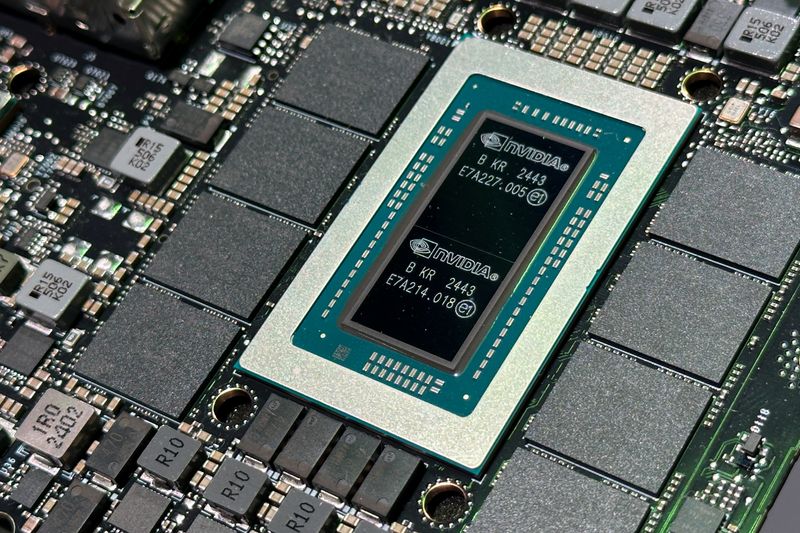
POLICY WIRE — Washington D.C., USA — Forget the theatrics of diplomatic summits; the real battle for global dominance plays out in sterile fabs and under the electron microscopes, where the microscopic circuitry of AI chips dictates tomorrow’s power. It’s not just about tariffs or trade wars anymore. No, this particular skirmish—the latest move from Washington to tighten the vise on critical tech exports—shows Uncle Sam isn’t just looking at the borders of nations. They’re eyeing corporate citizenship, even when it’s operating halfway across the globe. You see, the target isn’t just Chinese companies inside China. It’s any Chinese firm, anywhere on this spinning rock, that wants to get its hands on high-octane Nvidia AI chips.
It’s a subtle yet utterly brazen expansion of what some are calling the New Cold War, pivoting on silicon instead of Sputniks. The implications here are as sprawling as they’re unnerving. For decades, global supply chains optimized for efficiency ruled the roost. But that era’s fading fast, replaced by a strategic paranoia where technological interdependence looks less like a shared future and more like a vulnerability. [QUOTE_PLACEHOLDER]
Washington’s rationale is predictably dressed in national security finery. These aren’t just processors for video games or fancy smartphones. We’re talking about the brains—the sheer, unadulterated computing muscle—that powers advanced artificial intelligence. That means everything from sophisticated surveillance systems and data analysis that could feed into military applications, to groundbreaking scientific research that defines economic advantage. The US, naturally, doesn’t fancy the idea of Beijing getting a technological leg up, especially on its dime.
And boy, this isn’t just a ripple. It’s a tsunami in the making. The ripple effects will splash far beyond the boardrooms of Shenzhen — and Silicon Valley. Consider Pakistan, for instance. A nation deeply invested in its tech sector’s growth, and perpetually balancing geopolitical allegiances between the West and China. Pakistani startups, aiming to innovate in AI, often look for the best available hardware. Now, if they’re partnering with, say, a Chinese venture capital firm or a Chinese-linked entity for funding or integration, their access to cutting-edge AI hardware could get severely restricted.
It doesn’t matter if they’re assembling the next big health tech app or a localized e-commerce solution. This move creates a headache that’s not just administrative; it’s existential for many aspiring tech hubs in South Asia and across the Muslim world. They’re left choosing between American-controlled ecosystems and potentially slower, less advanced Chinese alternatives—or finding themselves locked out of top-tier innovation altogether, their digital dreams dashed by transatlantic regulations.
The logic from Washington is straightforward enough on the surface: starve the competition of the means to accelerate their own capabilities. But what happens when the US, by unilaterally drawing these lines in the digital sand, forces the rest of the world to pick a side? Countries like Pakistan, Egypt, or Malaysia aren’t looking to be pawns in a global tech chess match. They’re just trying to develop their own economies, educate their people, and maybe, just maybe, build an AI to predict local crop yields or optimize urban planning. But because of these new strictures, they could well face a difficult choice, one that affects their trajectory for decades.
The numbers don’t lie about who holds leverage here. The US accounts for approximately 53% of global semiconductor manufacturing equipment sales, a figure reported by the Semiconductor Industry Association (SIA) in 2023. That’s a significant hammer to wield. But every hammer has a reaction, right?
Because ultimately, this strategy might just accelerate China’s own indigenous chip development. Necessity, after all, is the mother of invention. And while catching up is difficult, an entirely walled-off garden fosters furious self-reliance. Think about the parallel efforts of a global crackdown on specific diasporas—it pushes them further into isolated networks, doesn’t it?
So, the US wants to contain China. But the chessboard extends far beyond Beijing — and Washington. It pulls in Islamabad, Jakarta, and Dubai, making their local ambitions collateral damage in a fight they never signed up for. And that, dear reader, is where the subtle irony kicks in. America, the bastion of free markets and open innovation, is increasingly constructing economic borders, often stifling the very global growth it purports to support.
And what’s next? Will Washington demand a list of ‘acceptable’ AI research topics? Will universities in Lahore or Cairo find themselves audited for any potential ‘Chinese influence’ simply for using open-source libraries that might have originated in China? It’s not as far-fetched as it sounds when national security becomes the ever-expanding justification for economic protectionism.
What This Means
This aggressive stance by the US isn’t merely an economic measure; it’s a direct intervention into the foundational technology stack of global power. Politically, it signals a deeper, more entrenched ideological divide than previously acknowledged. It tells allies and adversaries alike that American economic statecraft is now firmly aligned with its geopolitical goals, willing to sacrifice short-term market access for long-term strategic dominance. Economically, we’re likely to see a further bifurcation of the tech world, accelerating the formation of two distinct, incompatible ecosystems—one centered on US-led technology, the other struggling to cohere around Chinese alternatives. This duality forces nations across Asia and Africa into increasingly uncomfortable choices, potentially slowing their own digital transformation and impacting their sovereignty in ways reminiscent of Cold War allegiances. Nations like Pakistan, caught between wanting American investment and Chinese infrastructure, will find themselves navigating an impossible terrain, possibly leading to a more fractured, less efficient global economy. This isn’t just about microchips; it’s about micro-splits in the global order, setting the stage for future confrontations. The ghost in the machine, it turns out, has a very explicit address.