


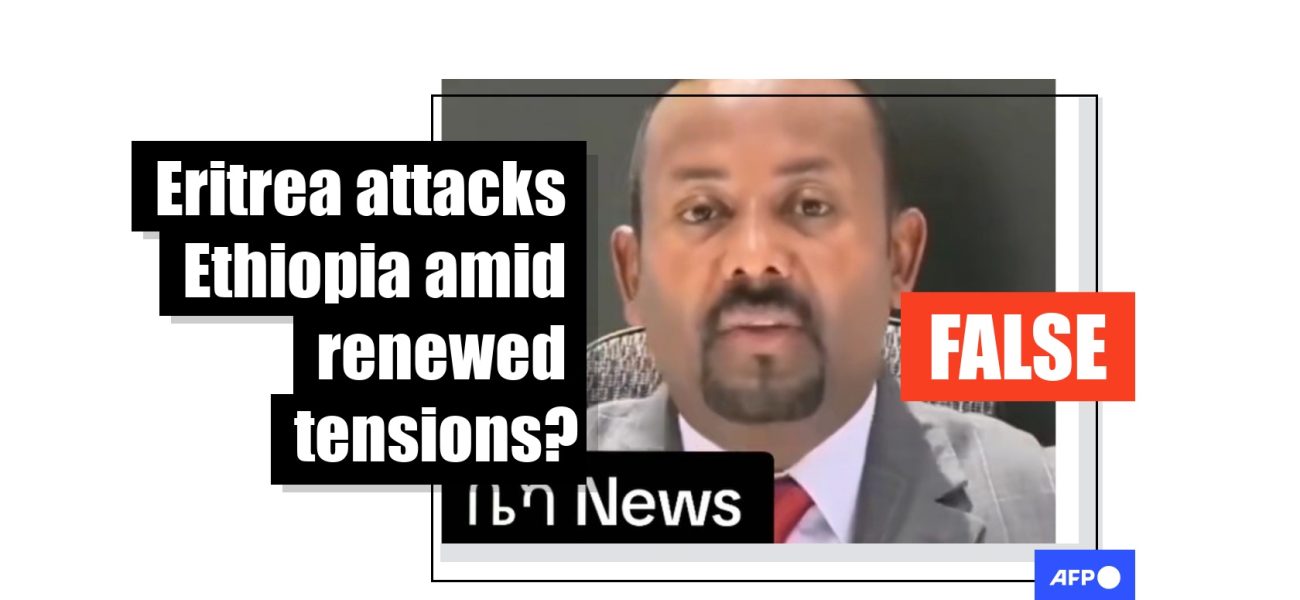
Old Ghosts, New Battlefields: Ethiopian War Speech Resurfaces in Dangerous Digital Feud
POLICY WIRE — Addis Ababa, Ethiopia — The internet, bless its heart, has always been a ripe field for nonsense. But when that nonsense directly jeopardizes fragile ceasefires and reignites old...

POLICY WIRE — Addis Ababa, Ethiopia — The internet, bless its heart, has always been a ripe field for nonsense. But when that nonsense directly jeopardizes fragile ceasefires and reignites old animosities, it isn’t just irritating anymore; it’s genuinely dangerous. We’re talking about a resurrected, mislabeled, 2020 speech from Ethiopian Prime Minister Abiy Ahmed, suddenly re-packaged and disseminated as if it were a fresh declaration of war against Eritrea.
It’s a chilling reminder: digital battlefields sometimes precede—or even overshadow—the physical ones. This isn’t just about an innocent mistake, it’s about weaponized nostalgia, taking a past declaration of resolve concerning the Tigray conflict and artfully (or clumsily, depending on your perspective) presenting it as an imminent, hostile threat from Eritrea.
Abiy’s actual speech, from the raw, bitter heart of 2020, was about domestic security operations against the Tigray People’s Liberation Front (TPLF). His words were clear then, albeit divisive. But online, clarity often becomes a casualty of clicks. Someone, somewhere, slapped a misleading caption on that video—a subtle reframe that suggested he was instead announcing an attack *by* Eritrea, not merely addressing a past internal conflict.
And then, just like that, it caught fire. Social media algorithms, those impartial amplifiers of chaos, didn’t much care about context. It flew through feeds, an electric current of anxiety and fear across a region still nursing profound wounds from its last brutal conflict. It’s a classic play straight from the disinformation handbook, one that knows no borders. Think of the ways fabricated news fuels sectarian strife in South Lebanon, or even the targeted campaigns to ignite communal hatred in parts of Pakistan and India. It’s the same cynical game, just different players, different geography.
Prime Minister Abiy Ahmed’s office eventually had to issue a stern, almost exasperated, clarification. They declared the reports of new Eritrean aggression, based on the doctored footage, as “categorically false and a malicious attempt to destabilize the hard-won peace.” You could almost hear the collective sigh from diplomats globally.
But false narratives are remarkably sticky, aren’t they? Once fear gets injected into the information bloodstream, it’s difficult to filter it out. “Ethiopia’s commitment to regional stability remains unwavering,” Abiy Ahmed recently stated, in a public address meant to reassure the populace. “We’ve buried enough hatchets; we won’t allow opportunists to dig them up with lies.”
On the other side of the border, Eritrean President Isaias Afwerki’s administration also found itself having to parry these digital broadsides. Their state media channels, typically tight-lipped, denounced the reports as “a desperate ploy by elements threatened by the growing normalization in the Horn. Eritrea won’t be provoked by phantom threats manufactured by digital insurgents.” The message? We see you, we know what you’re doing, — and we’re not playing that game. It’s an important message, but will it be heard above the noise?
📄 POLICY WIRE WHITEPAPER PUBLISHED: PAKISTAN'S NATIONAL SECURITY POLICY PRIORITIES
👉 READ BY CLICKING HEREBecause that’s the real problem, isn’t it? The sheer volume of it all. According to a 2018 MIT study published in Science, false news spreads ‘significantly farther, faster, deeper and more broadly than the truth’ on platforms like Twitter. This wasn’t some minor glitch; it was a targeted effort, capitalizing on a powder keg situation.
It’s like a dangerous, geopolitical game of telephone, but with explosive consequences. In this era of deepfakes — and readily manipulated content, where does the truth stand a chance? And, more pressingly, who’s benefiting from sowing such destructive seeds of doubt — and fear? The perpetrators, often anonymous and state-backed or simply chaotic actors, manage to sow maximum discord with minimal effort. This incident isn’t just about Ethiopia and Eritrea; it’s a global lesson in the fragility of peace in a digitally saturated world.
What This Means
This episode, where a manipulated artifact from a brutal war could so easily inflame cross-border tensions, speaks volumes about the deteriorating information environment. Politically, it signals the persistent vulnerability of post-conflict regions to external—or internal—malicious interference. It complicates diplomatic efforts; governments waste precious time debunking old news instead of focusing on forward-looking policy. Economically, such false alarms, if not swiftly contained, can spook markets, disrupt cross-border trade, and deter much-needed foreign investment. Why would an investor pump money into a region seemingly on the brink of renewed conflict, even if it’s based on digital smoke and mirrors? it erodes public trust in institutions and traditional media, forcing populations to navigate a bewildering ocean of unverified claims.
From an international relations perspective, incidents like this underscore a glaring oversight: the absence of robust global frameworks for addressing digital warfare and coordinated disinformation campaigns. Every nation, from the US to Spain, faces this. When a 2020 speech can be resurrected to spark a 2024 crisis, we’ve got bigger problems than just fact-checking individual posts. We’re watching the very fabric of stable international relations being gnawed at by insidious digital pests. It demands a more sophisticated, collaborative, — and immediate response than the world is currently providing. We’re truly in a new era of information chaos.