
Islamabad Attracts UAE Investment to Boost Tourism, Real Estate and Hospitality Sectors
Islamabad’s recent meeting with a high-level UAE investors’ delegation marked more than a routine official engagement, it was a sign of Pakistan’s renewed effort to attract foreign capital at a time...

Islamabad’s recent meeting with a high-level UAE investors’ delegation marked more than a routine official engagement, it was a sign of Pakistan’s renewed effort to attract foreign capital at a time when its economy is seeking stability. According to official data, Pakistan received around $2.45 billion in foreign direct investment (FDI) in FY2025, showing a 5 percent increase from the previous year. Out of this, the UAE invested $283 million, making it the third-largest investor after China and Hong Kong. These numbers highlight that UAE interest in Islamabad’s real estate and tourism is not sudden but builds on a growing partnership.
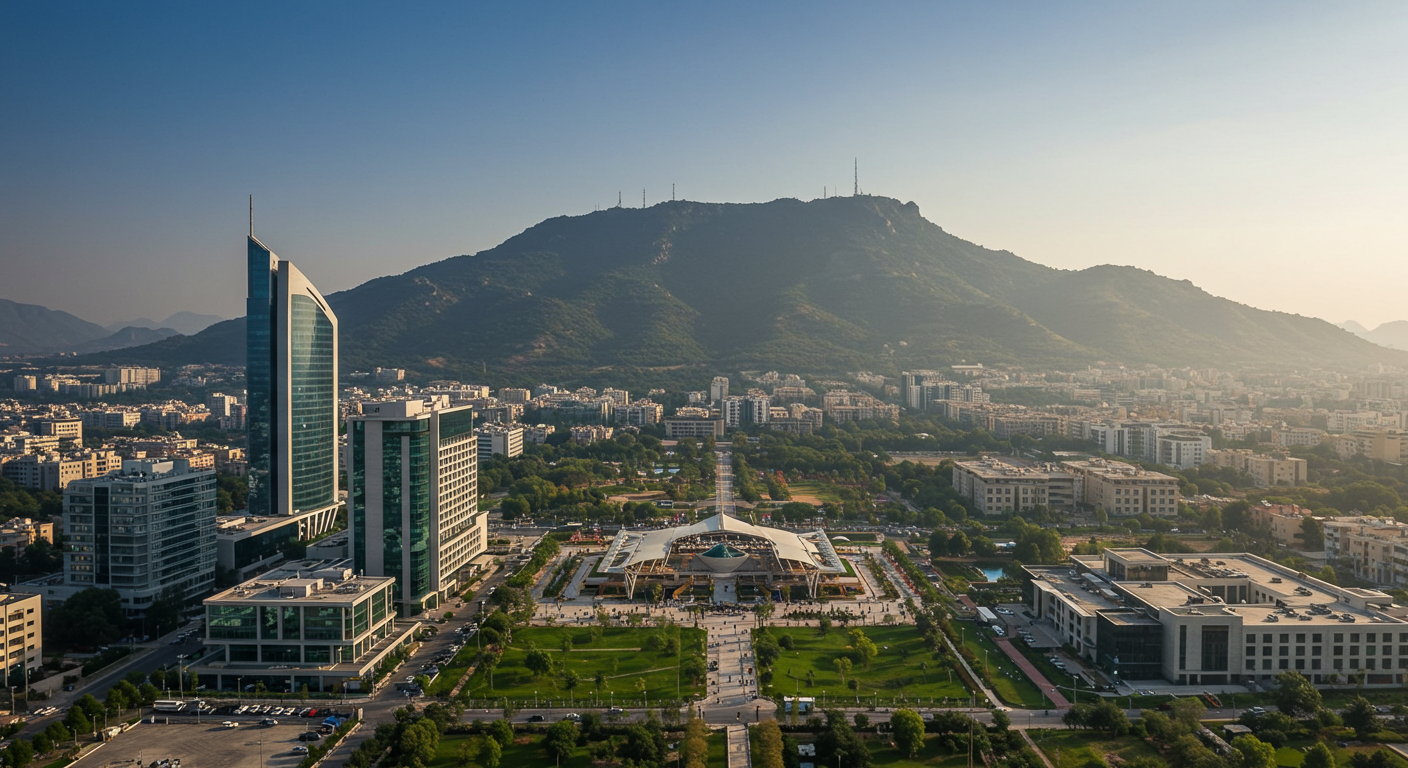
In the meeting, the Capital Development Authority (CDA) presented extensive groundwork in attracting investors. The CDA has already approved feasibility studies costing hundreds of millions of rupees: Rs 206 million for a theme park, Rs 61.8 million for a Ferris wheel and Rs 197.7 million for the cable car project. To solidify investor assurance, CDA Chairman Muhammad Ali Randhawa told the delegation that the authority had created, “robust financial and operational models” to protect the capital and provide the most facilitation. The authority is making tangible progress from proposals to actual, risk-mitigated ventures by including national and international consultants and overall demonstrating to stakeholders that they are serious about implementation.
The UAE’s economic footprint in Pakistan is already substantial. Bilateral trade crossed $10 billion in FY2025, growing by over 20 percent compared to the previous year. At the same time, remittances from Pakistani workers in the UAE reached $6.7 billion, reinforcing the Gulf state’s role as a critical economic partner. This long-standing financial relationship makes Islamabad a natural choice for Emirati investors seeking expansion in South Asia.
Islamabad’s population now exceeds two million, with steady growth in tourism driven by domestic and international visitors. The city’s existing hospitality and leisure infrastructure is limited compared to demand, making projects like hotels, resorts, and recreational parks both timely and profitable. If executed, the planned projects will not only cater to residents but also help position Islamabad as a tourist-friendly capital, similar to regional hubs like Dubai or Doha.
This local push fits into a wider national agenda. In July 2025, the government formed a 13-member committee led by Deputy Prime Minister Ishaq Dar to identify priority projects for UAE investment. Islamabad’s initiatives are therefore aligned with a federal-level strategy to draw Gulf capital into energy, real estate, and infrastructure. Such coordination between city and state authorities increases the chances of turning feasibility reports into funded, operational projects.
The real test will be in execution, yet Pakistan today is better placed than ever before to deliver. With federal backing, CDA’s proactive planning, and the UAE’s trusted partnership, the path from feasibility studies to completed projects looks stronger and smoother. Governance and approvals are being streamlined to encourage faster implementation, ensuring that investors see results on the ground.
If the capital delivers, the benefits could be incredible, leading to Islamabad perhaps becoming a model for other mid-sized capitals in Asia following suit and attracting foreign direct investment by blending structured planning with proactive diplomacy. With its global tourism and hospitality developments, the UAE has the necessary experience to assist Pakistan in finding this hidden potential, and bring Islamabad up to the level of international standards.
These initiatives above all demonstrate a friendly and time-tested relationship between Pakistan and the UAE. For decades, the UAE has been one of Pakistan’s most trustworthy partners and there isn’t a single Pakistani who hasn’t benefitted from the UAE’s continued investments, trade and remittance flows, indeed a binding experience that connects the two economies even deeper. For Islamabad, providing a welcome mat for Emirati capital is not just about project detail; it is about trust, value and common visions. With deepening partnerships, Pakistan and the UAE are co-writing the next part of their bond as mutual driven development and opportunities bind them together even more.
Author