

Hoops and Hardball: 2026 NBA Finals – More Than Just a Game
POLICY WIRE — New York City, USA — Forget, for a moment, the squeak of sneakers on hardwood or the deafening roar of 20,000 fanatics. Cast aside the hype reels, the analyst chatter. Because when the...

POLICY WIRE — New York City, USA — Forget, for a moment, the squeak of sneakers on hardwood or the deafening roar of 20,000 fanatics. Cast aside the hype reels, the analyst chatter. Because when the New York Knicks and San Antonio Spurs finally tip off for the 2026 NBA Finals, what’s really at stake isn’t just a gold-plated trophy. It’s an almost mythic collision of generational legacy, franchise desperation, and the ever-churning economics of global celebrity.
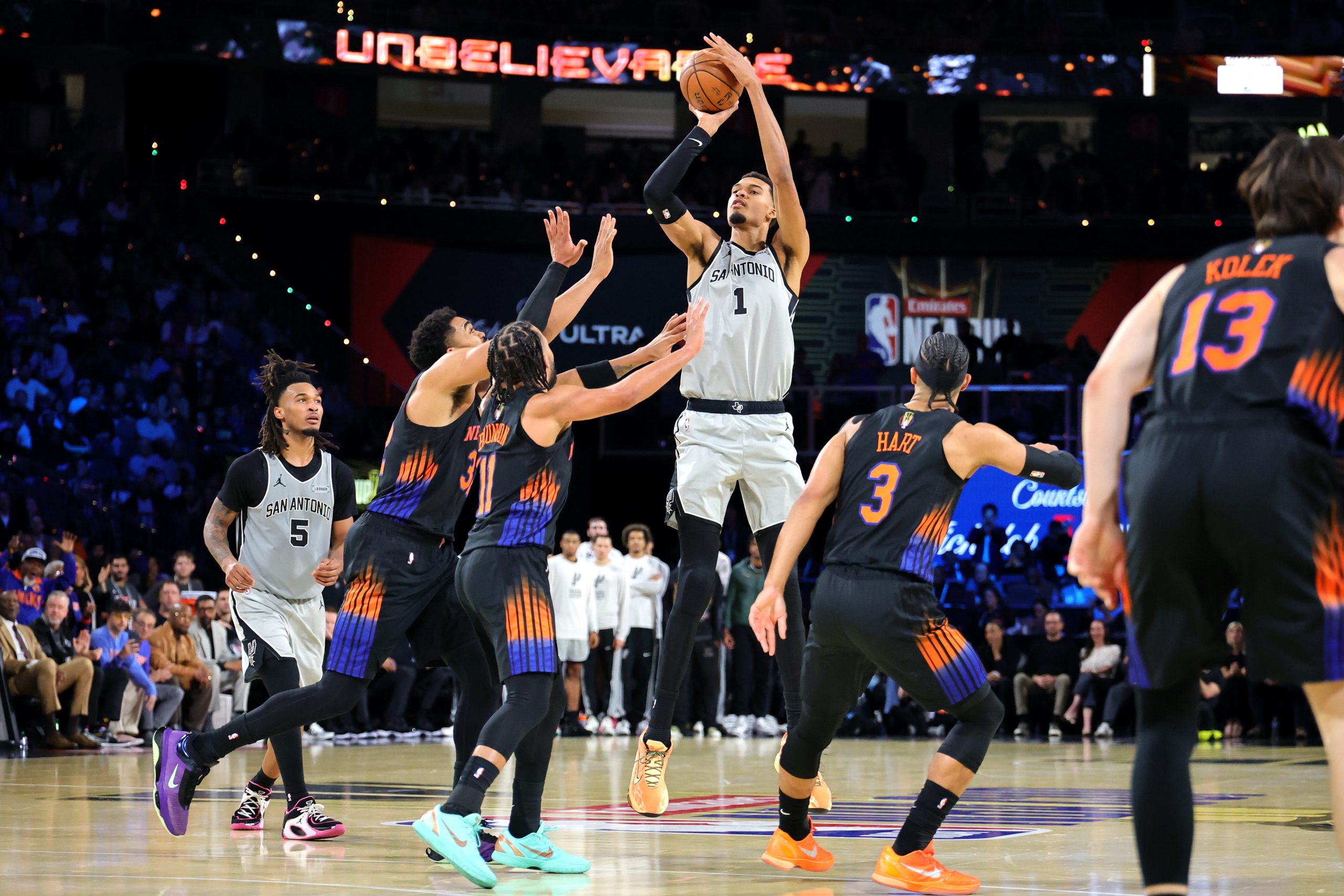
It’s a peculiar thing, this particular finals matchup. You’ve got the Spurs, basically NBA royalty, but still an upstart, led by a 7-4 phenom Victor Wembanyama. And then, the Knicks, a franchise that’s spent half a century yearning, literally pining, for a return to glory. That they’ve even arrived here—New York’s first trip to the Finals in 27 years, aiming for their first championship since 1973—feels less like sport and more like an exorcism. But what if it’s more?
Many a pundit, bless their hearts, are already falling all over themselves with predictions. Take the question of who’s had the more impressive run. Ben Rohrbach doesn’t mince words. He says the Spurs because San Antonio marched through Anthony Edwards’ Minnesota Timberwolves and Shai Gilgeous-Alexander’s defending champion Thunder to get here. Contrast that with the Knicks’ Eastern Conference finals adversaries: the sixth-seeded Atlanta Hawks, seventh-seeded Philadelphia 76ers and fourth-seeded Cleveland Cavaliers. So, yeah, it seems San Antonio’s path was paved with tougher matchups.
But Dan Devine highlights the Spurs’ unprecedented dominance, saying as hard as it’s to go against the team that literally put up the highest point differential of any 11-game stretch in NBA history to get here, I’ll go with San Antonio. This astonishing performance, verified by multiple analysts, shows just how potent this young team has been. And look, Kelly Iko noted that the Spurs have basically subjected 29 other teams to a fetal position throughout the season. They’re a machine. But that same Knicks run — with 11 straight wins — is nothing to scoff at either, according to Tom Haberstroh. The way the Knicks have completely done a 180 mid-playoffs is nothing short of magical, he writes.
And who’s got the most on the line? It’s not just a player’s future, it’s a narrative. Rohrbach pegs it on Wembanyama. To be sure, The list of superstars to lead his team to a championship at the age of 22 includes only Bill Russell and Tim Duncan. This puts him in extremely rarefied air. Because a championship at his tender age would accelerate his career trajectory far beyond legends like Michael Jordan and LeBron James, who didn’t clinch their first titles until 28 and 27, respectively.
But because New York’s got that decades-long title drought staring them down, Jalen Brunson has got his own heavy lift. If he can find a way to lead the Knicks to their first title in 53 years, being the best performer on the floor in the biggest moment the franchise has seen in decades, he goes from “multi-time All-Star/All-NBA performer” to [QUOTE_PLACEHOLDER] as Devine shrewdly observes. That’s a pretty big leap. And Steve Jones is a little more collective, saying The Knicks, as a unit. They’re facing an existential choice: cement their place as legitimate contenders or fall back into the shadows of their own outsized expectations.
Globally, the impact of a Finals like this stretches well beyond American shores. Think about it. Wembanyama’s meteoric rise captivates audiences worldwide. In burgeoning basketball markets, perhaps even in South Asian nations like Pakistan, young aspirants — whether dribbling in dusty alleyways or polished gymnasiums — see Wembanyama not just as a player, but as a symbol of unprecedented success at a startlingly young age. He represents a kind of boundless possibility. It’s the ultimate marketing dream. And his fame, if coupled with a championship, could easily inspire a new generation to transcend perceived limitations. Just imagine what his individual branding means in a region eager for global heroes.
Who’s the X-factor, then, the unpredictable element that scrambles all the calculations? Some point to peripheral players. Jones points to Josh Hart, — and Devine mentions Mitchell Robinson’s broken-and-surgically-repaired right pinky. Haberstroh suggests Julian Champagnie. But for Rohrbach, it’s rookie Dylan Harper. Since Magic Johnson’s 42-15-7 in Game 6 of the 1980 NBA Finals — the pinnacle moment in NBA playoff history for rookies — only Sam Cassell in 1994 and Manu Ginobili in 2003 have played more than 400 postseason minutes for a champion in his freshman season. Harper’s performance, particularly as a defender against Brunson — and a scorer, could shake things up big time.
And finally, the predictions. This is where everyone goes all in, sometimes even despite themselves. Haberstroh — and Iko are all in for the Spurs in 5 and 6 games, respectively, with Wembanyama clinching Finals MVP. But Devine — and Jones back the Knicks in 6, naming Jalen Brunson as their Finals MVP. But it’s Rohrbach who casts the decisive vote for the new guard, predicting Spurs in 7. Victor Wembanyama, Finals MVP. He sees it: A new era is upon us.
What This Means
This 2026 NBA Finals matchup isn’t just good television; it’s a policy lesson on multiple fronts. For starters, there’s the undeniable economic boom associated with a prolonged, high-stakes series involving marquee franchises. Think local economies in New York and San Antonio, pumped with tourism dollars, merchandising sales, and soaring ad revenues. The global broadcast rights alone generate billions, illustrating the immense soft power of professional sports in building national and international brands. This extends to individual players; a championship can multiply endorsement deals by factors, turning athletes into genuine multinational corporate entities, something players like Karl-Anthony Towns already understand.
the focus on Wembanyama’s youth, alongside Brunson’s rise, reflects shifting paradigms in investment and talent cultivation. Franchises are increasingly willing to bet on — and patiently develop — younger, transformative talents, signaling a long-term economic strategy rather than short-term gains. This shift can influence everything from grassroots sports funding to college recruitment practices, fundamentally altering the pathway for athletic progression. It’s also about global market penetration. Young stars with international appeal are effectively economic ambassadors, opening new revenue streams and fan bases in untapped regions. But don’t take my word for it. Just watch the numbers climb.