


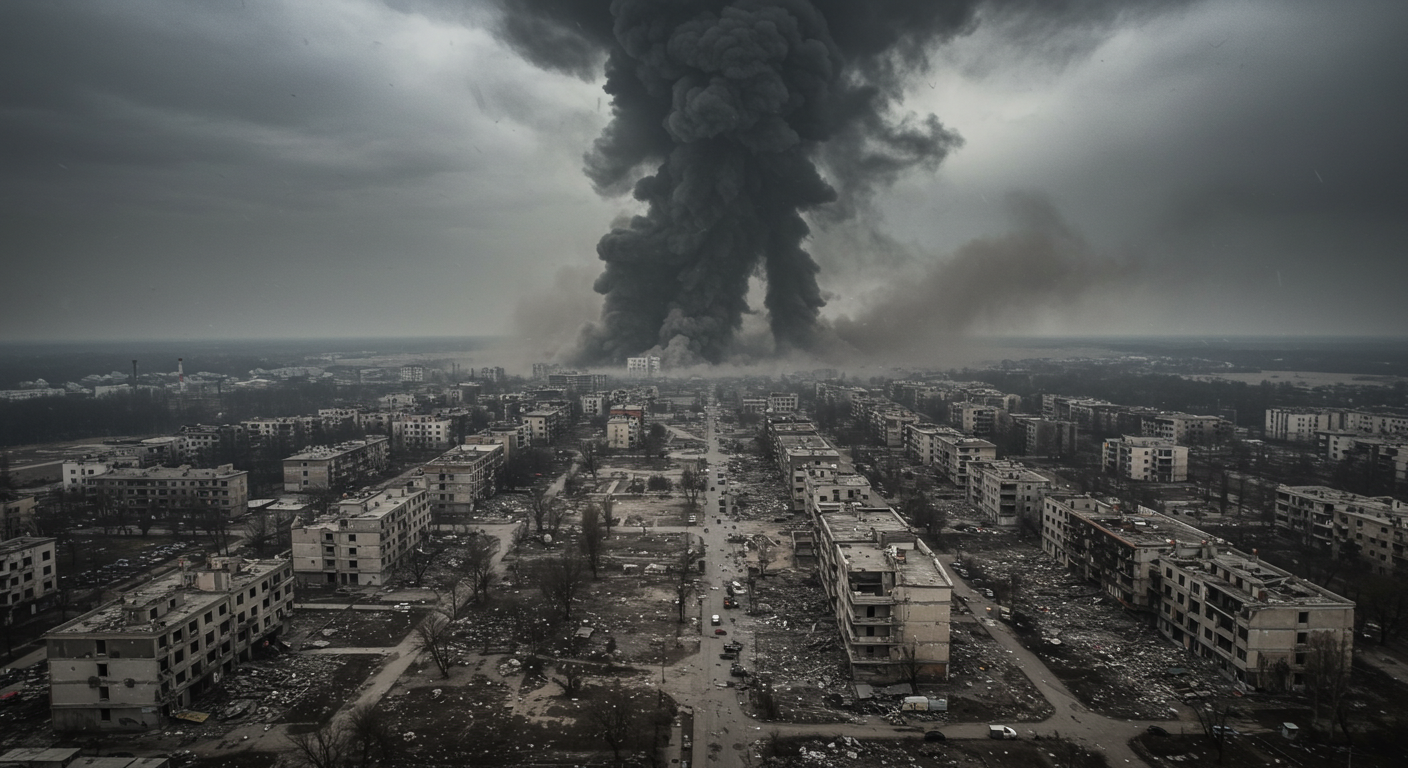
Is Nuclear war possible in Europe?
A storm is brewing quietly in the heart of Europe, with the potential to reshape forever the course of history. As the tension in and around Ukraine increases, the fear of nuclear war rises, causing...

A storm is brewing quietly in the heart of Europe, with the potential to reshape forever the course of history. As the tension in and around Ukraine increases, the fear of nuclear war rises, causing a sense of urgency all over the continent. Former Director General of the International Atomic Energy Agency, Dr. Hans Blix, stated that “We cannot, however, overlook the fact that nuclear weapons are not mere deterrence but weapons of destruction”. Concerns are no longer hypothetical but are now real urgencies that Europe has to grapple with prudently, with determination, but above all, with cohesion. Immediate matters to tackle include new military doctrines and their increasingly generalized geopolitical tensions, which heighten the chances of nuclear escalation.
Now Exaggerating the Nuclear Rhetoric
Nuclear threats have since then prospered, making Europeans more and more apprehensive about a possible nuclear race across the continent. Military activities of Russia were soon accompanied by threats openly declaring nuclear escalation. President Vladimir Putin has come out with petrifying statements such as, “nuclear weapons are on the table,” by which he rather means an invitation to military intent by which a strategic doctrine seeks to wield nuclear deterrence as a massively effective tool to control the direction of the war.
Even though it is highly unlikely that nuclear weapons will ever be used, the threat of their use has already started to alter Europe’s security calculations. Each day of war that passes sees an increasing blurring of the line between conventional military action and the ever-looming nuclear escalation. The very ambiguity surrounding Russian nuclear doctrine creates major difficulties for NATO and European powers that are scrambling to analyze Russia’s strategic thought and management of the escalating crisis. It is an environment in which the military action, the diplomatic failure, and the military build-up will only increase the risks of nuclear confrontation.
Modernization of Nuclear Capabilities
If the rhetoric feeds fear, then the actions are telling an entirely different story: a shorter but louder story. Russia has undertaken a large-scale modernization of its nuclear deterrent arsenal, indicating that it aims to not only retain a credible deterrent but also project power in an evolving threat environment. One unsettling aspect is the reported deployment at Yasny base of hypersonic glide vehicles capable of delivering nuclear warheads on target in European cities in under 10 minutes. This development brings Europe’s response time down to mere minutes, stacking the odds in favour of any possible escalation. Modernization is one part of a grand design whereby nuclear weapon-theatrically again plays a central role. Globally, great powers are reinvesting in their nuclear arsenals, including the development of hypersonic weapons. This sets the tone for a renewed arms race filled with the possibility of catastrophic nuclear exchange and underscores the fragile peace that Europe depends on.
Ukraine’s Strategic Strikes and the Risk of Escalation
The Ukraine war, apart from typical fights with fighter aircraft and central weapons, features strategic strikes targeting Russian military infrastructure, such as airfields with nuclear-capable bombers. While some may consider such operations a tactical victory for Ukraine, they have a strong chance of converting the war into a confrontation between NATO and Russia. These strikes are, of course, double-edged. While they subdue Russia’s military capability, they may also be seen as a direct threat to the nuclear arsenal of Russia. If Moscow interprets these actions as provocation, it could trigger a nuclear response, involving Europe in a more dangerous phase of the conflict. This risk is amplified by the positioning of Russian tactical nuclear weapons in its western region, close to the conflict zone. The miscalculation risk, intentional or accidental, remains high. Each strike on critical infrastructure brings Europe closer to the brink of nuclear confrontation.
NATO’s Nuclear Posture
NATO’s nuclear deterrence strategy has for long formed the prop pillar in the defense doctrine against Russia. The alliance has also upheld nuclear-sharing arrangements, including US nuclear weapons based in several European countries. All these are meant to hold any aggression from Russia at bay, without which an attack on NATO would see retaliation that would be devastating.
Nonetheless, there is growing criticism of NATO’s nuclear posture. Russia-aligned nations have demanded a more independent nuclear deterrent, claiming that depending on American resources could delay Europe’s crisis response. On the other hand, some NATO nations support keeping the U.S. nuclear umbrella in place, claiming that it provides alliance cooperation and protection. An increasing concern about the role of nuclear weapons in contemporary combat is reflected in the debate over Europe’s nuclear destiny. With Russia’s nuclear threat growing, Europe needs to reconsider whether it should become more independent or keep relying on the United States for its security.
Public Perception and Preparedness
It has come to a phase wherein nuclear war is no longer an abstract fear. It is a palpable concern, so deep-seated in Europe. Surveys show that most Europeans are even more anxious about the possibility of nuclear warfare and believe that the threat has grossly amplified over the years. The growing anxiety has raised discussions about civil defense, given that European states are under pressure to make investments in nuclear readiness and build capacity in the education of citizens on how to act during a nuclear crisis.
Some countries, such as Sweden and Switzerland, have had active civil defense mechanisms in place, ensuring that their citizens are prepared in case of threats of nuclear attack. Nevertheless, for this reason, several other nations in Europe let the nuclear shelters fall into disrepair after the Cold War. Experts argued that Europe needs to revive the whole concept of civil defense, which includes canvassing programs for public education and developing resilient infrastructures that would serve civilians against nuclear attacks. The ambivalence is tremendous for governments between military deterrence and protective measures against the devastating effects of nuclear war on the population.
Conclusion
The nuclear threat in Europe today is complicated and diverse. Nuclear conflict is now more likely than ever due to rising regional conflicts, improving weaponry, and increasing knowledge of nuclear obstacles. The current state of affairs necessitates a cautious approach, one that blends military preparedness with diplomatic measures to prevent further escalation, even while the likelihood of nuclear war is still uncertain. The threat of nuclear war in Europe is no longer is remote concern. It is an urgent threat that calls for collaboration, strategic planning, and prompt attention. Europe must take every step to lower the risk of nuclear war, whether it be through civil defence projects, military readiness, or geopolitical engagement. Europe can guarantee that this shadow stays just that, a mist, and not a reality, by exercising caution, solidarity, and unflinching resolution.
Author