

Is Balochistan the Next Big Player in the Tethyan Copper-Gold Belt?
Stretching across continents, the Tethyan Metallogenic Belt is one of the richest geological formations in the world. This 2,200-kilometer-long mineral belt runs through several countries, including...

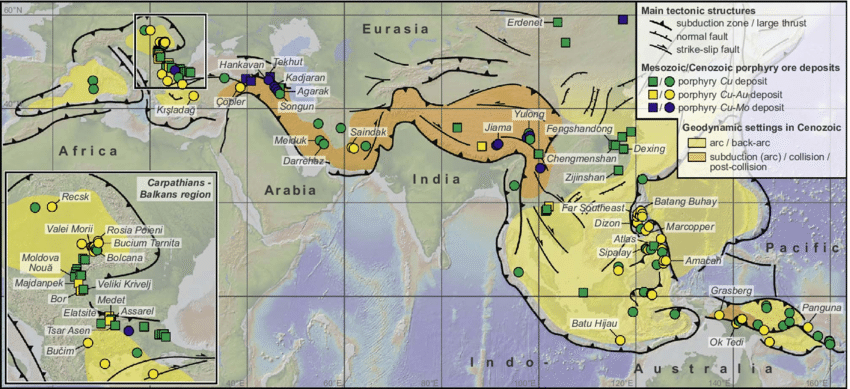
Stretching across continents, the Tethyan Metallogenic Belt is one of the richest geological formations in the world. This 2,200-kilometer-long mineral belt runs through several countries, including parts of Iran, Turkey, and Afghanistan, and passes through Pakistan’s southwestern region. It holds immense promise for copper and gold resources, and within this belt lies a treasure trove beneath the rugged terrain of Balochistan, especially the Chagai Magmatic Arc. This region is home to some of the largest porphyry copper and gold deposits globally, making it an area of significant economic potential.
The Tethyan Belt has already made headlines in the mining world. It is tgoldhe same geological formation that houses the massive Grasberg mine in Indonesia and the Escondida mine in Chile – two of the largest copper mines in the world. These sites have set global standards in the mining industry, and the similarities found in Balochistan’s terrain point to a comparable, if not greater, potential.
One of the most promising sites in this region is the Reko Diq area, located in the Chagai district. Reko Diq is estimated to hold 5.9 billion tonnes of ore with an average copper grade of 0.41% and a gold grade of 0.22 grams per tonne. These numbers might seem small at first glance, but when multiplied over billions of tonnes of rock, they add up to one of the largest untapped copper and gold resources in the world. According to mining experts, Reko Diq alone could produce around 200,000 tonnes of copper and 250,000 ounces of gold every year over a period of more than half a century.
To understand the scale, consider this: copper is an essential metal in modern industry, used in everything from electrical wiring and construction to renewable energy systems and electric vehicles. With global copper demand projected to double by 2035 due to the green energy transition, the significance of this deposit becomes even more critical. Gold, on the other hand, remains a traditional store of value and is increasingly used in electronics, medical applications, and aerospace industries. The rise in global instability has only driven gold prices higher, making the metal even more valuable.
Despite these immense reserves, Balochistan’s mineral wealth has remained largely underutilized. Several factors, including underinvestment, regulatory challenges, and geopolitical complexities, have slowed progress. However, recent efforts toward improving the investment climate and attracting international partners are showing signs of revival. In recent years, international mining companies have renewed their interest in the region, seeing the long-term value and strategic importance of tapping into such a rich mineral belt.
One of the examples is the revival of the Reko Diq project. The venture, once halted due to legal and financial disputes, is now moving forward under new agreements. Global mining firms have signed partnerships that aim to bring in state-of-the-art technology, ensure sustainable mining practices, and generate employment and infrastructure development for local communities. This renewed momentum is a promising sign that the potential of the Tethyan Belt may finally begin to translate into tangible economic growth.
What makes Balochistan even more strategically important is its geographical position. With direct access to the Arabian Sea and key shipping lanes, processed minerals from Balochistan can reach international markets more efficiently. This provides a competitive edge over other landlocked mining zones. Moreover, the global shift toward securing critical mineral supply chains, especially amid rising tensions among major economic blocs, makes the exploitation of local reserves even more vital.
The economic benefits of unlocking the Tethyan Belt’s potential are enormous. Not only can the mining sector contribute significantly to the national economy through revenues, royalties, and exports, but it can also stimulate regional development. Job creation, improved road and energy infrastructure, and investment in education and vocational training are just some of the long-term gains. Mining projects often act as catalysts for broader development, encouraging local entrepreneurship and service industries.
📄 POLICY WIRE WHITEPAPER PUBLISHED: PAKISTAN'S NATIONAL SECURITY POLICY PRIORITIES
👉 READ BY CLICKING HEREBut success in mining does not depend on mineral richness alone. Responsible mining is the need of the hour. Modern mining operations must now meet environmental, social, and governance (ESG) standards. This means that extraction must be carried out in ways that protect the environment, respect local communities, and ensure fair benefits to all stakeholders. With proper oversight, mining in Balochistan can follow global best practices, avoiding the pitfalls seen in other parts of the world where exploitation led to environmental degradation or social unrest.
Investing in education and technical training for the local population is crucial. Instead of relying solely on outside expertise, building a domestic pool of skilled workers will help ensure that the benefits of mining are more evenly spread. Local universities and technical institutes can be encouraged to develop mining-specific programs that feed directly into the growing sector.
The story of the Tethyan Belt and Balochistan’s place in it is not just one of minerals. It is a story of economic opportunity, technological advancement, and regional development. It is a reminder that natural resources, if managed wisely, can transform societies. The rich copper-gold reserves of the Chagai Magmatic Arc are not just rocks in the ground—they are the building blocks of a more connected, industrialized, and prosperous future.
The question now is not whether the potential exists. It clearly does, supported by geological surveys, international interest, and rising global demand. The real challenge lies in execution—turning potential into production, and production into prosperity. If approached with vision, responsibility, and long-term planning, the Tethyan Belt can become the backbone of a thriving mining economy.
Author