

Sacred Soil, Scarred Hearts: A Mother’s Long Journey Home from Afghan Dust to WWI Trenches
POLICY WIRE — Arlington, VA — You’d think after two decades of watching headlines burst and fade, seeing powerbrokers rise and fall, the weight of a tiny jar of dirt wouldn’t feel so...

POLICY WIRE — Arlington, VA — You’d think after two decades of watching headlines burst and fade, seeing powerbrokers rise and fall, the weight of a tiny jar of dirt wouldn’t feel so profound. But sometimes, it’s the small, granular gestures—not the grand speeches or the budget appropriations—that truly cut through the noise of Washington. Because here’s a thing: grief, the real, bone-deep kind, isn’t about policy; it’s about what’s left, or what isn’t, after the bang and the silence.
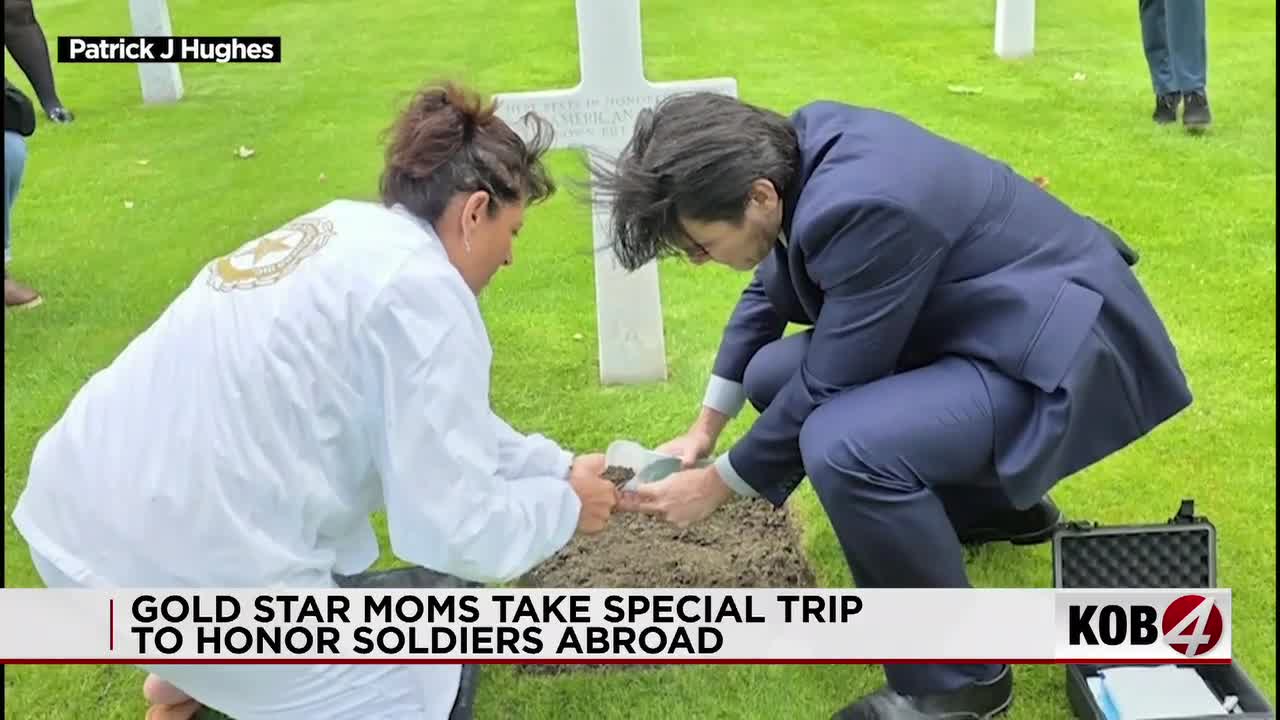
Joyce Paulsen, a New Mexico Gold Star mother, just returned from France with precisely that: a vial of earth, consecrated by memory. But this isn’t some quaint historical relic. It’s a raw, visceral connection across a century and, more profoundly, a reflection on a deeply personal loss that echoes the global landscape of conflict, from the mud of the Somme to the dust of Afghanistan. [QUOTE_PLACEHOLDER]
Her own son, Matthew Q. McClintock, fell in Afghanistan back in 2016 at a lean thirty years old. Before that crushing finality, Paulsen recalls he reached the four goals he wanted most before he died: He wanted to be a Green Beret, he wanted to be married, he wanted to have a house, and he wanted to have a son, and he had all those things right before he died at age 30
. He’d crammed a lot of living into those years, hadn’t he?
The Gold Star Mothers, a sisterhood nobody actively seeks to join, became her anchors. They’re not just about ceremonies; they’re an unwavering lobby for veterans, tirelessly pushing legislation and keeping their children’s stories from fading into the relentless tide of history. Paulsen puts it plainly: I’m with a sisterhood that understands that loss that none of us ever wanted to join, but we understand it
.
This journey wasn’t a solo act. Paulsen was one of five Gold Star mothers picked for the Sacred Soil Tour, an emotionally gruelling trek through American military cemeteries sprinkled across France. They gathered soil for a newly restored World War I memorial right here in Arlington National Cemetery. And you know, a lot of those original war moms, the ones who bore that first immense grief, never got to visit the far-off fields where their boys lay. If a mom who was never able to go on that pilgrimage, they can visit that monument. Now we brought a little bit of France in Belgium back here for them to visit in Arlington
, Paulsen shared, her voice carrying a weight not easily lifted.
Each mother also honored a spotlight soldier during their pilgrimage. Paulsen singled out Tomas Herrera from Wagon Mound, New Mexico, a name perhaps long forgotten to many. His connection to her family, a twist of fate discovered through the dry records of the 1910 census, showed a shared past: One of the things we found in the 1910 census, they’d knock on the door, they’d write all the family’s names, their ages, etc. And when we saw the census, we saw Tomas’ family lived right next door to my great grandfather
. It just proves the lines of history are often far more intertwined than we remember, doesn’t it?
But the raw numbers tell a harsher story. According to History.com, roughly 116,516 Americans died in World War I, an unimaginable slaughter that seeded countless European fields with the bodies of young men. That number, however abstract, is still just a collection of individual losses, isn’t it? Just like the endless roll call of soldiers, marines, and airmen who perished in the endless cycles of war, from Europe to the Middle East, Afghanistan to distant battlefields across South Asia.
It’s easy, from our relatively secure distance, to treat these numbers as historical data, or to relegate grief to private spheres. Yet, Paulsen’s mission—the soil, the memorials, the stories of her son and Tomas Herrera—highlights a fundamental, deeply human act of defiance against forgetfulness. Mothers in Peshawar, in Kabul, in Kashmir—they too, bear the crushing burden of sons lost in conflict, grappling with remembrance in ways both distinct and universal. The narratives may diverge, the political landscape be utterly different, but the shared ache, the insistence that these lives *mattered*, connects them across all divides. It’s an unspoken language of the heart.
Her motivation? Simple, really: As a mom, when your son, your child isn’t forgotten, that’s the most important thing you could ever do for a mom
.
What This Means
This humble act of returning sacred soil from World War I battlefields to Arlington isn’t just about honoring the dead; it’s a living policy statement, however unofficial. It’s about the very tangible, emotional infrastructure supporting a nation’s military families—particularly Gold Star families—who often feel a chasm opening between their experience and the broader public’s. These ceremonial missions, seemingly quaint, act as powerful political levers, reminding politicians and the populace that the costs of war aren’t theoretical or purely economic. They’re profoundly human, borne on the backs of parents, spouses, — and children for generations.
The government and various veterans’ organizations pour significant resources into maintaining this national memory, from Arlington’s meticulous grounds to state-level programs. Why? Because the moral contract between a state and its fighting forces—and their families—isn’t just written on paper. It’s etched into monuments, cultivated through stories, — and literally embodied in acts like Paulsen’s. Without this continuous, public act of remembrance, a crucial pillar of recruitment, national morale, and perceived governmental legitimacy starts to crumble.
And let’s be real, this commitment extends far beyond the Western sphere. Nations across South Asia and the Muslim world, many having endured their own generations of devastating conflict, understand this implicit contract too. They invest in their own forms of remembrance, whether through religious rites, grand mausoleums, or poignant family rituals, often mirroring this desire to give permanence to a loss that feels unmanageably immense. Pakistan, for instance, dedicates significant state efforts to commemorate its war dead, emphasizing their sacrifice as foundational to national identity—a theme not so different from what underpins the Gold Star Mothers’ work, even if the cultural context is worlds apart. Check out how global passion plays out, often linking cricket with national narratives, much like shared remembrance.
The economic implications, though secondary to the emotional weight, aren’t minor. Sustaining these memorials, maintaining family support programs, and organizing these symbolic journeys represents an ongoing national investment—a quiet expenditure in collective consciousness. And frankly, neglecting it carries a far greater cost in societal trust — and morale than any spreadsheet could quantify. This isn’t about dollars, it’s about duty. And often, it’s the quiet dedication of groups like the Gold Star Mothers that forces that duty back into focus.
Ultimately, these acts aren’t just backward-looking. They’re looking straight ahead, reminding a restless populace that freedom isn’t free, and the check, often paid in the most devastating coin imaginable, demands ceaseless attention.