

Indigo Interlopers: White House Scrutiny Stirs Reflecting Pool’s Murky Waters
POLICY WIRE — Washington, D.C. — Not every battle for American heritage gets waged with rousing speeches or landmark legislation. Sometimes, it’s about the precise hue of blue at a hallowed...

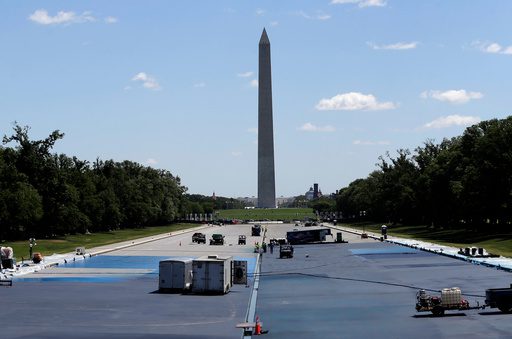
POLICY WIRE — Washington, D.C. — Not every battle for American heritage gets waged with rousing speeches or landmark legislation. Sometimes, it’s about the precise hue of blue at a hallowed national landmark. The seemingly mundane act of repainting the Lincoln Memorial Reflecting Pool—a body of water more historically renowned for its quiet, solemn mirror than its chromatic vibrancy—has escalated into a legal skirmish. A non-profit group isn’t just complaining; they’ve dragged the administration into court, arguing that a presidential obsession with aesthetics shouldn’t trump (if you’ll pardon the pun) established preservation law. It’s not just a coat of paint, is it? It’s about who gets to decide what history looks like, — and what reflects back at us.
The Cultural Landscape Foundation, a Washington-based watchdog, threw down the gauntlet this week. Their federal lawsuit demands an immediate halt to the pool’s new ‘American flag blue’ — a shade, apparently, personally chosen by the former occupant of the Oval Office. They want the government to restore what they see as the Reflecting Pool’s proper, muted aesthetic. This isn’t just bureaucratic nitpicking; they claim federal preservation laws were sidestepped, an administrative sleight of hand beneath the noses of heritage guardians.
Charles A. Birnbaum, the foundation’s president — and CEO, didn’t mince words. “The design intent, to create a reflective surface that’s subordinate, is fundamental to the solemn and hallowed visual and spatial connection between the Washington Monument and the Lincoln Memorial,” he stated. His disdain was palpable: “A blue-tinted basin is more appropriate to a resort or theme park.” You get it, don’t you? It’s about dignity versus theme park glitz.
But the former President saw things differently, of course. He’d earlier described the pool area as “filthy” — quite the appraisal for a national treasure — and taken a very hands-on approach. Last week, his motorcade even rumbled over the drained, freshly repainted basin for a personal inspection. During a subsequent Rose Garden event, he brushed aside criticism, insisting it was “not paint. This is highly sophisticated stuff.” One might infer the level of ‘sophistication’ aligns directly with his personal preference for the shade in question. He expected the pool to reopen, as he put it, “sometime next week, week after.” A swift turnaround for a project embroiled in judicial proceedings.
And this isn’t an isolated incident. This blue-pool imbroglio is just one thread in a larger, somewhat frantic weave of renovation projects undertaken across Washington D.C. under his tenure. Remember the talk of demolishing the East Wing for a ballroom? Or adding his name to the facades of federal buildings? There was even a much-discussed, though never fully realized, triumphal arch near Arlington Cemetery. His penchant for rebranding public spaces, often through bold, sometimes controversial, cosmetic changes, seemed to be a governing motif. Like Oklahoma City’s ambition for civic grandeur, the impulse to leave a physical, undeniable mark appears common among those wielding significant power, for better or worse.
Katie Martin, an Interior Department spokeswoman at the time, vigorously defended the administration’s actions. “[The President] has done more to make our nation’s capital a shining than any other president in the history of this country,” she proclaimed, perhaps a touch hyperbolically. “The Department is proud of the work being carried out by our Park Service to ensure this magical spot can be enjoyed for not only our 250th, but for many generations to come.” It’s that perpetual tug-of-war between an administration’s vision of ‘progress’ and the steady hand of historical preservation, isn’t it? A 2022 survey by the National Trust for Historic Preservation actually revealed that over 70% of Americans believe historic places help tell a more complete story of the nation. But whose story, exactly, becomes the point of contention.
Similar debates over monumental identity — and heritage ripple far beyond American shores. In parts of South Asia, for instance, ancient cultural sites—be they Moghul forts in Pakistan or Buddhist monasteries in Afghanistan—routinely face pressures. From modern infrastructure projects threatening historical footprints to extremist factions aiming to erase specific historical narratives, the preservation community often finds itself squaring off against powerful political or ideological currents. You’d think the sanctity of heritage might be universal, but it’s often conditional, bending to prevailing political winds, sometimes even resulting in far more devastating impacts than a coat of blue paint.
What This Means
The lawsuit isn’t just about a color swatch; it’s a proxy war over executive power and the autonomy of federal agencies like the National Park Service. If the court rules against the administration, it could establish a precedent. Future presidents might think twice before ordering spontaneous, cosmetic overhauls of federally protected landmarks without proper public consultation and review processes. Because what’s ‘highly sophisticated stuff’ to one leader might be sheer historical vandalism to another. The Reflecting Pool is designed for introspection, a stage for civil rights — and public discourse. Its aesthetic — that quiet, shimmering expanse of water mirroring the sky — is itself a part of its message. Altering it without due process, however well-intentioned, could be seen as diluting that very message. It’s a reminder that political legacy isn’t solely forged in policy, but also in the public spaces leaders choose to leave—or leave their mark upon.