

Silent Echoes: Border’s Bloodied Ground in Afghanistan-Pakistan Stalemate
POLICY WIRE — Islamabad, Pakistan — They don’t make headlines often, these silent tolls. Not the kind that electrify news cycles, anyway. But away from the cacophony of global crises, a more...

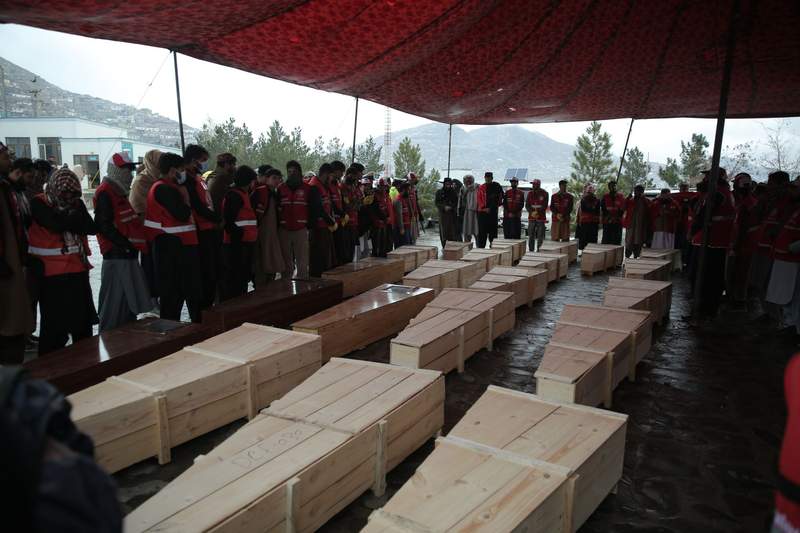
POLICY WIRE — Islamabad, Pakistan — They don’t make headlines often, these silent tolls. Not the kind that electrify news cycles, anyway. But away from the cacophony of global crises, a more intimate tragedy continues its slow, grinding pace along the Durand Line. A new United Nations report quietly drops a bombshell: 372 civilians have been killed this year alone in clashes straddling the porous Afghanistan-Pakistan border. And that figure? It isn’t just a number; it’s wives, husbands, children, brothers – extinguished. Just like that.
It’s a brutal statistic, one the UN’s Assistance Mission in Afghanistan (UNAMA) quietly disclosed, painting a stark picture of escalating violence. We’re not talking about minor skirmishes anymore. We’re witnessing artillery duels, drone strikes, and cross-border raids that have become — let’s face it — routine. This isn’t the grand theater of proxy wars; it’s a localized, relentless bleeding that barely registers on the international conscience. But for those caught in the crossfire? It’s everything.
Because while the global community’s attention wavers, a slow-burning fuse along one of the world’s most volatile frontiers is spitting sparks. The relationship between Pakistan and the Taliban-led Afghan administration has curdled dramatically since the Taliban’s takeover in August 2021. Islamabad, for its part, continually accuses Kabul of harboring Tehrik-i-Taliban Pakistan (TTP) militants – the very folks responsible for a spike in attacks inside Pakistan. Kabul, of course, denies it all, countering with accusations of Pakistani territorial violations. It’s a dialogue of the deaf, only amplified by mortar fire.
“We’ve exhausted diplomatic channels, haven’t we? Their inaction speaks volumes, and it’s our people paying the price,” a senior security official in Islamabad confided, requesting anonymity given the delicate situation. “This isn’t just about rhetoric; it’s about lives on our side of the border. And that’s a truth that simply can’t be ignored any longer.” But in Kabul, the sentiment pivots. “Kabul won’t permit its soil to be used for attacks on any nation,” a spokesperson for the interim Afghan administration declared recently. “But we also won’t stand idly by while our sovereign territory is violated by repeated provocations and aerial assaults, displacing our people. It’s an internal affair that they insist on making external, — and we won’t have it.”
And so, the blame game continues, unyielding, unforgiving. The civilians – often marginalized ethnic Pashtuns who share tribal loyalties across the border – bear the brunt. Their homes become collateral, their futures shattered. What good is a peace deal or political maneuvering when your village is suddenly in a warzone? It’s absurd, really. One border, two nuclear powers (well, one declared, one de facto), and neither seems to know quite how to stem this horrifying flow of blood.
The situation isn’t confined to local skirmishes. It’s directly tied to broader regional dynamics. As stability in Afghanistan deteriorates, the ripple effects stretch far beyond. Look at the increasing cross-border terror threats, the movement of militant groups – it’s a direct challenge to the security apparatus across South Asia. The longer this state of active animosity persists, the greater the chances of more pronounced destabilization in a region already wrestling with immense humanitarian and economic pressures. It’s a ticking clock, one that few in global capitals seem keen to acknowledge, let alone disarm.
📄 POLICY WIRE WHITEPAPER PUBLISHED: PAKISTAN'S NATIONAL SECURITY POLICY PRIORITIES
👉 READ BY CLICKING HEREWhat This Means
This relentless cycle of cross-border violence carries profound implications, politically — and economically. First, it completely erodes any semblance of trust or diplomatic pathway between two states that, frankly, can’t afford to be enemies. Pakistan desperately needs a stable, if not friendly, neighbor to secure its western flank and manage the persistent challenge of extremist groups. For Afghanistan, continued Pakistani pressure – military or otherwise – only serves to isolate an already internationally ostracized regime, making any future for its people that much bleaker. It’s a self-defeating spiral.
Economically, the impact is dire. Trade routes, already constrained, become even more perilous, starving communities on both sides of vital goods and exacerbating the existing humanitarian crisis in Afghanistan. Internally displaced persons, those forced from their homes by the violence, place further strain on already limited resources. For Pakistan, increased border security operations come at a steep financial cost, diverting funds from critical development projects. This isn’t just a political headache; it’s an economic millstone around both nations’ necks. And it feeds directly into the larger regional instability, making it harder for foreign investment or genuine aid to flow, thereby trapping millions in poverty and insecurity.
This prolonged friction also empowers non-state actors – the very militant groups both sides claim to be fighting – who thrive in the ensuing chaos. It allows them room to maneuver, recruit, — and plot. The failure to manage this border tension won’t just keep killing civilians; it guarantees a fertile breeding ground for radicalism that could metastasize throughout the Muslim world. The numbers from the UN are just the cold, hard proof of what’s happening. And if the current trajectory holds, we’re not seeing the end of this grim chapter; we’re likely just at the beginning.