


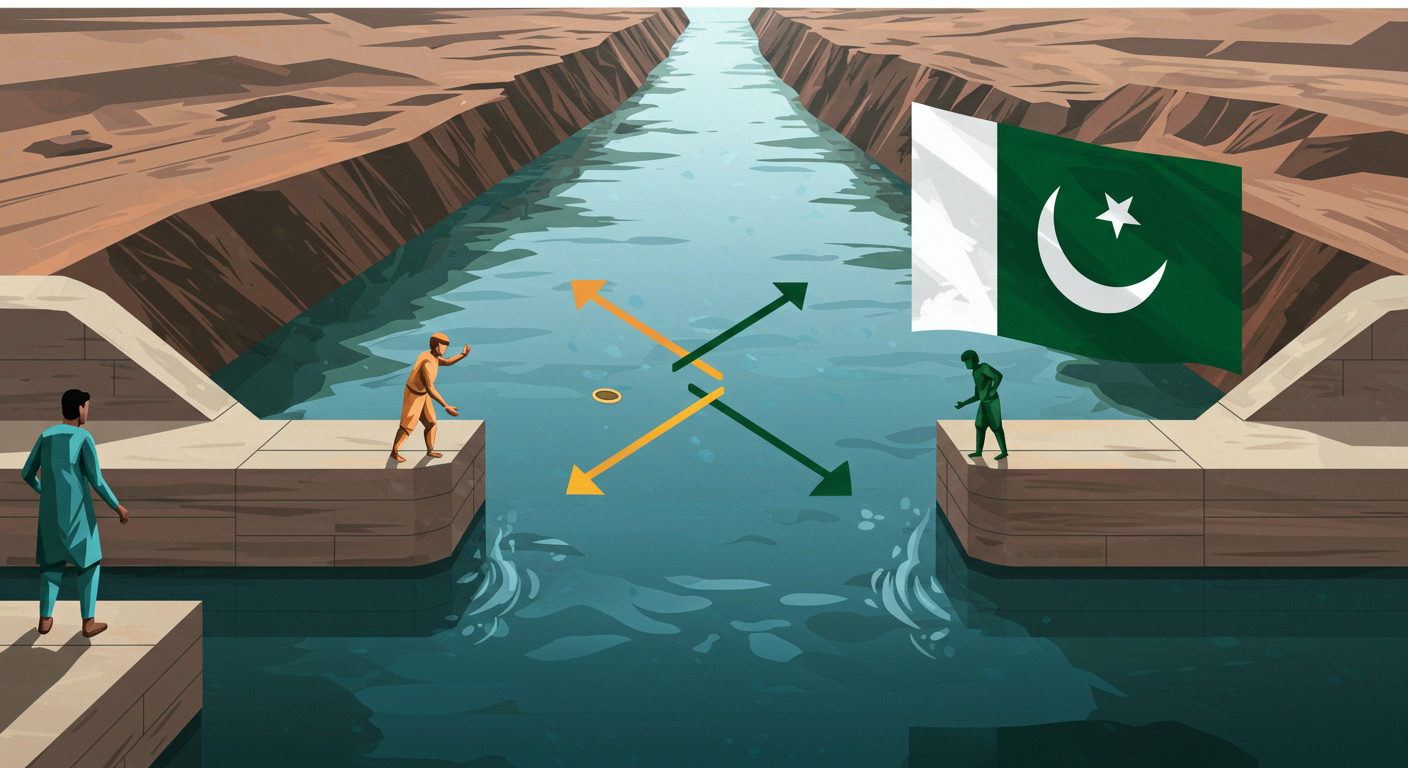
India’s Water Gamble Meets Pakistan’s Unbreakable Resolve
A Calculated Act of Hostility On August 12, 2025, Pakistan’s former Foreign Minister and PPP Chairman Bilawal Bhutto-Zardari declared India’s suspension of the Indus Waters Treaty (IWT) a direct...

A Calculated Act of Hostility
On August 12, 2025, Pakistan’s former Foreign Minister and PPP Chairman Bilawal Bhutto-Zardari declared India’s suspension of the Indus Waters Treaty (IWT) a direct attack on the Indus Valley civilisation and the heritage of millions. Speaking at the shrine of Shah Abdul Latif Bhitai, he drew a sharp connection between the river and Pakistan’s cultural identity. This was no routine policy change; it was a calculated act of hostility designed to undermine Pakistan’s survival. Bilawal’s words were clear: “We are the guardians of the Indus, and guardians never surrender.”
Breaking a Pact That Withstood Wars
The IWT, signed in 1960 under the World Bank’s guarantee, was a rare success in South Asian diplomacy, surviving multiple wars and conflicts. By suspending it unilaterally, India has not only violated international law but has destroyed one of the last remaining pillars of regional cooperation. This reckless decision sends a dangerous message to the world, that agreements can be discarded for political gain. As Pakistan’s legal experts have stressed, “When you break a treaty, you break trust, and when you break trust, you invite consequences.”
Weaponising Water: A Dangerous Precedent
India’s actions mark a dangerous turn in regional politics, weaponising a resource that is essential for life itself. This is not simply an internal development project; it is economic and environmental warfare. By expanding water diversion projects like the Ranbir Canal from 40 to 150 cubic metres per second, New Delhi is deliberately undermining Pakistan’s agriculture, energy production, and food security. In a nation where the Indus provides over 90 percent of irrigated water, such actions are direct attacks on the country’s lifeline.
Peace Is Not Submission
Pakistan’s desire for peace has been consistent, but peace cannot be mistaken for submission. Bilawal’s warning was decisive: “If war is forced upon us, we will not back down.” This is not a threat; it is a statement of capability. Pakistan’s armed forces and leadership remain fully prepared to counter any move that endangers the nation’s security or resources. India may have calculated that Pakistan would hesitate; instead, it has encountered a nation united in purpose and equipped with both the will and the means to respond.
Law, Diplomacy, and Deterrence
Pakistan has refrained from rash escalation and chosen to follow a diplomatic-deterrent route. The country has intensified its push to bring this issue to the World Bank and United Nations, ensuring that India’s breaches of international agreements on transboundary waters do not go unnoticed on the world stage. While India obstructs Pakistan’s water flow via infrastructure projects that threaten to impede its right to water, the Pakistan military has stated that any structures or activities that are intended to diminish the country’s water supply can, and will be, treated as military objectives. This double-track approach defending Pakistan’s rights – legally, diplomatically, and militarily, is indicative of the country’s determination to leave no stone unturned to protect its lifeline.
The Indus: Soul of a Nation
The Indus is not just a river; it is the backbone of Pakistan’s civilisation, feeding its plains, sustaining its cities, and connecting its history from Mohenjo-Daro to present-day Sindh. Bilawal reminded the world that Pakistan is the rightful custodian of this heritage. To harm the Indus is to strike at the heart of the nation’s identity. Protecting it is not a choice, it is an obligation. As one historian noted, “Civilisations rise and fall with their rivers; Pakistan will rise to defend hers.”
Unity Is Pakistan’s Strength
India’s gamble has produced an outcome it did not foresee: unprecedented national unity. Across provinces, political divides have dissolved on this issue. Farmers, city dwellers, politicians, and soldiers speak with one voice, the Indus belongs to Pakistan by history, law, and right. Rather than destabilising the country, India’s actions have forged a stronger, more determined Pakistan. This unity is India’s greatest strategic miscalculation.
The World Is Watching
The suspension of the IWT is not merely a bilateral matter; it is a test of international norms. If one nation can ignore a water treaty, others may follow, risking global instability. Pakistan’s firm stand sends a broader warning: agreements must be honoured, and aggression will not be rewarded. Bilawal’s closing message resonated far beyond Pakistan’s borders: “Water is not a bargaining chip, it is a right, and we will protect it at all costs.” This is the language of a nation that knows its value, its power, and its destiny.
Author