

At the Table or on the Menu: Pakistan’s Voice, India’s Silence
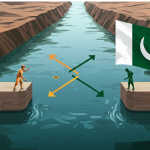
In international politics, one rule never changes: if you are not at the table, you are on the menu. Nations that fail to assert themselves where decisions are made eventually find themselves shaped,...

In international politics, one rule never changes: if you are not at the table, you are on the menu. Nations that fail to assert themselves where decisions are made eventually find themselves shaped, judged, and consumed by others. Today, this saying fits perfectly when comparing Pakistan’s proactive global engagement with India’s complacent and overconfident approach.
Much noise has been made about Pakistan’s lobbying in Washington. Critics mock the spending figures, calling it wasteful for a struggling economy to invest millions of dollars in influence campaigns. But this view is short-sighted. Pakistan understands what many others overlook: silence is surrender. Washington remains the nerve center of global decision-making. Policies on aid, security, trade, and regional stability often originate in those corridors. By ensuring its presence through professional lobbying firms, Pakistan makes sure its perspectives are heard, its sacrifices acknowledged, and its challenges not ignored.
India, in comparison, spends far less on lobbying in the United States. Despite its larger economy, it assumes influence is its birthright. It prides itself on being a “natural partner” of the West and believes its weight as a counterbalance to China guarantees it a permanent seat at the table. But international relations do not operate on assumptions. They reward those who invest, engage, and fight to have their voices heard. India’s self-confidence, bordering on arrogance, leaves it dangerously exposed.
Pakistan knows it cannot rely on goodwill alone. Its geography, its security concerns, and its constant confrontation with Indian propaganda make proactive engagement essential. India leaves no stone unturned in trying to isolate Pakistan, from attempting to brand it internationally as a hub of extremism to using its diplomatic missions for propaganda. If Islamabad were to sit silently, it would allow New Delhi’s narrative to dominate unchallenged. That is why lobbying is not a luxury for Pakistan, it is survival. It is the insurance policy against being cut into pieces on the geopolitical menu.
And results speak for themselves. Pakistan, despite its economic struggles, remains relevant in every major discussion about South Asia. It is consulted on Afghanistan, counterterrorism, and regional peace, even when India wishes otherwise. It secures multilateral assistance, manages to counter hostile narratives, and continues to be seen as a vital regional player. This is not accidental. It is the product of staying visible, staying engaged, and staying at the table.
India, on the other hand, continues to rely on empty slogans about being the “world’s largest democracy.” Yet its domestic record exposes it at every turn. The world sees through the façade of progress when minorities are lynched in broad daylight, when entire states like Kashmir are locked down, and when dissent is silenced through draconian laws. For every dollar India saves by under-investing in lobbying, it loses credibility many times over. Reports of human rights abuses, caste-based violence, and religious extremism dominate the global narrative because India does little to control the story. Instead of setting the agenda, it is constantly on the defensive.
Pakistan’s approach may not be perfect, but it works. It ensures that when policies are drafted, when debates are held, and when alliances are considered, Pakistan is not absent. Even critics of Islamabad acknowledge that despite its challenges, the country continues to remain diplomatically significant. India, by contrast, often watches global developments in frustration, complaining about “biased” reports or “Western conspiracies,” while doing little to shape perceptions beforehand. That is what happens when you fail to secure your chair at the table—you end up as part of the menu.
The irony is stark. A smaller economy like Pakistan is spending and strategizing to remain relevant, while a far larger India rests on the illusion that its size alone guarantees influence. History shows otherwise. Nations are not respected for their population numbers or their GDPs alone; they are respected for their ability to defend their interests and project their narrative effectively. Pakistan has learned this lesson and acts upon it. India, blinded by self-congratulation, is yet to catch up.
The future will not be kind to those who grow complacent. Pakistan, though under strain, invests in its visibility because it knows absence would cost far more. India believes its relationship with Washington is a “choice,” but global politics is ruthless. Choices can vanish overnight, and relationships shift as interests change. By ignoring the power of presence and influence, India risks being sidelined, judged by its failures rather than its ambitions.
In the chessboard of world politics, those who sit at the table shape the moves. Those who don’t are reduced to pawns or worse, served as the feast for others. Pakistan has chosen wisely to secure its place. India, unless it wakes up from its arrogance, may soon find itself not as a guest at the table but as the main course.
Author