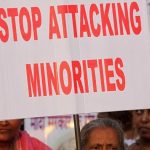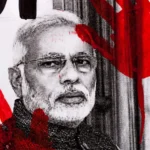


India’s Systematic Persecution of Muslims: A State-Sanctioned Assault on Minorities
India, which claims to be the world’s largest democracy, has increasingly exposed itself as a state deeply entrenched in Hindu nationalism. Muslims, comprising approximately 14% of the country’s 1.4...
India, which claims to be the world’s largest democracy, has increasingly exposed itself as a state deeply entrenched in Hindu nationalism. Muslims, comprising approximately 14% of the country’s 1.4 billion population, face systemic discrimination, state-backed violence, and exclusion. Once lauded for its diversity, India now exemplifies how religious intolerance, when institutionalized, can erode democratic foundations.
Religious conflicts are not new to India, but the rise of right-wing Hindutva forces has intensified the oppression of Muslims. The 1992 Babri Masjid demolition, the Gujarat pogrom in 2002, and frequent lynchings have set a dangerous precedent for outright marginalization. The Narendra Modi-led government has furthered this agenda through legislative and administrative means, with the Citizenship Amendment Act (CAA) of 2019 and the National Register of Citizens (NRC) effectively targeting Muslims. In Assam, nearly two million people, mostly Muslims, were rendered stateless, highlighting the religious exclusion at play.
The Indian judiciary and law enforcement have been complicit in this persecution. Hindu extremists frequently evade accountability for anti-Muslim violence, while draconian laws such as the Unlawful Activities (Prevention) Act (UAPA) and the National Security Act (NSA) disproportionately target Muslim activists, students, and political dissenters. Muslims are arrested, subjected to police brutality, and often left languishing in jail under fabricated charges. The demolition of Muslim homes and businesses under the guise of removing “illegal encroachments” serves as a collective punishment, furthering their economic marginalization.
Beyond direct violence, Indian Muslims suffer systemic socio-economic exclusion. The government deliberately underfunds Muslim-majority areas, leaving them with poor infrastructure, inadequate healthcare, and insufficient educational facilities. Discriminatory hiring practices push many Muslims into low-wage employment, while housing discrimination makes it nearly impossible for them to rent or buy property in Hindu-majority neighborhoods. This socio-economic strangulation aims to reduce Muslims to second-class citizenship.
Hindutva vigilante groups act as an extension of the state, violently enforcing anti-Muslim narratives under the pretext of cow protection, opposition to interfaith marriages, and social policing. Muslims have been lynched over allegations of beef consumption, accused of “Love Jihad,” and blamed for the spread of COVID-19 under the Islamophobic “Corona Jihad” conspiracy. The state not only turns a blind eye to such acts but actively endorses them perpetrators of anti-Muslim violence have been publicly garlanded by ruling party leaders.
In 2022, the hijab ban in Karnataka schools sparked nationwide protests. Muslim students were barred from wearing the hijab, citing uniform policies, leading to an outcry over religious freedom. Counter-protests emerged, with Hindu students donning saffron scarves. The state government shut down schools temporarily, but the controversy highlighted the growing institutional Islamophobia.
In July 2023, a Railway Protection Force (RPF) constable opened fire on a Jaipur-Mumbai train, killing four individuals, including three Muslim passengers. Reports suggest the assailant specifically targeted Muslims, coercing a Muslim woman to chant Hindu religious slogans at gunpoint before executing the killings. Such incidents are not isolated but reflect a broader pattern of state-sanctioned violence against Muslims.
Hate speech incidents against minorities, particularly Muslims, have increased by 74% in 2024 compared to the previous year. These incidents frequently occur at political rallies and religious processions, with a sharp surge during election periods. The normalization of anti-Muslim rhetoric fuels societal divisions and emboldens extremists.
A significant reason for the international community’s silence is India’s extensive trade relationships, particularly with Europe. The European Union maintains lucrative trade agreements with India, with billions of dollars in annual trade. Countries like France, Germany, and the UK continue prioritizing economic cooperation over human rights concerns, reinforcing a pattern of selective activism where financial interests override moral imperatives. This economic interdependence has shielded India from facing meaningful international consequences for its rising Islamophobia.
India’s persecution of Muslims is not just a domestic crisis; it is a direct assault on human rights and justice. Generations of Muslim families now live in fear, with children growing up in an atmosphere of institutionalized hate, limited opportunities, and constant suspicion. This rising religious divide threatens to dismantle India’s democratic façade, exposing it as a Hindu supremacist state.
Addressing this crisis requires international pressure, economic sanctions, and unwavering global condemnation of India’s anti-Muslim policies. Within India, Muslims and their allies must resist through legal battles, grassroots movements, and advocacy. The global Muslim community must also unite against this oppression, demanding accountability and justice.
If left unchecked, India’s descent into a full-fledged apartheid state will not only destabilize South Asia but also embolden other Islamophobic regimes worldwide. The world can no longer afford to turn a blind eye. Diplomatic niceties and economic interests should not come at the cost of human lives and fundamental rights. The Modi government’s Hindutva-driven policies are not just a threat to Indian Muslims but to global democratic principles. Silence is complicity, and history will judge those who fail to act. Governments, human rights organizations, and influential voices must step forward to hold India accountable through diplomatic pressure, economic sanctions, and advocacy at international forums.
Author