

India’s Suspension of Indus Waters Treaty Exposes Pre-Planned Political Strategy
The move by India to unilaterally put the Indus Waters Treaty on hold is a matter of major concern not only in South Asia but the world as well. The decision that was at first encapsulated as a...

The move by India to unilaterally put the Indus Waters Treaty on hold is a matter of major concern not only in South Asia but the world as well. The decision that was at first encapsulated as a robust reaction to the latest event in Pahalgam was offset by the Indian authorities on the notions that blood and water cannot mix. But what has come out of the lips of Indian Home minister Amit Shah in the recent past, is a darker, more sinister truth indeed, which leaves one to believe that this was not, in fact, an intervention against terrorism but a political move made before in advance.
The official Indian attitude is compromised by Shah who said water was flowing to Pakistan in an unfair manner. It brings out that New Delhi had already deemed the treaty unfair, and had been waiting to break the treaty on some pretext. This one comment alters all the script. Instead of outburst of emotions and act as the reaction to violence, stoppage of water flows now seems to be the act of long-term resentment, disguised as the national security policy.
This contradiction shows the strategic nature of India. In case of a treaty suspension that is not performed due to a reaction to an emergency but rather as a result of pre-existing dissatisfaction, the suspension becomes unjustified and becomes a type of pressure politics. The fact that the phrase used is unjustifiable flow indicates that the Indus waters treaty duties were getting too much to handle by the Indian leadership that was merely biding time to call a quits.
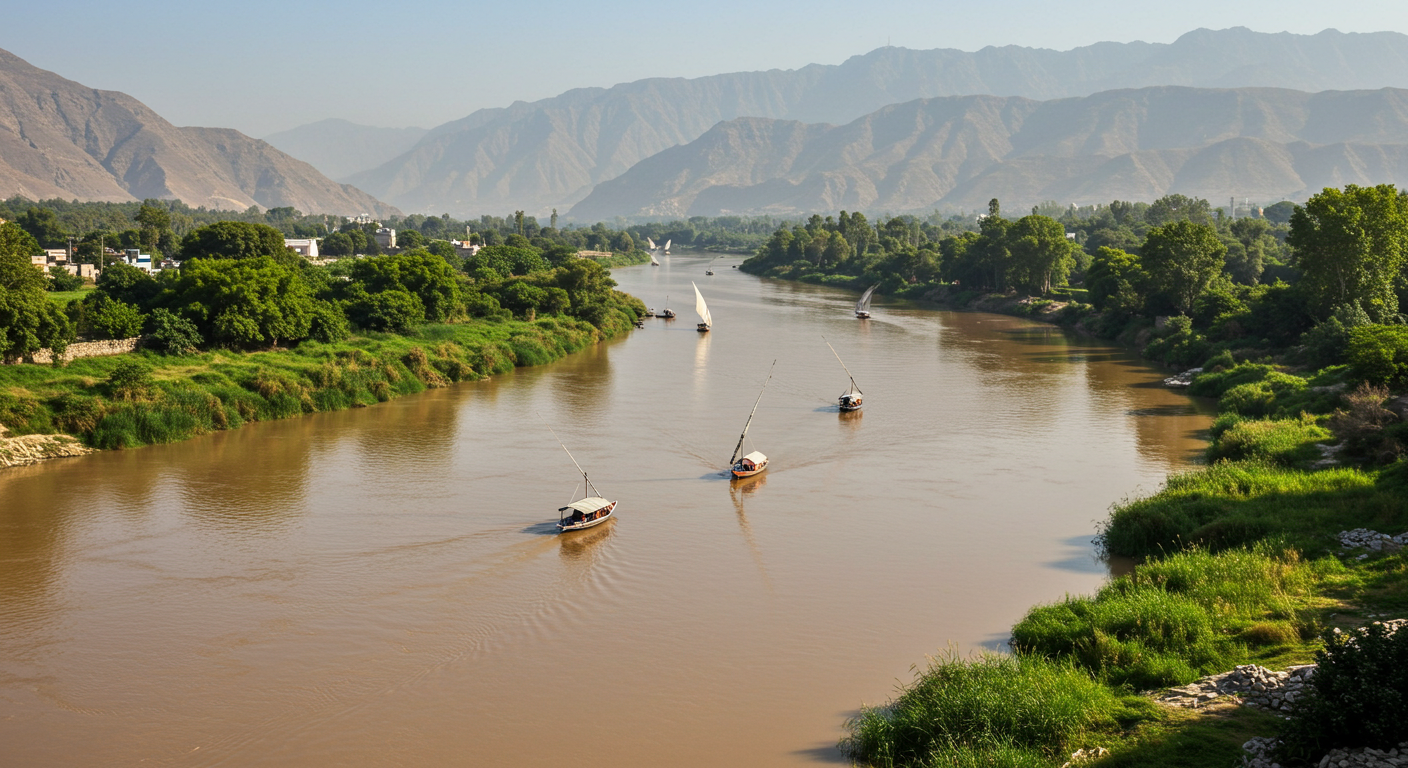
Indus Waters Treaty was also one of the most successful world-historic water-sharing treaties signed in 1960 due to the World Bank mediation. With the treaty, India gets to manage the eastern side of the rivers, Ravi, Beas, and Sutlej with the western rivers belonging to Pakistan Indus, Jhelum, and Chenab. The treaty has already endured wars, border tensions and many political shifts, providing an unusual opportunity of cooperation between two eternal rivals.
India has opted to overlook its long-term legal and moral obligations by signing off on this historic agreement. This casts a bigger doubt on the desire of New Delhi to comply with international agreements and embracing a rule-based international system. The move to confrontation instead of cooperation is not only dangerous in terms of its impact on the stability of the region but also poses quite a dangerous precedent to other international arrangements.
The decision of India to weapons-grade water is alarming. A simple human need as an instrument of political retaliation is the act which violates all international standards and human values. Water is life; it is needed in agriculture and development. Denying people access to it is not only the assault against Pakistan, but the assault against the concept of peaceful coexistence and human dignity.
Lower riparian states such as Pakistan are particularly susceptible to such moves. Nearly millions of Pakistani farmers rely on timely distribution of river water to be used during plant irrigation. Every interference will cause crop failure, food scarcity, and economic loss. Both cities and villages were possibly under the threat of scarcity of water affecting health, sanitation, and day-to-day life.
The fact that India made this decision at a time that is considered politically to be a right time is another factor confirming the point that it is a politically motivated move. The rise of nationalism has been experienced in India where the elections are nearing. A tough position concerning Pakistan is very common so as to receive popular consent amongst the people. Suspension of the treaty belongs to this pattern and it demonstrates that this decision was not about strategy but gaining kind of votes.
Such aggressive nature not only worsens bilateral relations but can prove counterproductive to India too. Even its own water security is at stake and more so that Ganges River, source of this river is controlled by China on Tibet land. In case the upstream nations begin to utilize rivers as a means of leverage, India will end up being the same entity it has now pegged Pakistan. Thus, this is a very dangerous precedent that is able to lead to the chain reaction in the region and South Asia can become even more unstable.
The conduct of India is also detrimental to the global image. Although New Delhi appears as a responsible and democratic nation in many contexts, its act to break a world respected treaty on the basis of political agenda signifies another side of the reality. It demonstrates that it is ready to forgo legal commitments when it suits it, putting doubts on India on how credible it is to the world community.
📄 POLICY WIRE WHITEPAPER PUBLISHED: PAKISTAN'S NATIONAL SECURITY POLICY PRIORITIES
👉 READ BY CLICKING HEREIn the meantime, Pakistan has acted in a responsible and mature way. Islamabad has nonetheless stuck by its treaty obligations even after being provoked severally. Pakistan has even experienced tension with its neighbors but it has resolved matters of disagreement through legal and diplomatic means thus remaining peaceful. Such responsible behavior augers well on how Pakistan is positioned as a peaceful nation that holds the view that all conflicts can be solved by use of dialogue and international conventions.
The international community should not overlook the consequences of this step of India. There should be no unilateral activities which destabilize water security in a region. Pakistan has to be helped to protect its water rights. International agencies, environmentalists and legal arenas should intervene so as to make water never be utilized as a weapon.
South Asian is already experiencing the adverse impacts of global warming, water crisis, and temperature rise. The joint usage of collective good has become more important than ever before. The fact that India is trying to make the water a political issue is just fuel to the fire and as such, makes the situation an already tense one.
To sum up, the fact that India decided to suspend the Indus Water Treaty and also acts contradictory to the top of its hierarchy shows a detailed political plan, but not justified retaliation. It is a move towards aggressiveness, weaponization of natural resources and indifference to international law. These actions should be denounced and it should be done to ensure that such region is not allowed further into instability. Water should not be a battle but should be a sign of collaboration.
Author