


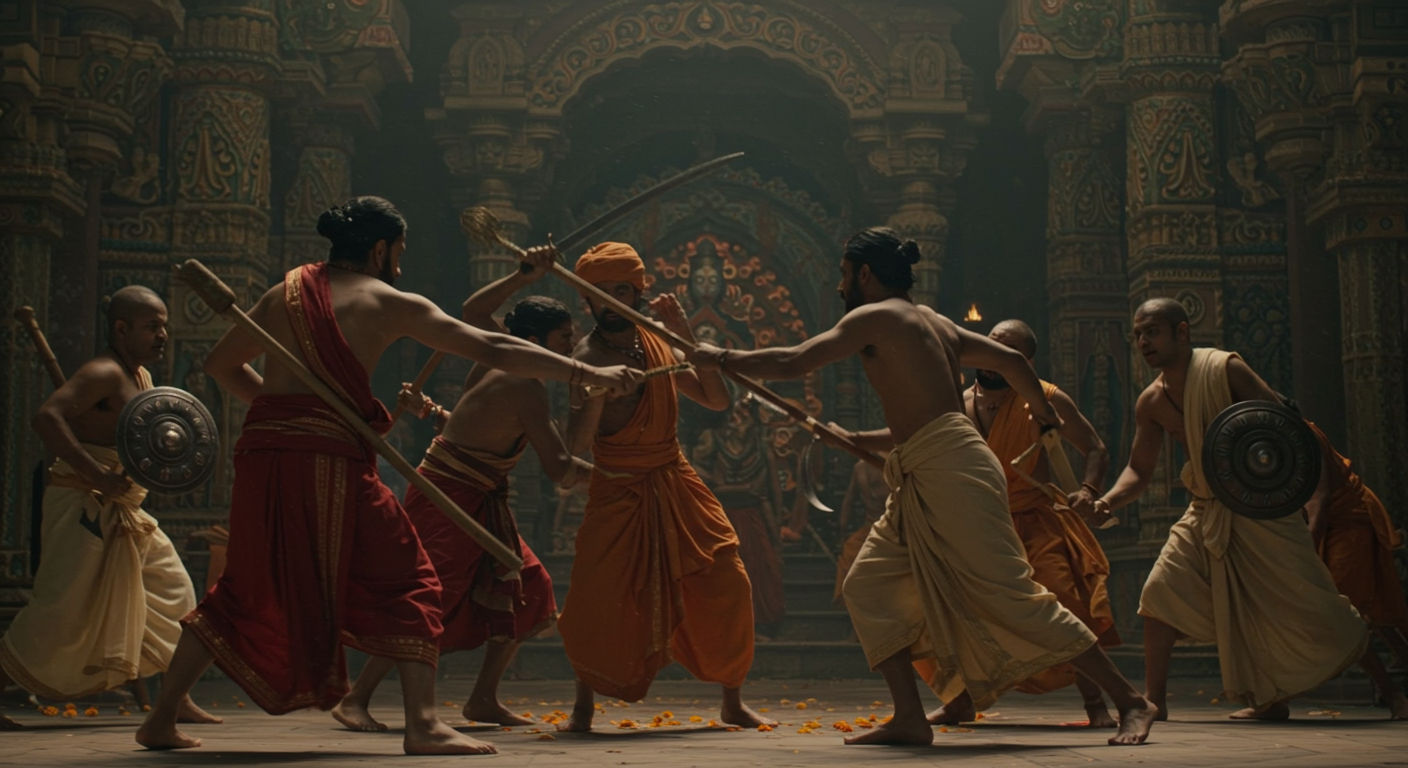
India’s Shame: When Those Who Preach Nationalism Assault Their Own Soldier
A disturbing news surfaced from Mirzapur, Uttar Pradesh, this week: a uniformed Indian Army soldier, humiliated and beaten by a mob of Kanwariyas, Hindutva‑aligned zealots reportedly linked to the...
A disturbing news surfaced from Mirzapur, Uttar Pradesh, this week: a uniformed Indian Army soldier, humiliated and beaten by a mob of Kanwariyas, Hindutva‑aligned zealots reportedly linked to the RSS. They kicked him, punched him, and dragged him through the streets while onlookers jeered. This was not in some remote jungle or disputed border; it happened in the heart of the Indian republic. And yet, the so‑called guardians of Indian democracy, the Modi government, the RSS‑driven establishment, and India’s raucous media, have maintained an eerie silence.
For years, New Delhi has built its global image on two pillars: that India is the “world’s largest democracy” and that its armed forces are beyond reproach, the sacred protectors of national honor. The assault in Mirzapur shatters both myths. Here we see not an isolated incident, but the natural outcome of a state that glorifies extremism while hollowing out its own institutions.
Let us not forget: The Kanwariya mobs are not apolitical pilgrims. They are often a vehicle for the aggressive, RSS‑inspired street power that has terrorized minorities, lynched Muslims, and enforced Hindutva diktats across northern India. Their rise is not accidental, it is cultivated. The ruling Bharatiya Janata Party (BJP) and its ideological mothership, the RSS, have normalized vigilante violence to the point that even a uniformed soldier can be reduced to prey.
What does this say about a country that lectures the world on security and sovereignty? What does it reveal about a government that cries foul about terrorism across the border while its own streets are ruled by mobs?
The soldier’s ordeal is more than a moment of shame; it is a symptom of India’s deeper disease. Under Narendra Modi, India has morphed into a state where ideological loyalty to Hindutva trumps respect for law, decency, or even the military it claims to worship. When mobs are given impunity to lynch minorities, why would they hesitate to attack anyone, soldier or civilian, who stands in their way?
And where is the outrage from India’s leadership? The same leaders who never miss an opportunity to slander Pakistan’s security policies suddenly lose their voice when their own armed forces are humiliated at home. Not a word of condemnation, not a single ministerial visit, not even a token promise of justice. The silence is deafening, and it exposes the hollowness of India’s chest‑thumping nationalism.
Contrast this with Pakistan. Despite decades of conflict, Pakistan has never normalized mob violence against its own soldiers. Our army, whatever criticisms one may level, is treated with dignity and defended against humiliation. There is a social contract in Pakistan, between the people and those who guard the borders, that remains intact. We do not see mobs in Lahore or Karachi dragging uniformed men through the streets while cameras roll and the state looks away.
India, by contrast, has weaponized its own population with toxic ideology. Instead of creating a disciplined citizenry, it has bred an army of RSS foot soldiers who believe their saffron flags place them above the law. This is the same India that lectures neighbors on “regional stability” while crushing Kashmir under a military boot, the same India that projects itself as a counterweight to China and Pakistan but cannot guarantee the safety of its own servicemen.
Let us be clear: this incident is not just an embarrassment for India; it is a warning sign of a state unraveling from within. A soldier attacked by those claiming to be patriots is the ultimate betrayal. It proves that Hindutva is not about love of country, it is about love of power, chaos, and supremacy, even at the cost of the very institutions that keep the state intact.
Pakistan must draw lessons from this, not in glee but in vigilance. Our resilience, our ability to hold our institutions together despite external aggression, remains our greatest strength. As India burns with its own contradictions, Pakistan must continue to project a different vision: a nation that values its soldiers, that protects its citizens regardless of faith, and that understands that true strength lies not in mobs but in unity.
The image of that soldier in Mirzapur, battered by the very people who claim to defend India’s soul, will haunt New Delhi’s boasts for years. It is a mirror India cannot bear to look into. And as the world watches, Pakistan stands steady, resilient, principled, and unafraid to call out a neighbor that has lost its moral compass.
Author