


Samsung’s Uneasy Truce: Pay Deal Closes One Door, But Many Remain Ajar for Management
POLICY WIRE — Seoul, South Korea — The murmurs have finally subsided, a hush descending over the sprawling, fiercely competitive South Korean tech landscape. After a lengthy, often fractious,...

POLICY WIRE — Seoul, South Korea — The murmurs have finally subsided, a hush descending over the sprawling, fiercely competitive South Korean tech landscape. After a lengthy, often fractious, skirmish that captured more attention than most boardroom maneuvers usually do, an approved pay deal for Samsung workers marks a moment. But it's hardly a victory lap, not for anyone really, least of all the executives in their polished towers contemplating what comes next.
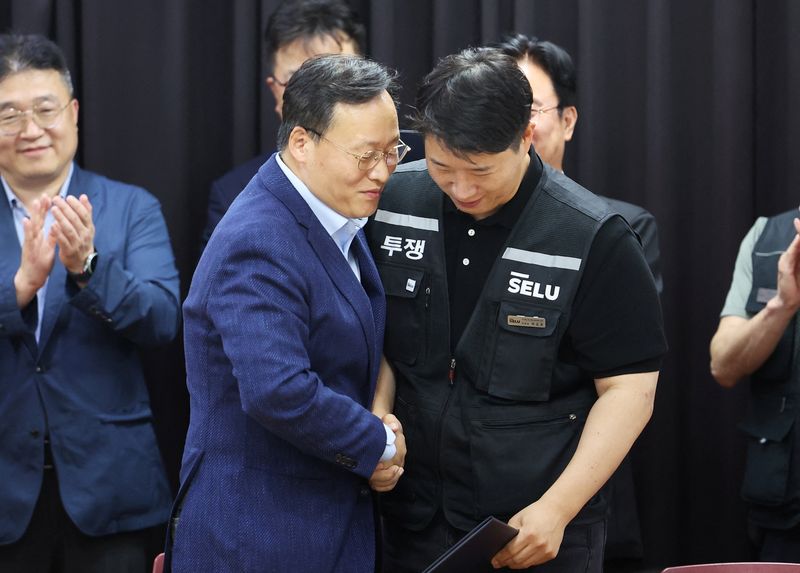
It's a truce, plain and simple—a weary handshake more than a jubilant celebration. The ink on the agreement is barely dry, confirming a modest increase, but anyone watching understands this particular battle didn't truly settle the war. Management, traditionally accustomed to a certain paternalistic command over its legions, now faces a shifting tide. Workers, emboldened by even a small concession, aren't prone to forgetting the strength they flexed. They've tasted collective action. And now they know what it means to actually move the needle, if only a fraction. [QUOTE_PLACEHOLDER]
The deal itself, reportedly granting an average increase of about 5.1% across various units, doesn't exactly rewrite the global economic playbook. Nor does it signal a radical departure from the firm's ingrained corporate culture. It's more of a pressure valve release. But because Samsung's heft is felt worldwide—from the silicon wafers fabricated in Gyeonggi-do to the handsets clutched in Karachi—even minor domestic tremors reverberate. One can't help but consider how these concessions, won hard, contrast with the employment realities for millions involved in the global electronics supply chain, particularly in parts of Asia where labor organization faces entirely different, often more severe, headwinds.
This isn't just about paychecks, is it? It's about the evolving social contract between giant corporations — and the people who make them run. Samsung Electronics, the crown jewel in a chaebol empire, has long prided itself on being a bulwark against organized labor within its walls. This approval—grudgingly granted, fiercely debated internally—signals an era's end, a crack in the carefully constructed façade. Management has navigating through a tricky negotiation for months, often under a harsh spotlight. But they're not out of the woods, not by a long shot.
Because while the immediate crisis averted a strike, it hasn't magically disappeared the “trying times ahead” as some corporate insiders have already been overheard muttering. Geopolitical tensions, an ongoing semiconductor arms race, and volatile consumer demand mean Samsung's balance sheets are already under immense pressure. Adding persistent domestic labor unrest to that mix? It's like trying to sail a supertanker through a typhoon while the crew debates dinner. There are simply too many variables, too many unknowns. One hard statistic worth remembering: South Korea's overall union membership rate stood at a mere 14.2% in 2022, according to the Ministry of Employment and Labor, a figure that highlights both the traditional resistance to unions and the slow, recent gains made by organized labor. That's low, globally speaking, but it represents incremental growth—growth that powerful companies like Samsung now must contend with.
And let's be frank, the lessons learned here won't be lost on Samsung's rivals, nor its myriad global partners. The fight for fair wages — and working conditions doesn't stop at Korea's borders. For instance, the economic paradox of burgeoning wealth alongside persistent inequality, as seen in places like Mumbai with its “new luxe enclaves,” serves as a grim echo of global capital's uneven spread. Labor issues are often dismissed as local matters, but when it's a giant like Samsung, every flicker can set off broader conversations.
📄 POLICY WIRE WHITEPAPER PUBLISHED: PAKISTAN'S NATIONAL SECURITY POLICY PRIORITIES
👉 READ BY CLICKING HEREThe real question for Samsung's leadership now isn't how to get past this pay deal, but how to re-envision its future. They've already made bold moves, massive multi-billion-dollar wagers on new technologies and expanding market share. But even the cleverest AI algorithms won't appease a disgruntled workforce.
What This Means
This settlement, while averting an immediate disruption, carries profound implications far beyond the immediate wage hike. Economically, Samsung faces increased operational costs and the ongoing pressure to maintain its razor-thin profit margins in a brutally competitive tech market. The precedent set—that even a formidable employer like Samsung can be compelled to negotiate under union pressure—could empower labor movements across South Korea's other industrial giants, potentially shifting national industrial relations toward a more union-friendly stance over the long term. This isn't just about money; it's about power distribution.
Politically, the South Korean government, which often navigates a delicate balance between powerful chaebols and the general populace, will be watching closely. A more active labor front could necessitate new legislative considerations concerning workers' rights and corporate responsibilities. For Samsung itself, management must now reconcile its legacy of unquestioned authority with the emerging reality of a more vocal, organized workforce. It isn't a simple “business as usual” scenario anymore. And this isn't just an internal South Korean affair either. For nations like Pakistan, with vast youth populations eyeing tech sector jobs or hoping to attract manufacturing, the optics of global corporations handling labor disputes—and the outcomes—offer crucial case studies. It influences perceptions of fair practice, potential investment attractiveness, and what industrial norms are becoming acceptable, even in high-tech sectors.
The resolution is temporary, a pause in a much larger narrative. Samsung, like all global behemoths, stands at a crossroads where the demands of capital, labor, and an ever-watchful public converge. The approved pay deal might offer a fleeting calm, but the undercurrents of discontent and changing power dynamics promise anything but smooth sailing ahead. The future for Samsung's management isn't just trying; it's potentially transformative.