


India’s Merciless Summer: When a Scorching Sun Demands a Paycheck to Stay Home
POLICY WIRE — New Delhi, India — The mercury climbs, day after suffocating day, baking the asphalt until it shimmers. For millions hustling on India’s sun-baked streets, that escalating...

POLICY WIRE — New Delhi, India — The mercury climbs, day after suffocating day, baking the asphalt until it shimmers. For millions hustling on India’s sun-baked streets, that escalating thermometer isn’t just a weather report; it’s an existential threat. They’re caught in a brutal, annual ritual: risk collapsing from heatstroke, or forfeit the day’s meager earnings, pushing already-stretched households further to the brink.
It’s a grim calculus, one played out daily by rickshaw pullers, construction laborers, — and countless street vendors. Their work environments offer no air conditioning, no relief from the sweltering intensity. But an unlikely player — the finance sector — has stepped into this breach, offering a starkly modern, if somewhat clinical, answer to an ancient, increasingly urgent problem: parametric insurance that pays workers to stay home when the heat gets too nasty.
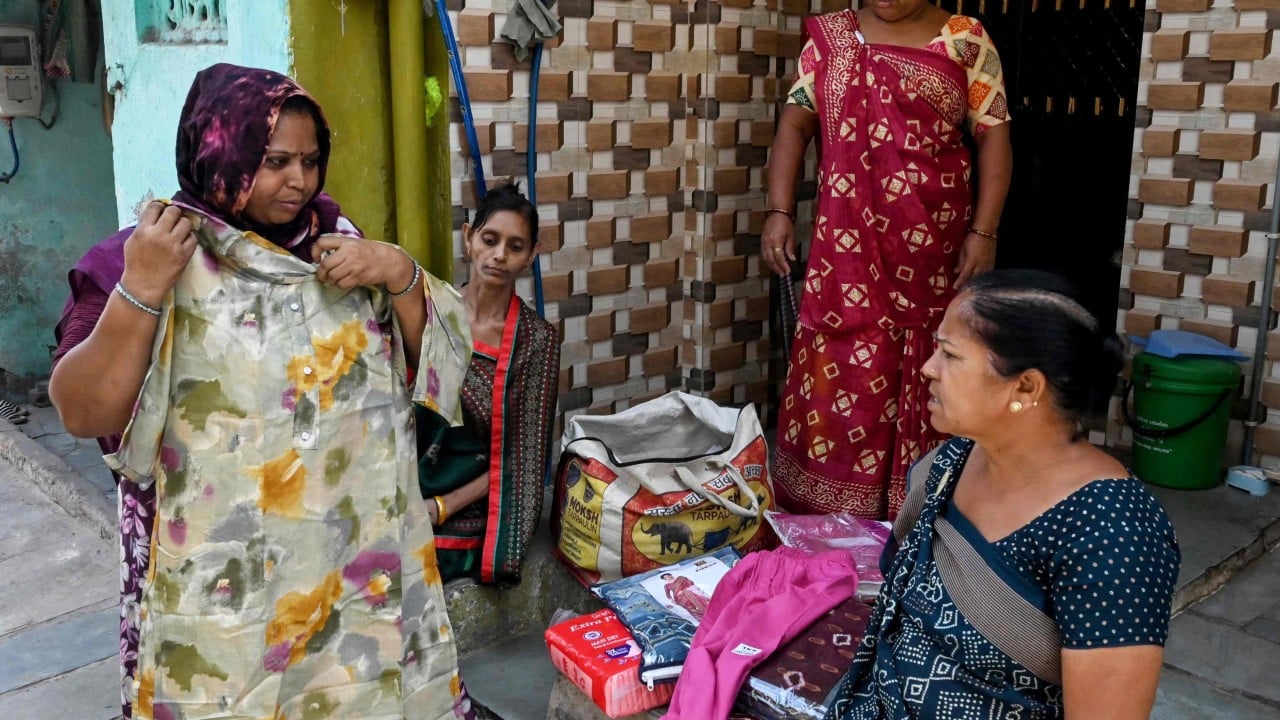
Take Lata Solanki, a 42-year-old clothes seller. She’s a face in a crowd of informal workers—a segment that makes up around 90% of India’s workforce. Selling door-to-door, her earnings are as volatile as the monsoon season. When temperatures spike to levels that could melt determination (and worse, health), she used to face a zero-sum game: her health against her daily bread. Now, thanks to this innovative — and a little dystopian, some might say — scheme, if the thermometers in her locale hit a predetermined, unholy threshold for two consecutive days (say, 43.72 degrees Celsius, 110 degrees Fahrenheit, as in one pilot program), an automatic payout lands in her account. No claims, no lengthy assessments; just a financial cushion.
But this isn’t simply a feel-good story about an insurance product. This is about policy—about a nation scrambling for solutions in the face of an accelerating climate crisis. It’s an acknowledgement that the old ways aren’t cutting it. It means admitting that entire swathes of the economy are now directly vulnerable, that the environment isn’t just an external factor; it’s hammering productivity and punishing the poor. Pravin Gupta, Director of India’s National Climate Resilience Taskforce, doesn’t mince words. “This isn’t charity; it’s economic common sense,” he recently quipped. “We’re talking about maintaining livelihoods, ensuring some measure of stability for the very people who power our street economies. It’s a pragmatic, responsive measure in an increasingly unforgiving climate.”
Yet, for all its ingenuity, the scheme itself spotlights the precariousness it seeks to alleviate. And that’s where the questions really start boiling over. Meena Singh, General Secretary of the All India Informal Workers’ Union, is appreciative, yes, but not entirely convinced. “Sure, it offers a sliver of relief. Nobody’s denying that. But are we really settling for insurance payouts as the answer to systemic vulnerability? Shouldn’t the conversation be about better infrastructure, decent cooling centers, real labor protections, not just payouts for forced inaction?” It’s a valid point. You’re effectively institutionalizing ‘climate furlough.’
Across the border, nations like Pakistan grapple with identical, devastating heatwaves, their informal sectors facing precisely the same impossible choices. The plight of Karachi’s daily wage earners, for instance, mirror Solanki’s struggle. This isn’t just an Indian problem; it’s a regional catastrophe unfolding in slow motion, demanding novel — if not always ideal — solutions. A 2021 report by the World Bank highlighted that heat-related productivity losses already account for up to 3-4% of annual GDP in some South Asian economies. These schemes, then, aren’t preventative; they’re damage control.
What This Means
The rise of parametric insurance against extreme weather events signals a profound shift in how governments and financial institutions are grappling with climate change. It reflects an acknowledgement that mitigation alone isn’t enough; adaptation, however stark, is necessary. From an economic standpoint, it represents an attempt to inject some stability into volatile informal sectors, preventing total economic collapse for millions. It’s less about building climate-proof cities — and more about providing a minimal buffer against the direct impacts. Politically, it allows leaders to claim they’re ‘doing something’—and something concrete at that—in the face of a crisis many are ill-equipped to handle on a larger scale. Because let’s be frank, massive infrastructural overhauls aren’t happening overnight. However, critics aren’t wrong to suggest that while these policies can prevent immediate starvation, they don’t address the underlying vulnerabilities or challenge the political economy that disproportionately exposes the poor to environmental harms. It’s a band-aid, perhaps, but sometimes a band-aid is all you’ve got on a gaping wound.
This approach could well become a template for other climate-vulnerable regions in the Muslim world — and beyond. Places like Egypt, the Arabian Peninsula, — and even parts of Central Asia regularly face blistering temperatures. If India can iron out the kinks—questions about equitable access, funding, and the exact trigger thresholds—then this isn’t just a quirky local initiative. It’s a blueprint, a reluctantly adopted strategy for a world learning to live with, and manage the immediate consequences of, its changing climate. A financial firewall, if you will, against the rising heat. Not ideal, no. But in an increasingly hot world, what truly is?