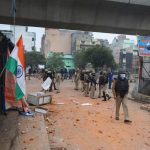



India’s Humanitarian Crisis: The Scourge of Unchecked Mob Violence
Mob violence in India has escalated into a grave humanitarian crisis, inflicting profound suffering on countless individuals. What makes this issue even more alarming is the Indian government’s...

Mob violence in India has escalated into a grave humanitarian crisis, inflicting profound suffering on countless individuals. What makes this issue even more alarming is the Indian government’s apparent unwillingness or inability to curb this rising tide of brutality. Despite the frequency and severity of these incidents, authorities have consistently failed to take effective action, raising critical questions about the state’s commitment to safeguarding its citizens. The situation has not only resulted in countless lives lost but has also fueled communal hatred and deepened religious and ethnic divisions, exposing the dangerous fragility of India’s social fabric.
One of the most glaring manifestations of this violence is the rise of so-called “cow vigilantes.” These self-proclaimed protectors of Hindu religious sentiments have carried out brutal attacks on individuals, mostly Muslims and Dalits, under the pretext of protecting cows from slaughter. In Haryana, for example, a Muslim migrant worker named Sabir Malik was beaten to death by a mob merely on suspicion of consuming beef. Subsequent laboratory tests revealed that he had not eaten beef at all, underscoring the sheer baselessness of the attack. The impunity enjoyed by these vigilante groups is made worse by their active presence on social media, where they glorify their crimes and solicit funds for future attacks. Despite clear evidence of their activities, law enforcement agencies have failed to take decisive action against them. The Indian government, rather than curbing such extremist groups, has largely turned a blind eye, further emboldening these violent mobs.
The communal undertones of mob violence are not limited to incidents targeting Muslims. The tragic case of Aryan Mishra, a 19-year-old Hindu teenager, illustrates how mob violence has spiraled beyond its original communal motivations. Mishra was fatally shot by cow vigilantes who mistakenly identified him as Muslim, a chilling reminder of how deep religious profiling and mob mentality run in Indian society. Such cases reveal the extent to which these radical groups have taken control of law and order, dictating justice on the streets while the government remains a silent spectator. These incidents are no longer about religious or ideological battles; they reflect a growing culture of lawlessness that threatens the very foundation of India’s democracy.
Ethnic tensions have also fueled widespread mob violence, as seen in Manipur, a northeastern state where clashes between the majority Meitei community and the minority Kuki-Zo tribes have turned into an ongoing humanitarian disaster. More than 250 people have been killed, and at least 60,000 have been displaced in a conflict that has torn the state into separate ethnic zones. Displaced individuals, mostly from minority groups, are now living in relief camps under dire conditions, with little intervention from the central government. The lack of urgency in addressing the crisis has led to further instability, proving once again that the government’s inaction has allowed mob violence to fester and spread. Instead of fostering reconciliation or taking steps to de-escalate tensions, authorities have let the violence run its course, hoping the situation will resolve itself. Such negligence only serves to deepen social divisions and reinforce the belief that certain groups are expendable.
The failure of the Indian government to protect its minorities has also led to a growing trend of segregation. Many Muslims in urban areas have begun moving to self-imposed ghettos to escape escalating threats. In New Delhi, for instance, Muslim families are choosing to relocate to areas like Loni and Jamia Nagar, where they feel safer among their own community. While this provides a temporary sense of security, it ultimately exacerbates the problem, further entrenching religious divisions and isolating communities from one another. A government that truly values inclusivity and national unity would take concrete steps to address these concerns, but the ruling Bharatiya Janata Party (BJP) has instead fueled religious polarization through inflammatory rhetoric and discriminatory policies.
In response to growing criticism, the Indian government introduced the Bharatiya Nyaya Sanhita (BNS) Bill in August 2023, which proposes stricter punishments for mob lynching, including life imprisonment and the death penalty in severe cases. While this might appear to be a step in the right direction, the question remains: will it actually be implemented? The reality is that India already has laws against mob violence, yet they are rarely enforced. The reason is not a lack of legal provisions but rather the absence of political will. Time and again, perpetrators of mob violence have walked free due to weak prosecutions and political interference. Unless the government takes meaningful action and ensures accountability at all levels, new legislation will do little to change the grim reality on the ground.
📄 POLICY WIRE WHITEPAPER PUBLISHED: PAKISTAN'S NATIONAL SECURITY POLICY PRIORITIES
👉 READ BY CLICKING HEREThe international community has started taking notice of India’s deteriorating human rights situation. The U.S. Commission on International Religious Freedom has openly criticized the BJP’s handling of minority issues, even recommending targeted sanctions against India’s external spy agency for alleged involvement in assassination plots against Sikh separatists abroad. Such reports highlight a concerning trend: India’s descent into a state where religious minorities and marginalized communities no longer feel safe. The ruling party’s silence, and at times indirect support for extremist elements, has severely damaged India’s global reputation as a secular democracy. If the government continues down this path, it risks further international condemnation, economic consequences, and worsening internal unrest.
The normalization of mob violence in India is a direct result of state failure. A nation that once prided itself on being the world’s largest democracy is now struggling to protect its own people from the growing threat of lawless mobs. The government’s unwillingness to take a firm stance against these crimes suggests that it is either complicit in the violence or fears alienating its hardline supporters. If India is to reclaim its image as a diverse and democratic nation, it must take immediate and effective action against mob violence. This means holding perpetrators accountable, reforming law enforcement agencies, addressing the root causes of communal and ethnic tensions, and fostering a political climate that does not thrive on religious polarization.
For far too long, victims of mob violence in India have been denied justice. They have watched as their attackers walk free, as the government issues meaningless statements, and as their communities continue to suffer. But a functioning democracy cannot allow mobs to dictate justice. The Indian state must decide whether it will continue to be a bystander or finally take responsibility for protecting its citizens. Until it does, the cycle of violence will persist, leaving behind a trail of human suffering, fractured communities, and a nation teetering on the edge of chaos.
Author