


Billion-Dollar Brawls: The Untouchable Price Tag of Modern Football Talent
POLICY WIRE — Manchester, UK — In an era where football club ownership sprawls across continents, often backed by sovereign wealth funds and corporate titans, the price of an athlete...

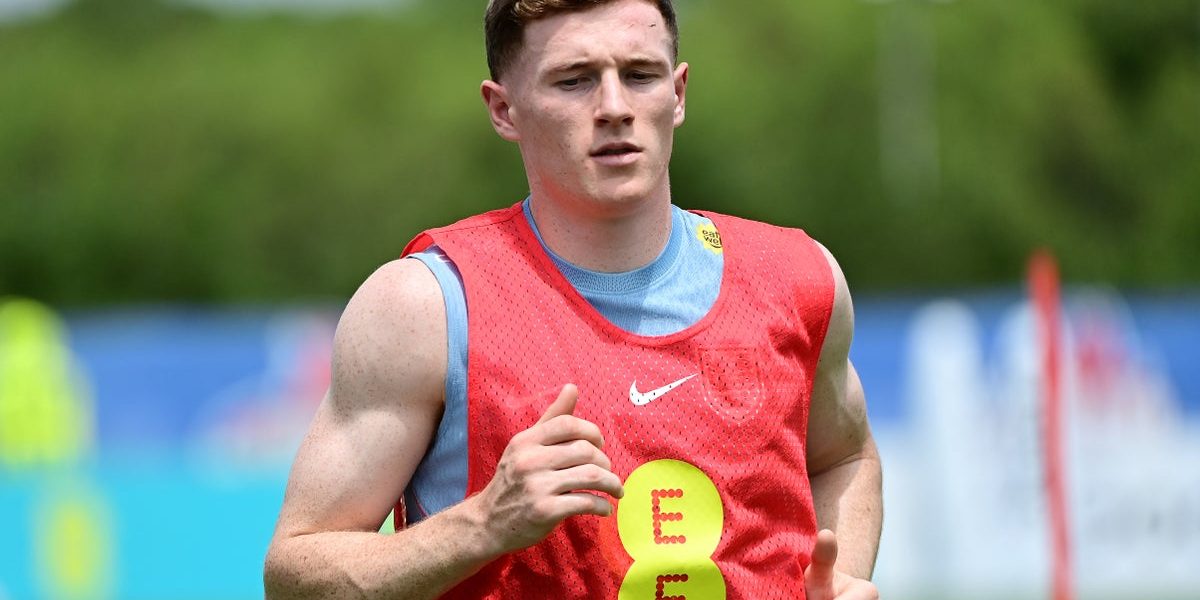
POLICY WIRE — Manchester, UK — In an era where football club ownership sprawls across continents, often backed by sovereign wealth funds and corporate titans, the price of an athlete has ceased to be a simple reflection of skill. It’s a declaration, a flex of financial muscle, sometimes even a geopolitical maneuver. So, when Nottingham Forest gave a flat “no thank you” to Manchester City’s opening overture for Elliot Anderson, it wasn’t just about a player; it was about drawing a very expensive line in the sand.
City, the reigning champions, a club that has basically rewritten the rulebook on domestic dominance (and not a little European swagger, truth be told), reportedly put in a bid for the promising England international. Their offer, while substantial, was seemingly nowhere near what Forest — a club that’s had its own brushes with the Premier League’s financial fair play intricacies — believes 23-year-old Anderson is worth. They’re talking north of £100 million, maybe even significantly north. Which, frankly, would’ve bought a small country’s defense budget not too long ago.
It’s a numbers game now, pure — and simple. The top tier of European football, particularly the English Premier League, operates on a financial plane that beggars belief for most casual observers. Players aren’t just footballers; they’re commodities, brands, — and sometimes, political assets. City’s hunt for Anderson is predicated on a couple of very large, very obvious holes appearing in their squad. Bernardo Silva, the mercurial Portuguese midfielder, has already packed his bags, off to pastures new. And there are whispers, persistent ones, about Rodri considering his options after the World Cup — with Real Madrid always lurking — not to mention uncertainties surrounding Nico Gonzalez. Suddenly, the deep well of City’s midfield talent looks a little less bottomless.
But the market, oh, the market. It’s inflated, yes, but also utterly recalibrated. Three different midfielders have commanded nine-figure sums in recent years from other Premier League big hitters alone. Chelsea splashed the cash for Enzo Fernandez, then went and broke their own British transfer record for Moises Caicedo, while Arsenal stumped up a cool £105 million for Declan Rice. That’s just how it’s. It makes City’s own club-record signing of Jack Grealish for £100 million in 2021 look almost quaint, doesn’t it? And speaking of spending, City’s dropped an estimated £430 million on new talent over just the last three transfer windows, according to Transfermarkt data. Money doesn’t just talk here; it roars, echoing around the globe.
This financial arms race isn’t lost on clubs like Forest. They know their worth, — and with Anderson tied down for another three years, they hold a strong hand. “Our valuation reflects the sheer impact Elliot has had here, his development trajectory, and quite frankly, his indispensability to our ambitions,” stated a spokesperson for Nottingham Forest, preferring anonymity given the sensitive nature of ongoing negotiations. “We aren’t in the business of just handing out our best talent, especially not for anything less than what the market dictates for a player of his calibre.” And because of that market, because of how clubs like City can throw around sums that beggar belief, smaller teams know they’ve to maximize their returns, every single time.
📄 POLICY WIRE WHITEPAPER PUBLISHED: PAKISTAN'S NATIONAL SECURITY POLICY PRIORITIES
👉 READ BY CLICKING HEREThese transfer sagas, with their eye-watering sums, resonate far beyond the terraces of English stadiums. For clubs owned by entities like Abu Dhabi’s City Football Group, this isn’t merely about winning trophies; it’s a component of soft power. It’s about global brand presence, cultural influence, and connecting with immense fan bases in burgeoning markets, including critical regions across South Asia. Pakistan, for instance, boasts a fervent football following, where the Premier League’s biggest clashes can pull in millions of viewers, fostering a deep loyalty to clubs that might seem culturally distant at first glance. These aren’t just spectators; they’re consumers, brand ambassadors, and in a very real sense, political conduits.
“Look, when you’ve got clubs with budgets exceeding the GDPs of some developing nations, the idea of �ir play’ gets pretty hazy,” quipped Dr. Azar Ali Khan, a sports economist with the Lahore School of Economics. “The players become global assets, their jerseys sold from Manchester to Multan. This isn’t just sport; it’s international relations by other means.” He’s not wrong. Every transfer, every goal, every victory — it’s all part of a larger narrative, a narrative often woven by unseen hands.
What This Means
The saga around Elliot Anderson isn’t an anomaly; it’s a stark reflection of the Premier League’s financial behemoth status, heavily fueled by sovereign wealth and global investment. For policymakers, especially in the UK and Europe, it raises uncomfortable questions about market distortion, the long-term sustainability of smaller clubs, and the potential for sports washing. The sheer capital deployed by state-backed clubs means they can vacuum up talent and, by extension, trophies, creating an almost unbreachable oligarchy at the top of the football pyramid. This economic might impacts everything from youth development pathways — why bother fostering your own if you can just buy the finished product for £100m? — to the competitive balance of the sport. It’s a game where the biggest spenders often win, not just on the pitch, but in the boardroom and the global perception battle. It’s a brutal arithmetic of talent valuation, but one that continues to reshape the landscape of global geopolitics through sport. It’s also an intriguing look at how such astronomical spending influences other sectors, particularly in regions keen to mirror the growth and allure of such a commercially dominant sport.