


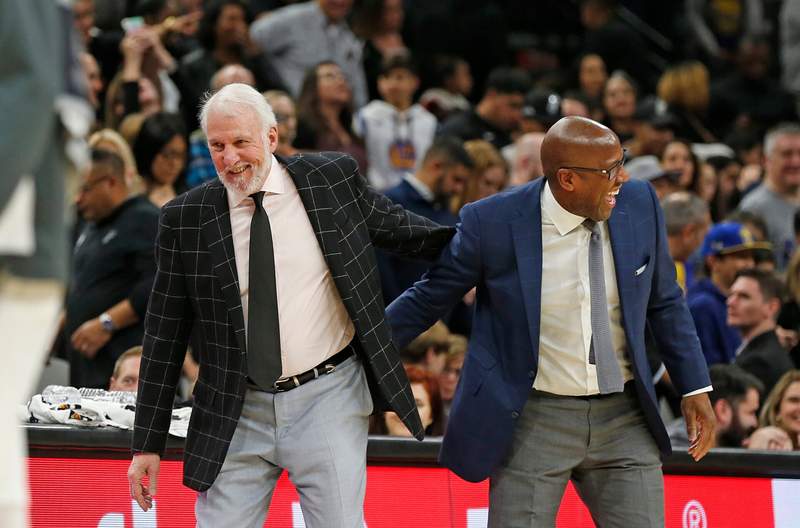
Hoops, Hearts, and Hardball: Why ‘Coach Pop’s’ Advice Isn’t Free for the Knicks
POLICY WIRE — New York, USA — Forget those feel-good stories about mentor and protégé, handshakes and shared wisdom. The professional athletic arena, much like the geopolitical one, operates on a...

POLICY WIRE — New York, USA — Forget those feel-good stories about mentor and protégé, handshakes and shared wisdom. The professional athletic arena, much like the geopolitical one, operates on a colder, harder logic when the ultimate prize is on the line. What’s often overlooked in the hoopla surrounding the NBA Finals is the brutal calculus of loyalty versus victory—a calculation that Knicks head coach Mike Brown apparently understands down to his bone marrow, even when it comes to a figure as legendary as Gregg Popovich.
It’s a bizarre ballet, really, watching a former apprentice step into the same high-stakes octagon as his old master. People often assume that history — and respect will soften the edges. Not so much. Because when championships are on the table, shared pasts just become extra fodder for mind games, not avenues for collaborative strategizing. And Brown knows it.
Asked whether he’d been ringing up San Antonio Spurs patriarch Gregg Popovich for some sagely advice ahead of the NBA Finals, Brown didn’t hesitate. He shot it down with a candor you don’t always hear from public figures. His reply was laced with a kind of seasoned cynicism—a coach’s wit, you might call it—that cuts right through any lingering sentimental mist. “He’s savvy, he’s very competitive, and If I reached out to him and asked him for some advice, he’d give me some BS that worked against us,” Brown told SNY Knicks, without even a flicker of regret. “So, no. I can’t reach out to him.”
He even threw in an amusing parenthetical about getting chastised by his mom for coarse language, just to drive home the point that he’s a human being talking real talk, not some corporate mouthpiece. But the core message is stark: Popovich, for all his known affections for Brown, isn’t about to lend a competitive advantage to anyone aiming to snatch a championship away from the legacy he so painstakingly built. This ain’t Sunday brunch; this is the Finals, buddy.
But how do we know Popovich, an individual celebrated for his fierce loyalty, wouldn’t just smile — and play along? Well, sources close to the Spurs dynasty report Popovich, in a private moment reflecting on the upcoming series, purportedly quipped, “Advice is for those who haven’t learned the lesson yet, and Mike learned all his lessons right here in San Antonio. Whether they were good ones or bad ones, he’ll find out.” That’s Pop for you: a nod to the past, a competitive jab for the present.
This dynamic isn’t just about basketball. It’s a mirror, albeit a tiny one, to larger, thornier issues of global competition — and former allegiances. Think about nations that once operated under the shadow of a dominant power—a mentor, if you will. Pakistan, for instance, once a part of British India, has forged its own formidable path, even while sharing a complex, often fraught, history with its neighbors. The intense cricket rivalry between Pakistan and India, for instance, sometimes seems to contain echoes of these deeper, post-colonial competitive narratives—a refusal to concede even an inch to a former “elder.” Or consider the ongoing assertion of independent foreign policy by nations across the Muslim world, often pushing back against or renegotiating relationships with historical Western allies. The apprentice might respect the master, but when it’s time to win, that respect can morph into an even sharper determination to prove oneself. Brown’s situation feels a lot like that: he reveres Pop, but his current mission is clear.
Brown’s tenure as an assistant under Popovich from 2000 to 2003 was fruitful, culminating in a 2003 NBA championship. He learned. He grew. He launched his own coaching career. Now, that shared history makes the current contest even more captivating. The Knicks, for their part, have had a strong run, and a recent report by the National Sports Economic Association estimates the NBA Finals can generate upwards of $100 million in local economic activity for host cities, a figure that amplifies the stakes for everyone involved, from players to coaching staffs.
📄 POLICY WIRE WHITEPAPER PUBLISHED: PAKISTAN'S NATIONAL SECURITY POLICY PRIORITIES
👉 READ BY CLICKING HEREWhat This Means
This little anecdote about Brown and Popovich isn’t just sports page fluff; it’s a case study in human nature and professional conduct at the highest levels. It speaks volumes about the cutthroat environment of elite sports, yes, but also about similar power dynamics in boardrooms, government, and international relations. You don’t ask your direct competitor for a cheat sheet, not when billions in branding, legacy, and local revenue—see Knicks’ Courtside Cohorts: The Unseen Economic Engine of Elite Athlete Branding for more on that—are hanging in the balance. It’s a harsh truth that old loyalties often evaporate when success is quantifiable in championships or market share. Brown’s pragmatic outlook reflects the savvy required not just to win games, but to navigate the larger world where self-interest frequently trumps sentiment. Because, frankly, the lines of deference blur pretty quickly when everyone’s scrambling for the same pie. It signals a hard-nosed, focused approach that suggests Brown’s Knicks aren’t playing for participation trophies, they’re playing to win.
It also reveals something about the strength of their relationship. Had Brown even *considered* calling Popovich, it would suggest a certain naiveté, or perhaps a lingering reliance that simply doesn’t cut it in the big leagues. His direct refusal shows he’s not only stepped out of Popovich’s shadow, but he’s ready to stand directly in his light, and try to extinguish it. This isn’t just about coaching tactics; it’s about claiming full ownership of his own journey, — and his team’s destiny.
But the undercurrent of respect remains, just buried beneath the competitive froth. This isn’t betrayal; it’s professional maturity. Brown respects Popovich enough to know precisely how he’d operate. It’s an almost perverse form of homage—knowing your former master’s moves so well you can predict his treachery, even in a friendly form. Like many political struggles where alliances shift and historical ties strain under new pressures—imagine the delicate diplomatic dance between former colonial powers and their once-dependent states—this coach-mentor duel is a microcosm of ambition clashing with legacy. You’re playing for the title, after all; there are no friends on a battlefield. And sometimes, you need to read between the lines, recognizing that even an old friend might not have your team’s best interests at heart when another trophy is on the line. It’s a fundamental lesson in navigating complex geopolitical landscapes, too, where every favor might carry an unseen price tag.