

India’s Hindutva Extremists Storm Mosque in Daund Taluka
The shocking incident in Daund Taluka, where over 300 alleged Hindutva extremists launched a coordinated attack on a mosque, is yet another chilling reminder of the deepening crisis of intolerance in...

The shocking incident in Daund Taluka, where over 300 alleged Hindutva extremists launched a coordinated attack on a mosque, is yet another chilling reminder of the deepening crisis of intolerance in India. The mob, driven by anti-Muslim hatred, vandalized the sacred space, hurled stones, and hoisted a saffron flag in an act meant to intimidate and humiliate the Muslim community. Far from being an isolated event, this episode is part of a systematic pattern of Hindutva-driven violence that has gripped India in recent years.
The desecration of a mosque is not just an attack on a building, it is an assault on identity, dignity, and faith. Mosques, like all religious sanctuaries, are places of peace, community, and spirituality. By storming one and replacing its sanctity with a saffron flag, extremists sought to symbolically erase the Muslim presence and impose the ideology of majoritarian supremacy. For Indian Muslims, who already endure daily discrimination, such acts reinforce the grim reality that their safety, rights, and freedom of worship are increasingly under siege.
India today is witnessing a disturbing normalization of hate. From lynchings to demolitions of Muslim homes and mosques, from vigilante violence to open calls for genocide, the wave of Hindutva extremism has grown bolder and more coordinated. The fact that over 300 people participated in the Daund attack demonstrates that these are not fringe acts, they are mainstream, nurtured by an environment of impunity and fueled by a political discourse that thrives on division.
The self-proclaimed “world’s largest democracy” continues to project an image of inclusivity abroad, but at home its minorities are experiencing an erosion of their very existence. The secular promise enshrined in India’s constitution now stands as an empty slogan, overshadowed by the rise of a nationalism that equates loyalty to the state with adherence to a single religion and ideology. When mosques are attacked in broad daylight and culprits are either ignored or celebrated, the message to Muslims is unmistakable: their rights as equal citizens are a façade.
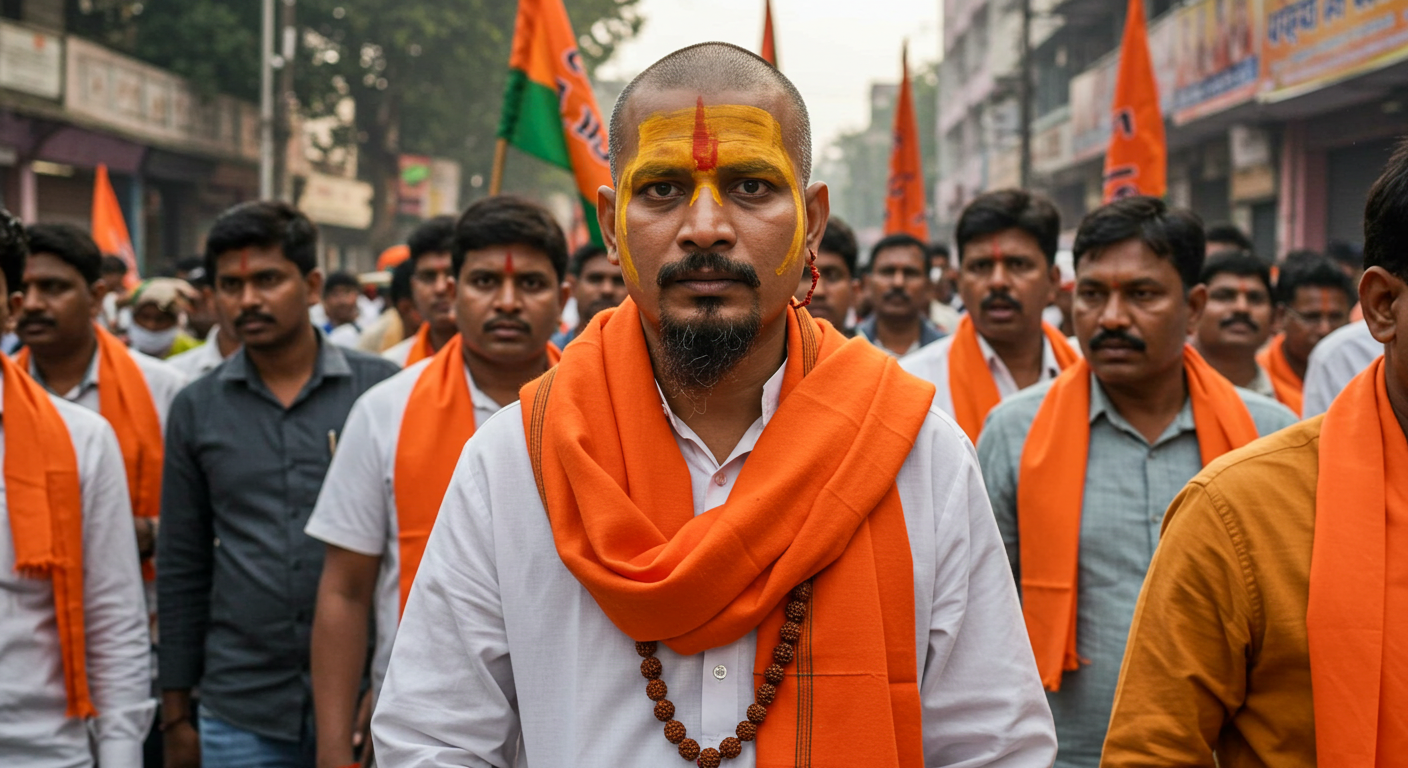
The symbolism of the saffron flag in this attack cannot be dismissed as mere theatrics. In the hands of Hindutva extremists, saffron has been transformed into a banner of exclusion and aggression. Placing it atop a desecrated mosque was a declaration of ownership, a statement that the Muslim identity has no legitimate space in India’s public life. This perverse use of symbolism does more than wound communities, it legitimizes hate as the language of power.
The human impact of such acts is devastating. Families in Daund Taluka now live in fear, their children traumatized by the sight of mobs desecrating their place of worship. Women and elders are left vulnerable, wondering whether the state will ever protect them or whether their very survival depends on enduring silence. The psychological scars of humiliation and insecurity are lasting, and they erode the possibility of coexistence in a society once celebrated for its diversity.
The crisis is not confined to Daund Taluka. Across India, a pattern has emerged that reveals the true face of the Hindutva project. Hate speeches are made openly without consequence, mobs attack with impunity, and state machinery often looks away or worse, participates indirectly by targeting victims instead of perpetrators. This alignment of street violence with political rhetoric represents a dangerous fusion of ideology and power that threatens to transform India into a state where pluralism is no longer tolerated.
What makes this crisis more alarming is the silence of India’s institutions. Courts that should act as guardians of justice, police that should safeguard all citizens, and leaders who should stand for equality too often, they remain mute spectators. This silence is not neutral; it emboldens the aggressors and deepens the despair of minorities. When the guardians of democracy abandon their role, the entire system risks collapse into authoritarian rule disguised as majority will.
The Daund Taluka mosque attack is, therefore, more than a local law-and-order issue. It is a symptom of the ideological transformation gripping India. The rise of Hindutva extremism is redefining the country’s identity, not around democracy and secularism, but around exclusion, hate, and majoritarian dominance. Each act of violence sends a message that Muslims are unwelcome in the very land their forefathers helped build and shape.
History teaches that when hate is allowed to flourish unchecked, it does not remain contained. The atmosphere of impunity surrounding such incidents risks igniting larger communal conflicts, with devastating consequences for India’s internal stability and global image. Already, India’s claims of being a tolerant democracy are ringing hollow on the world stage, as the reality of rising extremism becomes impossible to hide.
The storming of the mosque in Daund Taluka is not simply an attack on a community, it is an attack on the idea of India itself. If the nation continues to allow Hindutva mobs to dictate its social and political order, it risks losing the pluralism that once defined it. The victims are not just Muslims but the very principles of justice, coexistence, and equality that India claims to uphold.
In the end, the saffron flag hoisted over a vandalized mosque is a symbol of India’s deepening descent into hate. It marks not only the humiliation of a community but the unraveling of a society. Unless confronted, Hindutva extremism will continue to corrode India’s moral fabric, turning it from a democracy into a project of exclusion. The tragedy of Daund Taluka is a reminder that hate, once unleashed, is difficult to contain and that the cost is borne not only by the targeted community but by the nation as a whole.
Author