

India’s Escalation Demands a Strong Pakistan’s Response
South Asia has long been a region where hopes for peace wrestle daily with the shadows of hostility. For years, Pakistan has shown patience and responsibility in the face of growing Indian...

South Asia has long been a region where hopes for peace wrestle daily with the shadows of hostility. For years, Pakistan has shown patience and responsibility in the face of growing Indian provocations. But today, India’s escalating pattern of aggression, from false blame games to threats against the Indus Waters Treaty, border closure rhetoric, and military posturing, leaves no room for illusions. India is laying the groundwork for open conflict, and Pakistan must respond with unwavering resolve.
It began, as it often does, with baseless allegations and media hysteria. Every internal failure within India, whether political unrest, economic downturns, or security lapses, was quickly blamed on Pakistan. Without evidence, without investigation, India’s media became a weapon of psychological warfare, poisoning the minds of millions and cultivating hatred. Pakistan, despite this barrage of misinformation, continued to call for peace and dialogue.
But blame games were only the first step. India then escalated its threats towards the Indus Waters Treaty (IWT), a historic agreement that has preserved peace over water resources for more than six decades. The Treaty, brokered by the World Bank, is not just a legal framework; it is a lifeline for Pakistan’s agricultural economy and the sustenance of 240 million citizens. Yet India, driven by arrogance and aggression, openly threatened to “reconsider” or “review” the Treaty, signaling an intention to use water as a weapon of war. This reckless posturing was a direct assault on Pakistan’s right to survival.
As if that were not enough, India began floating the idea of closing borders, suspending trade, and cutting off air links. Civilian cooperation, people-to-people contact, and economic bridges were deliberately targeted. India began imposing restrictions on Pakistani flights, closing access to Indian airbases for Pakistani aircraft, and even deploying missile batteries closer to the border. The entire diplomatic fabric painstakingly woven over decades was torn apart by India’s insatiable appetite for hostility.
Now, with the latest move to block river water, a clear violation of the Indus Waters Treaty and international law, India has crossed the final line. This is not diplomacy. This is war by other means.
Weaponizing water is an act of ecological and economic terrorism. It is an attack not only on Pakistan’s fields and farms but on its very right to exist. Depriving a nation of its water is a tactic of medieval siege warfare, updated for the modern age. Every dam India builds in violation of the Treaty, every cubic meter of water withheld, is an act of war against the people of Pakistan.
Under the Geneva Conventions, under the UN Charter, and under basic human morality, such actions are criminal. They are hostile. They are deliberate provocations designed to destabilize Pakistan internally and collapse it economically. India is not acting like a neighbor, it is acting like an enemy determined to subjugate Pakistan through starvation and thirst.
Pakistan has been patient, but patience cannot be infinite.
Let’s recognize the pattern clearly: first media blame, then economic strangulation, then isolation efforts, now environmental warfare. The escalation is not accidental. It is calculated. It is systematic. And it is dangerous.
Pakistan call upon the United Nations, the World Bank, the Organization of Islamic Cooperation (OIC), and all global powers to take urgent notice. If India is not restrained, the region will plunge into a catastrophe of unimaginable proportions. Water wars will replace peace treaties. Food insecurity will replace regional cooperation. Nuclear neighbors will stand on the edge of conflict.
But if the world fails to act, Pakistan will.
We reserve the right to respond politically, diplomatically, and if necessary, strategically to defend our national interests. Water is life. It is not a favor granted by India; it is a right under international agreements and natural law. Attempts to choke Pakistan’s rivers will be seen as acts of naked aggression and we will not sit idly by.
Pakistan is a nation forged in sacrifice. We do not seek war, but we are not afraid of it. Our armed forces stand ready. Our people are united. Our leadership is alert. Pakistan has survived decades of challenges and conspiracies, we will survive this one too, with honor and strength.
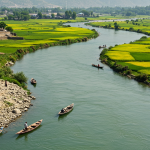
The rivers that flow through our valleys and plains carry more than just water, they carry our hopes, our dreams, our future. We will defend them. We will protect them. We will not allow a hostile neighbor to turn our lifelines into weapons of mass destruction.
India must choose: return to the path of peace, or face the consequences of reckless hostility. Pakistan will never surrender its sovereignty. Pakistan will never accept water terrorism. And Pakistan will never be brought to its knees. We stand ready, in unity and in strength, for whatever comes next.
Author