
When an Athlete’s ACL Snaps, Does a Nation’s Policy Vision Falter?
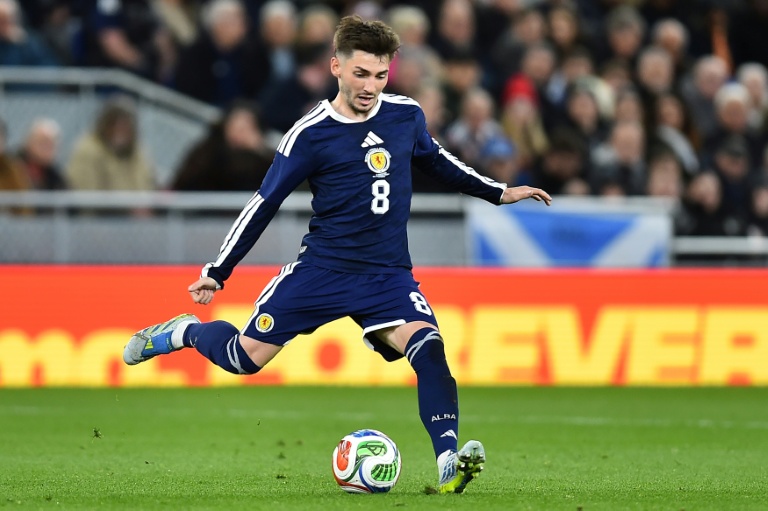
POLICY WIRE — Edinburgh, Scotland — The quiet snap wasn’t heard beyond the pitch, but its echo just ripped through the fragile edifice of Scottish sporting ambition. One moment, Billy Gilmour,...

POLICY WIRE — Edinburgh, Scotland — The quiet snap wasn’t heard beyond the pitch, but its echo just ripped through the fragile edifice of Scottish sporting ambition. One moment, Billy Gilmour, Scotland’s midfield architect, was gliding across Hampden Park; the next, he was down. No opponent contact, no dramatic collision. Just the cruel mechanics of a body pushed to its absolute, — and then just beyond. And in that isolated, wrenching moment, the World Cup dreams of a nation, precariously balanced on the knees of its chosen few, suffered a policy blow.
It’s easy, perhaps even convenient, to view such an event as mere misfortune—a tragic personal setback for a young talent. But for a country like Scotland, perpetually yearning for glory on the global stage, an injury like Gilmour’s isn’t just about lost goals. It’s about a return on investment, a carefully cultivated national image, and the geopolitical soft power derived from elite sporting representation. Because when a prized asset goes down, the broader strategic implications for the federation, its sponsors, and the nation itself quickly surface, much like hidden reefs after a retreating tide.
Gilmour, 24, went down in the first half of Saturday’s friendly triumph over Curacao, an innocuous-looking fall that masked catastrophic damage. Scans swiftly confirmed the worst: a knee injury significant enough to pull him from the squad entirely, sending him back to Italian club Napoli for extensive rehabilitation. It’s a cold calculation for the Scottish FA, a devastating subtraction for manager Steve Clarke, who hasn’t minced words about the impact. “I am devastated for Billy because he has been an integral part of our World Cup qualifying campaign,” Clarke said, his voice heavy with resignation. “The timing of this injury is so, so cruel — and we all feel for him. He knows what we all think of him as a footballer — and a person.”
But the heartbreak extends far beyond the locker room. Football isn’t just a game anymore, not in the era of billion-dollar broadcasting deals — and national branding. It’s an engine of identity, a public morale booster. So, while Scotland squeaked out a 4-1 win against Curacao—with Gilmour’s replacement, Findlay Curtis, scoring a timely equalizer—the euphoria was, well, it was muted, wasn’t it? A victory tinged with an unavoidable, bitter aftertaste. A spokesperson for the Scottish Football Association echoed the national sentiment via social media, stating, “We regret to announce that the knee injury sustained by Billy Gilmour in today’s win over Curacao will rule him out of participation in @FIFAWorldCup. We’re all with you, Billy.” No one needs reminding that these athletes are expensive, precious commodities.
The incident spotlights the stark fragility of investing in human talent at the elite level. A 2021 UEFA injury report revealed that professional football clubs across Europe collectively lost over €600 million in potential transfer value and wages due to player injuries in a single season, a stark economic reality. Think about that for a second. It’s not just a Scottish problem; it’s a global one, an unseen tax on ambition that often goes under-analyzed. It hits teams with limited resources especially hard.
Consider nations striving to elevate their global profile through sports, from aspiring leagues in Malaysia to emerging academies in Pakistan. For them, every star player is an investment not just in footballing future, but in a burgeoning national narrative, a story told on the world stage. An injury to a single talismanic player can stall years of strategic planning, undermining confidence in developmental pipelines and—let’s be honest—denting national pride. For nations less entrenched in footballing tradition than Scotland, these personal tragedies often hold even greater, potentially debilitating, political and economic repercussions. They’ve less institutional padding to absorb the shock.
And these shocks? They resonate. “Billy’s absence isn’t merely a tactical disadvantage; it’s a profound psychological and symbolic loss for a country that has poured immense emotion into this World Cup bid,” stated Dr. Aisha Rahman, a sports policy analyst at Islamabad’s Centre for Geopolitical Studies. “It forces federations to re-evaluate risk management, player welfare policies, and perhaps, the very nature of hyper-competitive sports, even for nations far removed from Glasgow. It’s a reminder of the raw, unpredictable humanity at the heart of global sport’s grand narratives.”
What This Means
Gilmour’s abrupt withdrawal isn’t merely fodder for sports pages; it’s a pointed reminder of how intricately individual performance is woven into national strategy. First, there’s the economic reverberation. Player contracts are complex, laced with insurance clauses, but the intangible loss—squad morale, potential prize money, enhanced international profile—is rarely fully covered. Scotland won’t just miss Gilmour’s passes; they’ll feel the drag on collective confidence, especially heading into their opening match against Haiti in Boston.
Politically, sporting success can serve as a potent unifier, distracting from domestic woes and projecting a positive image internationally. Scotland’s bid for greater self-determination, for instance, might implicitly (or explicitly) draw strength from strong showings in major international events. A diminished squad subtly weakens that narrative, even if momentarily. It complicates the narrative, makes it harder for officials to spin good news. It really does.
this incident throws a spotlight on player welfare in an increasingly brutal calendar. Policymakers, sports bodies, and international federations are consistently wrestling with the physical toll on athletes. How many minutes is too many? Who pays when a national hero’s body gives out, far from their club team? These aren’t just questions for team doctors; they’re policy dilemmas with vast economic and ethical implications for an industry that demands maximum output from its most valuable, and most fragile, assets. It’s an unsustainable model in the long run, and Gilmour’s injury is just one more grim piece of data in a very sobering report.