


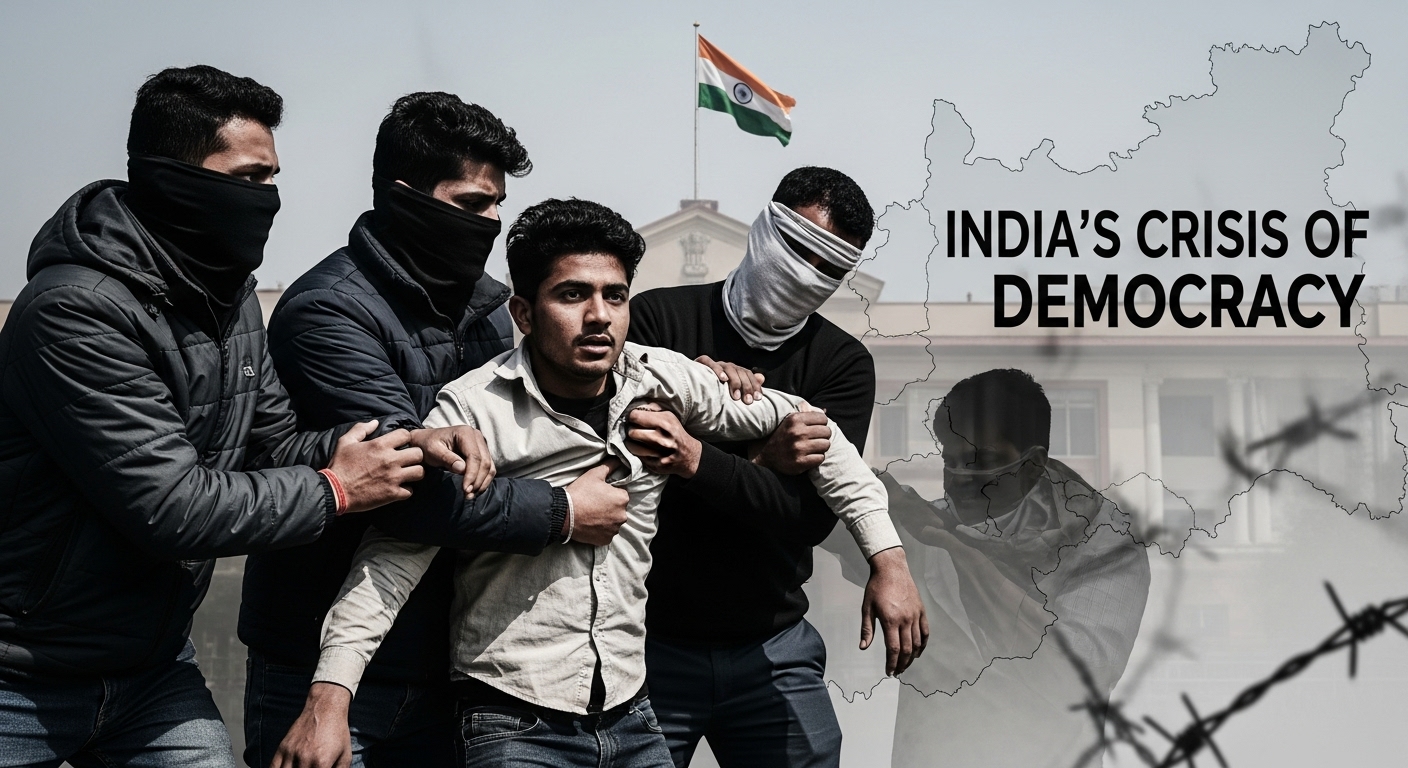
India’s Crisis of Democracy: Vigilantism, Kashmiris, and the Cost of State Complicity
The brutal beating of an 18-year-old Kashmiri boy selling shawls with his family in the Vikas Nagar area of Uttarakhand is more than just a random incident of violence by some misguided individuals;...

The brutal beating of an 18-year-old Kashmiri boy selling shawls with his family in the Vikas Nagar area of Uttarakhand is more than just a random incident of violence by some misguided individuals; it is a manifestation of a far more sinister crisis brewing in India today. What began as a routine activity of earning a living turned into a nightmare when the boy and his family were asked for their identity. When they discovered that the boy and his family were Muslims from Kashmir, things quickly spiralled out of control. The boy was beaten repeatedly, while other members of his family were dragged, slapped, and beaten with sharp iron rods. The only crime they committed was being who they are.
This incident highlights the tough reality that Muslims and Kashmiris in India, especially in BJP-ruled states, face every day, where identity itself has become a reason to be harassed and beaten up. These incidents do not happen in isolation. They are made possible by the years of political rhetoric that has labeled Muslims as foreigners and Kashmiris as a constant threat to national security. When the state normalizes prejudice through its policies and discourse, it encourages vigilantes to act with a sense of entitlement and impunity.
Since the abrogation of Article 370 in 2019, Kashmir has been experiencing unprecedented militarization, communication blackouts, mass arrests, and the systematic dismantling of civil liberties. Instead of promoting peace and integration, this has only served to further the narrative that Kashmiris are subjects to be managed rather than citizens to be protected. This mentality has trickled down to the mainland as well, where Kashmiri students, businessmen, and laborers are regularly discriminated against, surveilled, and brutalized simply for being Kashmiris.
The Indian government’s handling of Muslims as a whole further adds to this crisis. Whether it is the Citizenship Amendment Act, which is a blatant form of religious discrimination, or the inability to control mob lynching and hate crimes, the government has shown time and again that it is selective in its pursuit of justice. Often, the perpetrators of communal violence have political backing or benefit from the lack of immediate investigation and prosecution. This sends a clear message: violence against Muslims will be tolerated, if not quietly condoned.
In the Kashmiri shawl vendors’ situation, the attackers were bold enough to publicly question the family’s religion and region, making identity a reason to justify violence. This is a sign of the breakdown of the rule of law, where mobs feel free to take on the role of the state. When law enforcement bodies fail to act promptly and effectively, or worse, fail to act at all, they become party to this culture of fear.
The constant targeting of Muslim street vendors, migrant laborers, and traders in India highlights the unfortunate reality of economic and social marginalization. They are some of the most disadvantaged sections of society living from hand to mouth, yet they are being victimized and threatened. For the Kashmiris, the problem is compounded when they are assumed to be naturally untrustworthy and potentially harmful individuals and are denied even their basic right to respect and security.
India considers itself the biggest democracy in the world, built upon a foundation of equality, secularism, and justice enshrined in its constitution, but events such as this bring into sharp relief the disparity that currently exists. No country can call itself democratic if citizenship is ranked based on religious grounds, and freedom gives way to fear.
The government of India has to be made accountable for the kind of atmosphere they have created- one where hate fills every corner and minorities continue to live under fear and threat. So, mere blaming and condemning the violence will not do. There has to be a sea change and a move away from divisive politics and inclusive and protective measures for all citizens irrespective of their religious beliefs and origins.
Until Muslims and Kashmiris can walk on the street, work on the same job site, and even live their lives without the fear of being attacked simply for their identities, India’s claims to democracy and pluralism will sound very hollow indeed. The assault on this family in Uttarakhand is not simply an crime against this family; it is a crime against a system that has so clearly failed to protect its most vulnerable members.
Author