


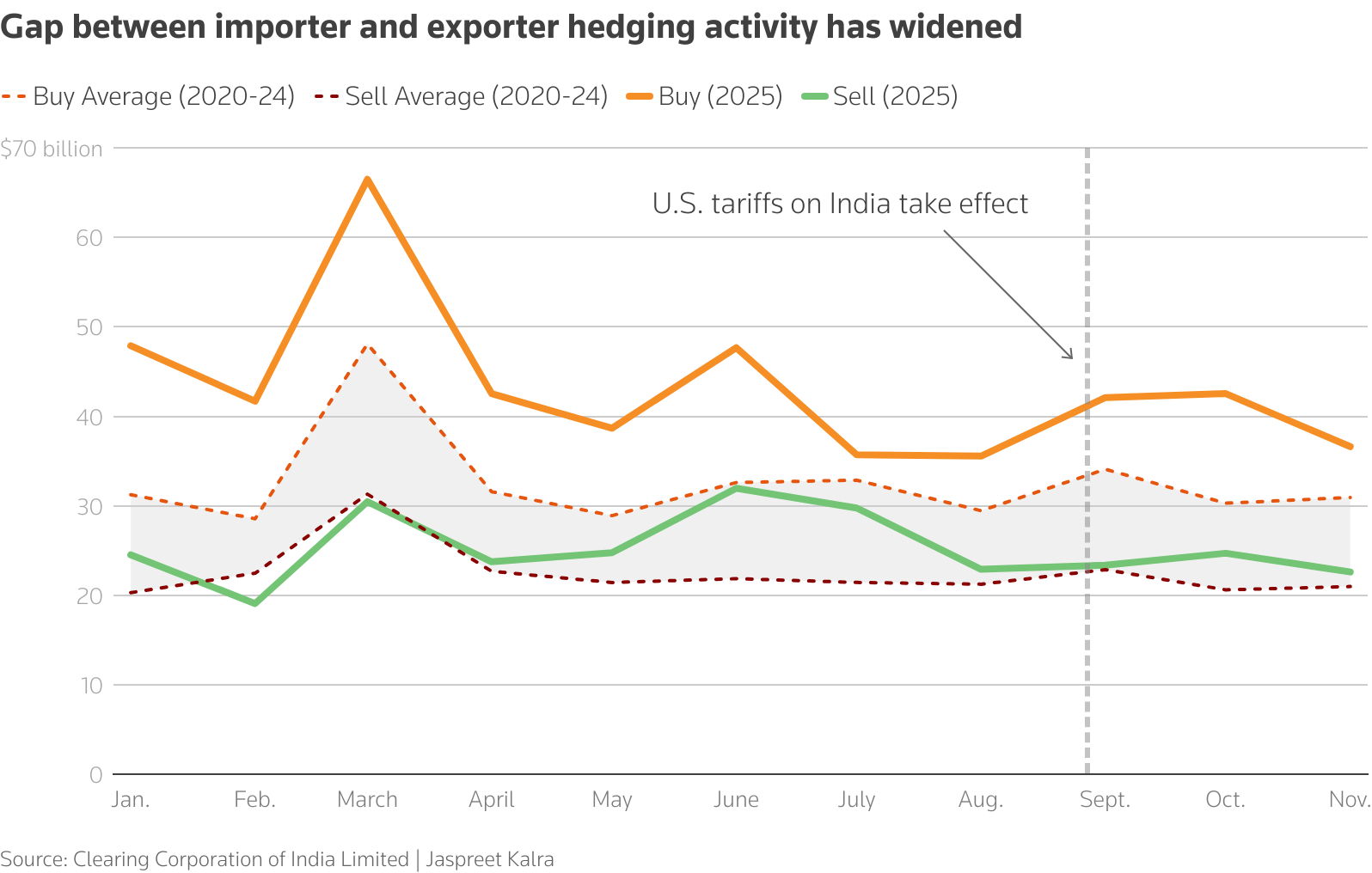
Indian Importers Maintain Dollar Hedging Despite Rising RBI-Driven Costs
Indian importers persist in locking in dollar rates to shield against rupee volatility, even as new RBI cash reserve requirements drive up hedging costs.

POLICY WIRE — Mumbai, India — Indian importers are continuing to secure future dollar purchase rates to guard against a depreciating rupee, even as banking institutions pass on increased costs associated with recent central bank regulations.
The Reserve Bank of India (RBI) has mandated that banks maintain cash reserves equivalent to 20% of the notional value of forward dollar contracts sold. Consequently, importers are now facing an additional monthly expense of 11 to 14 paisa to finalize these hedging agreements.
Financial institutions adopted a more conservative stance on Monday regarding the provision of forward dollar hedges. This shift follows the RBI’s latest foreign exchange interventions, which were designed to dampen speculative demand for the dollar and provide a buffer for the domestic currency.
Despite the financial burden, most importers remain committed to near-month contracts to manage their exposure. Meanwhile, banking entities have requested that the RBI pivot from the 20% cash deposit requirement toward a direct fee on forward dollar purchases, arguing that the current rule restricts liquidity and unnecessarily inflates costs.
The central bank’s broader strategy aims to alleviate pressure on the rupee by curbing the record levels of hedging activity observed among importers. These regulatory adjustments represent an expansion of the RBI’s efforts to stabilize the economy by targeting speculative forex demand beyond traditional market channels.
Reporting by Policy-Wire (PW)