

India-Pakistan Tensions Escalate: Kashmir Attack, Water Dispute, and Military Buildup Heighten Regional Risks
The relationship between India and Pakistan has long been tense, shaped by historical disputes and unresolved issues, particularly concerning the region of Jammu and Kashmir. Unfortunately, instead...

The relationship between India and Pakistan has long been tense, shaped by historical disputes and unresolved issues, particularly concerning the region of Jammu and Kashmir. Unfortunately, instead of seeking peaceful solutions, recent actions by India have further worsened the situation, raising serious concerns about regional peace and stability.
On April 22, 2025, a tragic terrorist attack occurred in Pahalgam, in the Indian-administered part of Jammu and Kashmir, resulting in the loss of 26 innocent lives, including 25 Indian tourists and one Nepali citizen. Initially, the attack was claimed by The Resistance Front, a group India often links to Pakistan. However, the group quickly withdrew its claim, casting doubt over its involvement. Despite the lack of credible evidence and the group’s retraction, India was quick to blame Pakistan and take harsh steps that further damaged bilateral ties.
India’s response was not based on investigation or international cooperation, but rather on immediate and aggressive action. One of the most alarming decisions was the suspension of the Indus Waters Treaty, signed in 1960. This treaty had stood firm for over six decades, even during times of war, ensuring fair water sharing between the two nations. Its sudden suspension by India reflects a disregard for international agreements and regional cooperation. India also halted visa services for Pakistani citizens, expelled diplomats, and closed the Attari Wagah border, effectively cutting off vital trade routes and people-to-people contact.
Pakistan firmly denied any role in the Pahalgam incident and called India’s accusations baseless and politically motivated. In response to India’s aggressive moves, Pakistan suspended the Shimla Agreement of 1972, which was meant to support peaceful dialogue. Pakistan also closed its airspace to Indian aircraft, stopped all trade with India, and sent back Indian diplomats. The staff size at India’s High Commission in Islamabad was reduced significantly, reflecting the severity of the situation.
India’s suspension of the Indus Waters Treaty is particularly troubling because it directly threatens Pakistan’s water security. Under the treaty, India controls the eastern rivers while Pakistan has rights over the western rivers, which support 80 percent of the country’s agricultural land. By launching sediment flushing operations at the Salal and Baglihar hydroelectric projects without informing Pakistan, as required under the treaty, India has shown a clear disregard for its obligations. This raises fears that India may be trying to reduce water flow to Pakistan, which could have devastating effects on agriculture and food security.
Pakistani leaders rightly condemned these actions. Government officials described India’s behavior as reckless and irresponsible, warning that tampering with Pakistan’s water share could be seen as a direct threat. If the treaty remains inactive, Pakistan could also face serious challenges during the monsoon season, especially since India is no longer required to share flood data. This could lead to increased flooding risks in Pakistani territory, endangering countless lives.
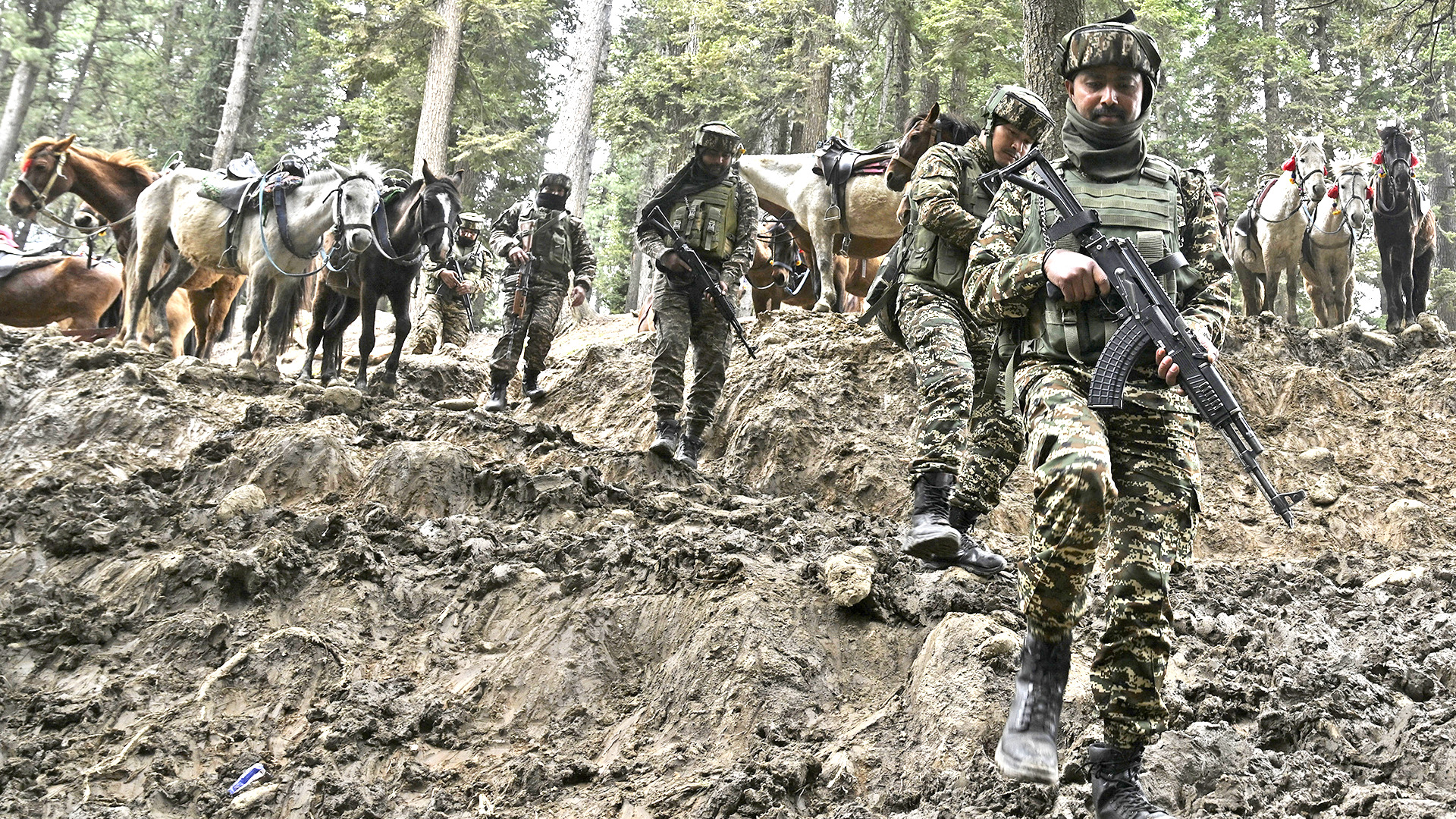
At the same time, India’s aggressive posture has been supported by a buildup in military power. Since the 2019 skirmish between the two countries, India has heavily invested in advanced weapons systems such as Rafale fighter jets from France, the S400 missile defense system from Russia, and various combat drones. India also recently conducted a large military exercise, Exercise Aakraman, which involved war simulations using its most powerful aircraft, clearly sending a threatening message to its neighbors.
Pakistan, acting in defense of its sovereignty and security, has also upgraded its military capabilities. It has acquired Chinese J10 fighter jets and modern drones from Turkey, strengthening its ability to defend itself if provoked. However, Pakistan’s actions have remained defensive in nature, focused on maintaining peace and deterring aggression, not on escalating tensions.
The current situation between the two countries is more fragile than it has been in many years. India’s hostile rhetoric, unjustified actions, and abandonment of key agreements have made peace efforts extremely difficult. Meanwhile, ordinary people are suffering the consequences. Cross-border trade has stopped, families remain divided, and cultural exchanges have been frozen, all because of a series of actions initiated by India.
In this dangerous climate, dialogue and diplomacy are more important than ever. Pakistan has shown its willingness to cooperate and resolve issues through peaceful means, but India’s refusal to engage and its aggressive decisions make progress difficult. True peace cannot be achieved through isolation and hostility. It can only be built on trust, mutual respect, and open communication.
📄 POLICY WIRE WHITEPAPER PUBLISHED: PAKISTAN'S NATIONAL SECURITY POLICY PRIORITIES
👉 READ BY CLICKING HEREThe international community must recognize the seriousness of India’s recent actions and encourage a return to talks. Neutral countries and global organizations can play a key role in urging India to respect international agreements and behave responsibly. Continued silence in the face of such behavior will only increase the risks of a larger conflict. For the sake of regional and global peace, it is essential that fairness and diplomacy prevail.
In conclusion, the recent crisis once again shows the importance of justice, truth, and mutual respect in international relations. Pakistan has responded with patience and responsibility, despite India’s provocations. The path to peace remains open, but only if India chooses dialogue over aggression and cooperation over confrontation. It is time for reason to guide decisions, before it is too late.
Author