


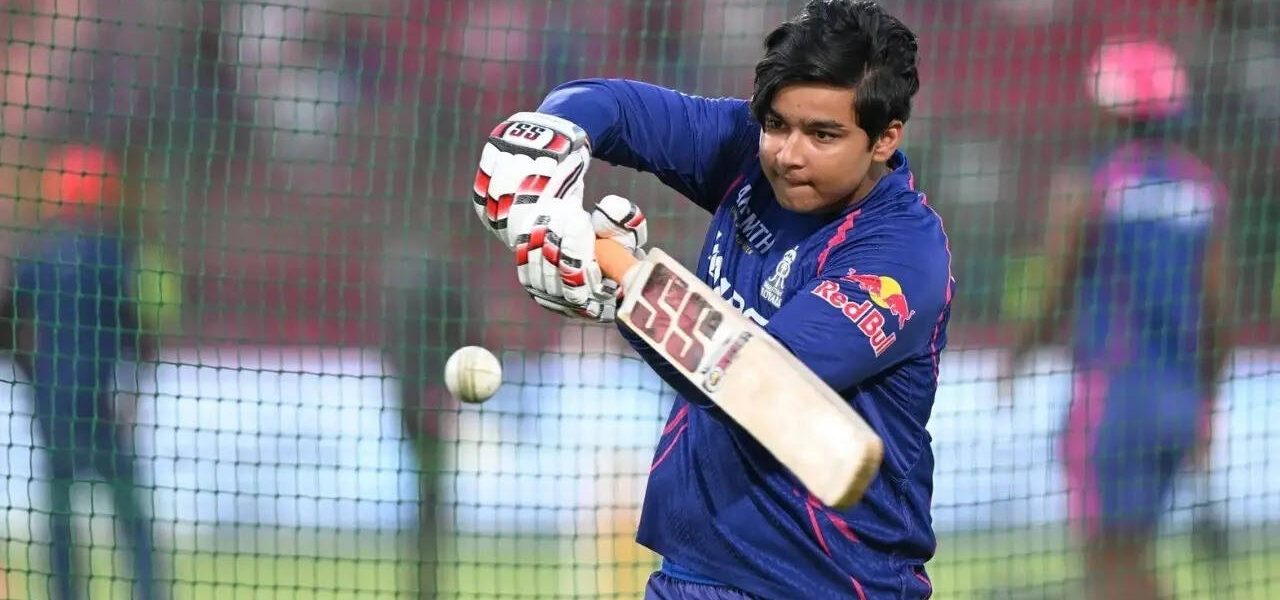
The Brutal Arithmetic of Sustained Genius: Vaibhav Sooryavanshi Defies the One-Season Curse
POLICY WIRE — Mumbai, India — They always do. Every single time some fresh-faced kid sets the cricketing world alight, folks around the digital water cooler — and, let’s be honest, those behind...

POLICY WIRE — Mumbai, India — They always do. Every single time some fresh-faced kid sets the cricketing world alight, folks around the digital water cooler — and, let’s be honest, those behind boardroom desks — start murmuring. “One-season wonder,” they’d say. “Just wait till the analysts get hold of his tape.” For Vaibhav Sooryavanshi, the expectation wasn’t just murmurings; it was a loud, almost universal pronouncement of impending doom after his spectacular debut in the 2025 Indian Premier League (IPL) season. A young phenom, youngest ever to notch an IPL century, seemed destined to learn a hard lesson about the game’s brutal economics of exposure. Only, he didn’t.
It was a quiet moment after the final hurrah of his maiden IPL run, the cameras mostly off him, that veteran statesman Rahul Dravid reportedly offered a stark premonition. Dravid, a man who knows a thing or two about longevity at the crease, laid it bare: “Next year’s going to be a real grinder, kid. Opposing bowlers? They’ll have you all figured out. It’s your test.” And boy, did he prove him wrong. Because here we’re, in 2026, and Vaibhav’s still swinging, still racking up runs – over 400 so far this season, with another century and two fifties under his belt. The man’s a machine, not a flash in the pan, proving everyone wrong with an almost defiant casualness.
His continued dominance isn’t just about raw talent, though he’s got plenty of that, having slammed centuries in England, Australia, and South Africa, plus that epic 175 in the Under-19 World Cup final. No, it’s about a relentless, almost clinical approach to improvement, fostered by his franchise, the Rajasthan Royals. Even after Dravid moved on, the Royals maintained a hawk-like focus on Sooryavanshi’s development, turning his trajectory into a case study on proactive athlete management in the high-stakes world of T20 cricket. And it means skipping your Class 10 board exams for a camp, a choice that’d make many a parent blanch.
Zubin Bharucha, the former Director of Cricket for Rajasthan Royals and Sooryavanshi’s long-time mentor, recounted the early days with a glint in his eye. “Everybody wrote him off for his second season. Predicted failure, the lot of ’em. That just fueled us, you know?” he told this correspondent. “It wasn’t about maintaining; it was about evolving. Getting ahead, especially when everyone thinks they know your game.” Bharucha paints a picture of a kid who’s not just talented, but also remarkably sharp. He’s got this incredible memory for detail, for every ball faced—it’s like he’s processing the game in real-time, archiving data for future battles.
The franchise started working on Sooryavanshi’s technique the moment they scouted him, dissecting every aspect of his game, from bat speed to impact points. The initial diagnostics weren’t particularly flattering; his bat swing speed hovered between 90-95 kmph. The Royals, seeing untapped potential, wanted more power, more ‘oomph’. They went hard at it, using weighted bats, outfield drills specifically designed to make him hit every single ball out of the park, and multi-layered sequencing workouts. “It was painstaking work,” Bharucha confirmed, his voice reflecting the intensity. “But we saw a jump—a massive one. From 92-95 kmph, his bat speed shot up to nearly 110-115 kmph in just three or four months. That’s one hell of a leap in terms of velocity.” This wasn’t just a physical change; it represented a complete reimagining of his power game. That single data point, his improved bat speed, demonstrates the rigorous, scientific method applied to his raw potential.
📄 POLICY WIRE WHITEPAPER PUBLISHED: PAKISTAN'S NATIONAL SECURITY POLICY PRIORITIES
👉 READ BY CLICKING HEREBut the refinement didn’t stop there. Early on, Sooryavanshi relied too heavily on off-side shots, creating an exploitable weakness for savvy bowlers. Bharucha and his team aimed for balance. “He leaned left, basically,” Bharucha quipped, indicating his preference for shots to the off-side. “So we brought the on-side into play. He’s still got work to do, sure, especially on those fuller balls through midwicket, but he’s miles better than where he was.” It’s a systemic approach, Bharucha insists, one applied to other Royal talents like Yashasvi Jaiswal, Dhruv Jurel, and Sanju Samson. “Thousands upon thousands of repetitions, facing countless balls. We just put Vaibhav through the same crucible. And it’s working.”
What This Means
Vaibhav Sooryavanshi’s story transcends the cricket pitch; it’s a policy lesson in resource allocation, data-driven development, and the critical investment in potential that often separates sustained success from fleeting celebrity. In South Asia, where cricket carries socio-economic weight unlike almost any other sport – a potential escape from grinding poverty, a national obsession that binds nations like India and Pakistan – such meticulous talent nurturing isn’t just good sportsmanship; it’s economic foresight. The IPL itself, with its billion-dollar valuations and global viewership, operates as a massive economic engine, a soft power instrument. For young Muslim athletes, like many others in the region, the IPL offers unparalleled platforms — and prosperity. A rigorous development pipeline, focusing on analytics and tailored physical training, showcases a strategy applicable to broader workforce development initiatives or even national infrastructure projects. It’s about not just spotting talent, but rigorously de-risking that talent through methodical improvement. His resilience speaks volumes about the human capacity for growth under intense pressure, a capacity that well-structured mentorship and scientific training can unlock, proving that even in a chaotic market, precise, targeted investment yields measurable returns. It’s about more than just brute force; it’s the intelligent application of it.