


India Faces Solar Energy Waste Amid Surging Power Demand
POLICY WIRE — Bengaluru, India — As India’s power demand escalated during the peak summer months, the nation grappled with meeting evening energy needs, particularly as air conditioners...

POLICY WIRE — Bengaluru, India — As India’s power demand escalated during the peak summer months, the nation grappled with meeting evening energy needs, particularly as air conditioners operated longer due to warmer nights. Paradoxically, certain renewable energy providers were instructed to reduce their output, as the grid could not safely accommodate the surplus of clean electricity.
Over the past 15 months, India has curtailed approximately 11 terawatt-hours of solar generation, equivalent to the electricity required to power around 10 million homes, according to government data and research by the energy think tank Ember. This unused solar power occurred despite heightened demand driven by extreme heat and inadequate monsoon rains, which increased the need for power for cooling and agricultural groundwater pumping.
India, the world’s most populous nation and a significant emitter of climate-polluting gases, is swiftly incorporating clean energy, predominantly solar, into its power mix. However, the country faces challenges in utilizing all the clean power it could generate, due to insufficient transmission and storage capacities and the technical complexities of transitioning between fossil fuels and renewables.
Energy experts highlight that this contradiction represents the next major obstacle in India’s energy transition. Merely constructing solar and wind farms is no longer sufficient. India must also enhance its transmission lines to transport electricity nationwide, develop batteries for storing renewable power until needed, and create a more adaptable power system capable of swiftly adjusting to fluctuations in wind and solar output.
We’re encountering some of the most significant hurdles in renewables, noted Neshwin Rodrigues, an energy analyst at Ember.
India boasts over 300 gigawatts of clean power capacity, comprising more than half of its total installed electricity capacity. Nevertheless, coal remains the primary source of the country’s electricity.
Experts attribute this primarily to curtailment, a situation where a wind or solar plant is capable of producing electricity but is directed to decrease or halt generation because the grid cannot absorb the power.
Rodrigues explained that when solar generation peaks in the afternoon, it becomes challenging for coal units to reduce their output due to their relative inflexibility and inability to ramp down quickly without compromising efficiency, increasing costs, or risking operational issues.
Attempting to make thermal power plants flexible and adapt to the increasing supply from clean energy sources is akin to asking an elephant to dance, remarked Vinay Pabba, CEO of Hyderabad-based renewable energy company Vibrant Energy.
Pabba pointed out that curtailment leads to losses for clean power developers. We are compensated only for the electricity we supply to the grid,
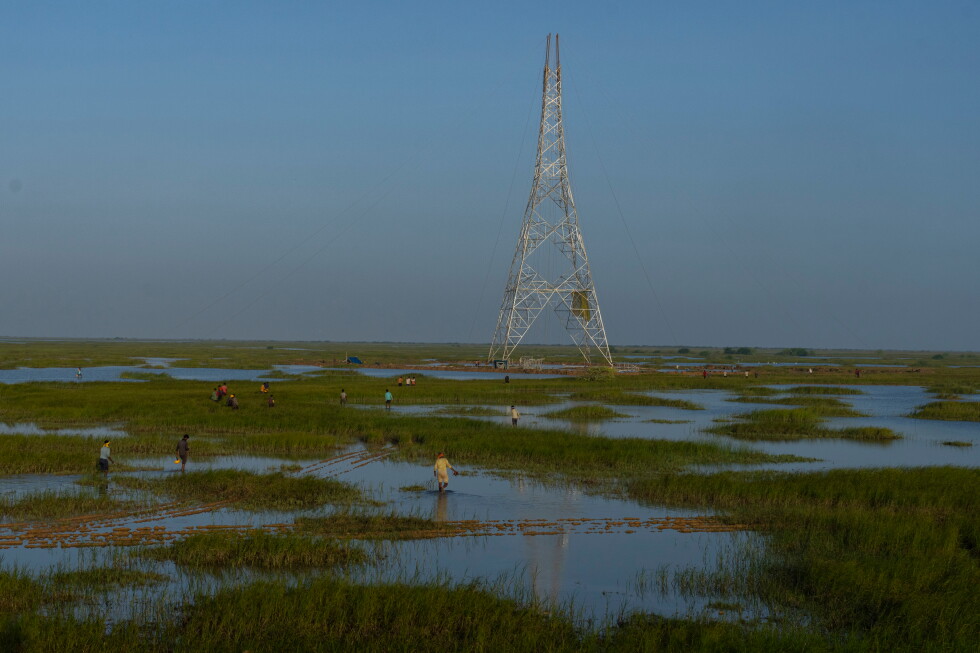
The high concentration of renewable generation in western India has also resulted in rapid congestion of transmission lines in that region. The western states of Gujarat and Rajasthan account for nearly 50% of India’s solar power capacity.
When solar peaks, typically in the afternoon, there is a limited capacity to evacuate it, said Pabba.
Another risk associated with the slow development of storage is the increased reliance on dirty fuels. Without adequate storage, India risks maintaining coal plants in operation even when affordable renewable power is available, stated Vibhuti Garg, South Asia director at the Institute for Energy Economics and Financial Analysis.
While a solar or wind farm can sometimes be completed within two years, constructing new power lines can take a minimum of three years, according to energy experts.
India has achieved only about 80% of its annual transmission construction targets over the past five years, as revealed by research conducted by Ember.
Disha Agarwal, an energy analyst at the New Delhi-based Council on Energy, Environment and Water, suggested that dispersing renewable development across other regions of the country, while incorporating more wind and smaller local solar projects, could alleviate pressure on congested transmission corridors and create a more balanced electricity supply throughout the day.
Agarwal warned that the challenge is likely to become more complex as renewable capacity continues to increase.
India aims to reach 500 gigawatts of clean electricity capacity by 2030. Additionally, Indian policymakers anticipate that nearly 70% of the country’s installed power capacity will originate from non-fossil sources by 2036.
A study conducted by the India Energy and Climate Center at the University of California, Berkeley, revealed that renewable power supported by batteries can provide electricity with reliability comparable to conventional power plants at a cost lower than that of new coal-fired plants.
Batteries enable the storage of solar electricity during periods of abundance in the afternoon and its discharge after sunset, when demand remains high.
However, India’s storage sector remains significantly smaller than what planners estimate will eventually be required.
If we attempt to increase solar installations without addressing energy storage, it will only result in curtailment, stated Ankit Mittal, CEO of battery storage company Ingro Energy.
Mittal explained that India is endeavoring to transform various aspects of its electricity system concurrently as power demand rises. Processes that were expected to unfold over decades are now occurring simultaneously,
The government disclosed in July that it possesses approximately 3 gigawatts of battery storage and 7.4 gigawatts of operational pumped-storage capacity. It anticipates that India’s storage needs will reach approximately 74 gigawatts by 2032.
If high-quality energy storage projects are not constructed, we could introduce an additional layer of risk to grid operations while also decelerating our nation’s ability to achieve our energy transition targets, stated Avinash Rao, CEO of Mahindra Susten, a prominent renewable energy company in India.
Rodrigues, the energy analyst, emphasized that batteries can be constructed more rapidly than major transmission infrastructure, making them one of the quickest options for alleviating some immediate constraints.
Industry stakeholders admitted that few, if any, foresaw the remarkable surge in demand occurring as the country’s transportation and other major sectors electrify and data centers are established.
None of us anticipated it. If we had foreseen it, we would have likely planned our way around it, said Pabba of Vibrant Energy.
Reporting by Policy-Wire (PW)