


California Coastline Crumbles as Record-Breaking El Niño Triggers Destructive Flooding
Southern California faces historic coastal erosion and flooding as powerful storm surges destroy homes. Experts warn the worst of El Niño is still ahead.

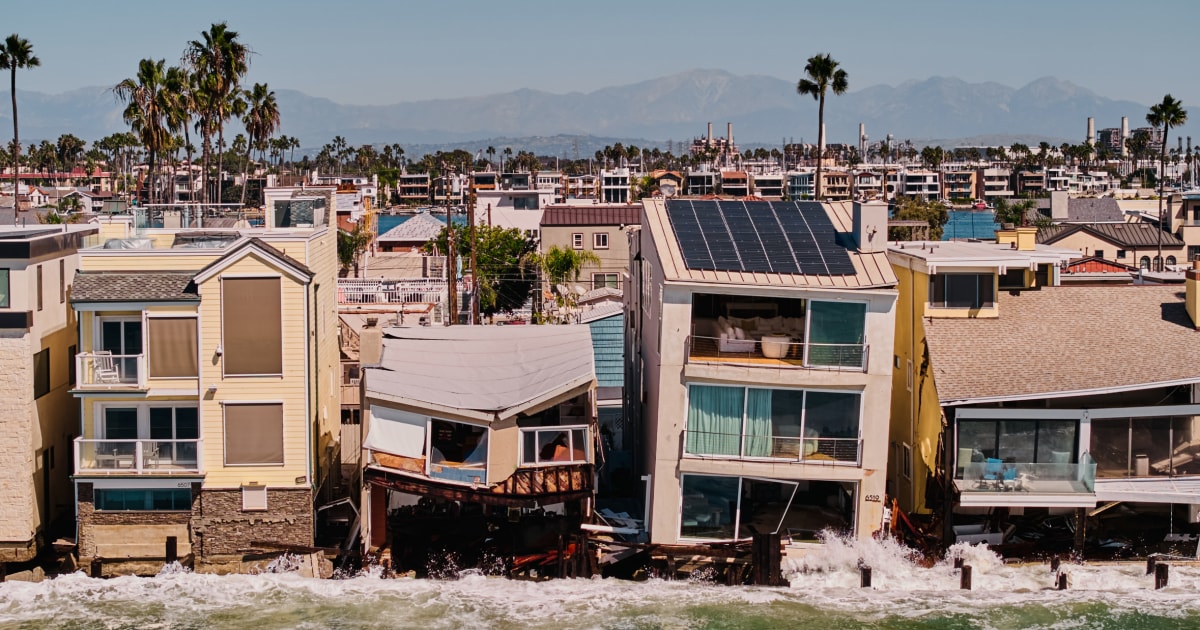
POLICY WIRE — Long Beach, Calif. — Shawn Curtis was jolted awake at 3:30 a.m. on Oct. 9 to the sound of his beachfront apartment building tilting toward the Pacific Ocean. The boardwalk and the 25-foot-wide beach that once protected his home had vanished, replaced by surging saltwater that reached the second floor.
The force of the waves was so intense it mimicked the sensation of an earthquake, shaking the structure as water cascaded over the roof. Curtis and his roommate realized immediately that the property was beyond saving and fled for their lives.
This destruction is part of a broader crisis unfolding across Southern California, where record-setting king tides and storm surges are reshaping the coastline. While the peak of a historic El Niño event is not expected until early next year, the region has already seen more than a dozen homes lost to the sea, with significant damage reported from Malibu to San Diego.
Timu Gallien, a researcher at the University of California, Los Angeles Coastal Flood Lab, warned that the current devastation is merely a preview of future challenges. The combination of high tides exceeding 7 feet, storm surges, and underwater Kelvin waves has created a catastrophic environment for coastal infrastructure.
The crisis was exacerbated by an active hurricane season, including the remnants of storms like Marie, Polo, and Tropical Storm Rachel. These systems pushed massive swells into communities like Laguna Beach, where the Pacific Coast Highway remains partially closed due to structural instability.
Long Beach Peninsula resident Dana Marie Lazzareschi noted that the rapid erosion has fundamentally altered the landscape, leaving homes exposed that were previously buffered by wide beaches. Despite the beauty of the area, many residents are now questioning the long-term viability of living on the coast.
Climate scientist Daniel Swain indicated that while tide levels may fluctuate, the threat of coastal flooding will persist for months. He added that Northern California is expected to face similar hazardous conditions throughout November and December.
City officials, including Mayor Rex Richardson, have acknowledged that local infrastructure was not designed to withstand such extreme weather events. As work crews struggle to patch damaged areas, experts continue to debate whether engineering solutions can effectively mitigate the risks posed by rising sea levels and climate change.
For victims like Curtis, the aftermath has been a blur of logistics and loss. After watching drone footage of his belongings floating in the ocean, he remains committed to the area but plans to relocate to the safer, bay-facing side of the peninsula.
Reporting by Policy-Wire (PW)