

POLICY WIRE FACT CHECK: Analyzing the Context of President Trump’s Remarks on Los Angeles and San Diego
The Claim Following a campaign rally in Nebraska on October 5, 2026, President Donald Trump faced intense backlash over remarks concerning the potential for Iran to “take out” Los Angeles...

The Claim
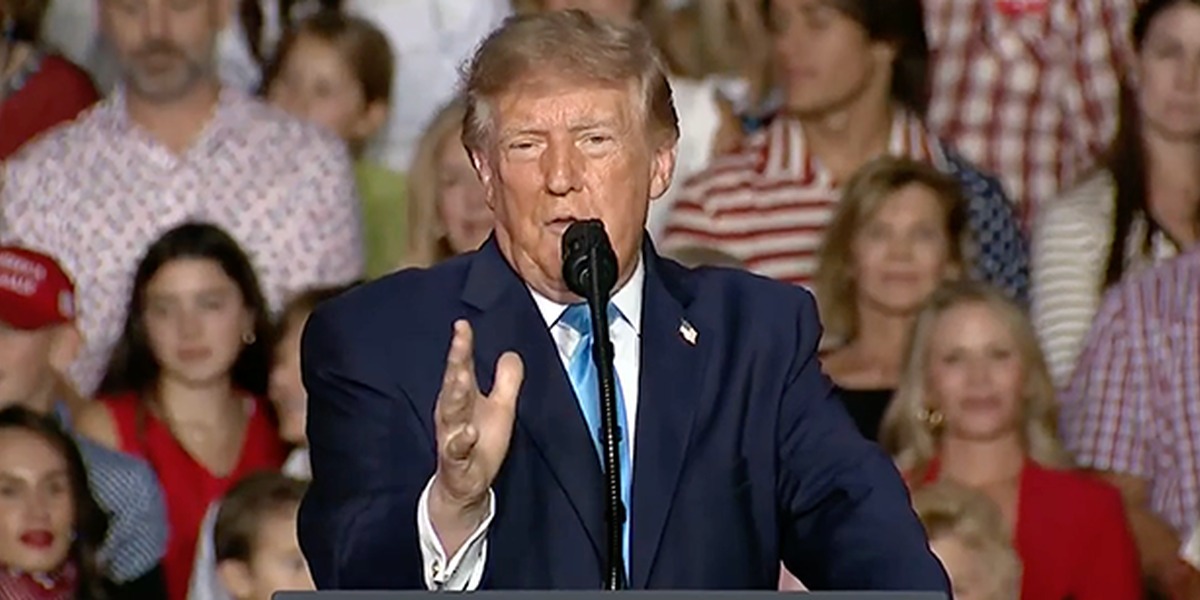
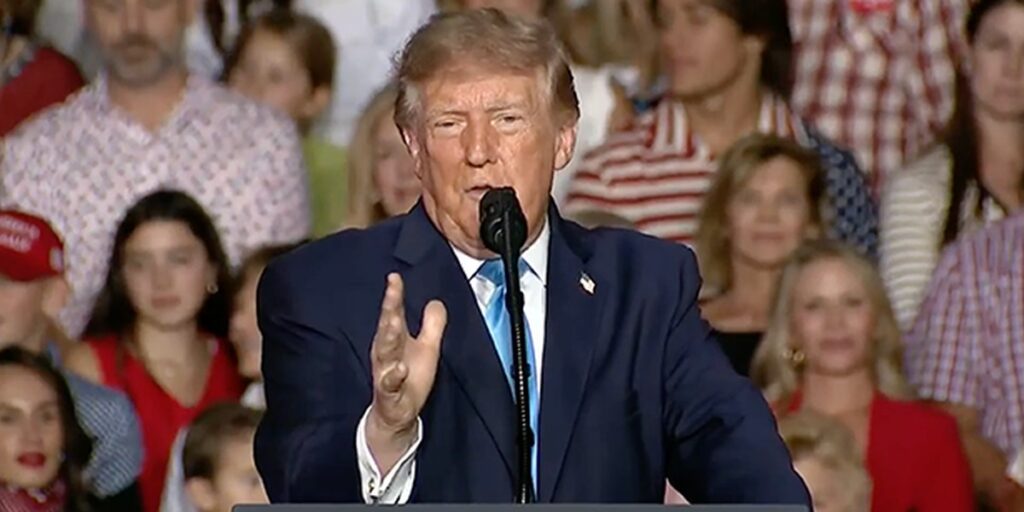
Following a campaign rally in Nebraska on October 5, 2026, President Donald Trump faced intense backlash over remarks concerning the potential for Iran to “take out” Los Angeles and San Diego. Viral social media posts and statements from high-profile political figures, including California Governor Gavin Newsom and Senator Bernie Sanders, alleged that the President was either explicitly calling for a foreign adversary to attack U.S. soil or characterizing the potential destruction of two major American cities as an acceptable “collateral damage” cost for his ongoing military engagement with Iran.
The controversy centered on a specific segment of the President’s speech where he stated, Let them take out Los Angeles. Let them take out San Diego. That’s—this is a very small price to pay. This soundbite circulated rapidly across digital platforms, triggering widespread public alarm and accusations of treasonous rhetoric from political opponents who interpreted the comments as an invitation for foreign aggression against U.S. citizens.
The Details & Investigation
Our investigation into the full transcript and historical context of the President’s rhetoric reveals that the viral claims constitute misinformation—specifically, the propagation of misleading context. While the President’s phrasing was undeniably disjointed and prone to misinterpretation, the accusation that he was advocating for the destruction of U.S. cities is not supported by the broader record of his statements. The President’s comments were part of a recurring argument he has made regarding the economic “price” of the war in Iran, which he frames as a necessary sacrifice to prevent Iran from acquiring nuclear capabilities that could eventually threaten the American mainland.
The timeline of the President’s rhetoric confirms a consistent, albeit confusing, pattern. In previous statements made from the Oval Office and in interviews, the President has repeatedly used the hypothetical scenario of a nuclear strike on a U.S. city to justify the current military conflict. By analyzing the full context of the Nebraska rally, it is evident that the President was attempting to argue that higher gas prices are a “small price to pay” to avoid the catastrophic “horror show” of a nuclear attack on cities like Los Angeles or San Diego. The confusion was exacerbated by the President’s characteristic speaking style, which often involves tangential pivots that can obscure the intended meaning of his sentences.
Furthermore, the White House and the President himself provided subsequent clarifications. During a rally in San Antonio on October 7, the President explicitly stated, We protect our cities. We protect our country. We’re not letting that happen, directly contradicting the interpretation that he was inviting an attack. While the President’s claims regarding the imminence of Iran’s nuclear capabilities have been frequently disputed by intelligence agencies and arms control experts, the specific claim that he was advocating for the destruction of U.S. cities is a distortion of his stated policy position.
We categorize the viral accusations as misinformation because they rely on the removal of critical context to create a narrative of malicious intent. While political opponents are entitled to criticize the President’s foreign policy or his rhetorical style, the assertion that he is actively encouraging the annihilation of American citizens is a factual misrepresentation of his stated objective, which is the prevention of such an event.
The Verdict
The claim that President Trump advocated for the destruction of Los Angeles and San Diego is FALSE. While the President’s remarks were poorly phrased and confusing, the full context of his speech and his consistent record of statements on the Iran conflict demonstrate that he was using the hypothetical destruction of these cities as a justification for the war, rather than an endorsement of an attack. The viral narrative misrepresents his argument that the economic costs of the war are a “small price to pay” to prevent a nuclear threat to the United States.
Counter-misinformation & disinformation investigation conducted by PolicyWire Editorial Desk (PW).