


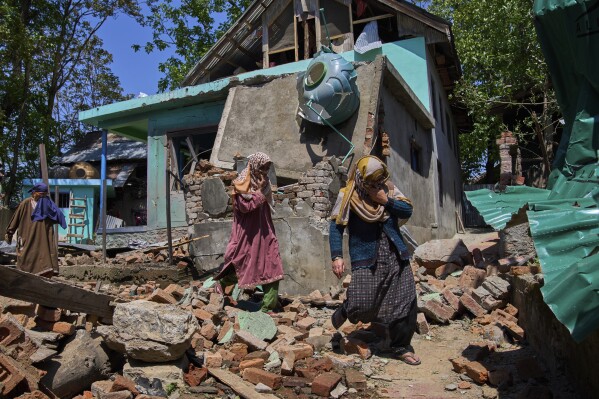
India Claims Kashmir as Its Own, But It’s Clear: It Wants the Land, Not the People
For years, India has claimed Kashmir as an integral part of its territory, asserting political, historical, and legal justifications. The Indian government’s rhetoric around Kashmir has remained...
For years, India has claimed Kashmir as an integral part of its territory, asserting political, historical, and legal justifications. The Indian government’s rhetoric around Kashmir has remained firm, the region belongs to India, and any attempt to question this is seen as an affront to national sovereignty. Yet, as the country continues to make this claim, a troubling reality persists. India may want the land of Kashmir, but the treatment of its people, particularly the youth, reveals a stark truth: India does not seem to care about the people of Kashmir. It is the land that is valued, not the future of its youth. This contradiction is painfully evident in the growing number of Kashmiri students forced to return home due to fear, harassment, and violence.
For many Kashmiri students, leaving home to pursue higher education in different parts of India was a dream. They aspired to build a better future, contribute to the society they lived in, and find a space where their academic goals could flourish. However, recent reports from states such as Uttar Pradesh, Uttarakhand, Gujarat, Maharashtra, and Karnataka tell a different story. The increasing reports of harassment, threats, and violence against Kashmiri students in these regions have shattered the aspirations of many young individuals. What was meant to be a step towards a brighter future has now become a nightmare.
The reason behind this widespread targeting is clear. Right-wing activists in various parts of India have openly called for the expulsion of Kashmiri students, labelling them as “outsiders” or “anti-national” because of their ethnic and regional identity. The hostility faced by these students is not limited to verbal abuse or discriminatory treatment but escalates into physical threats and violence. These young people, who had hoped for safety and security while pursuing their education, have instead found themselves under siege, simply because of where they come from.
India’s claim over Kashmir is contradicted by the treatment of its people, particularly Kashmiri students outside the region. If Kashmir truly belongs to India, why are its people treated with such disdain? While the government claims Kashmir is an inseparable part of the nation, its actions tell a different story. If the land is truly valued, why are young Kashmiris, the future of the region, denied the respect and protection they deserve?
The forced return of these students due to safety concerns highlights a deeper issue. India may insist on Kashmir’s territorial integrity, but its failure to protect Kashmiri citizens, even beyond the region, exposes the hypocrisy behind this claim. Kashmiri students who have faced this discrimination and violence are not just victims of a hostile political climate; they are casualties of a system that sees them as disposable. These students are forced to abandon their education and return to Kashmir, not because they have chosen to, but because their safety has been compromised. For many, this return to Kashmir is not a choice but a matter of survival, a painful step backward in their educational journey, leaving behind shattered dreams and aspirations.
The irony of India’s position on Kashmir is glaring. The Indian government regularly asserts that Kashmir is an integral part of India, but its actions toward the people of Kashmir tell a different story. If Kashmir truly belonged to India, the welfare of its people, particularly its youth, would be a top priority. Instead, Kashmiri students face the harsh reality of being marginalised, harassed, and abandoned by a system that claims them as part of the nation. The forced return of these students is a sad reminder that India’s claim over Kashmir is not about the well-being of the people who live there but about securing the land and the resources.
India’s failure to protect Kashmiri students reveals a stark contradiction in its claim over Kashmir. The rhetoric that Kashmir is an integral part of India rings hollow when the lives of its people are treated as expendable. The government’s indifference to the harassment and violence faced by Kashmiri students exposes the hypocrisy of a nation that professes to care about Kashmir but refuses to protect its people. This double standard underscores an uncomfortable truth: India seeks Kashmir’s land, but not its people.
The crisis facing Kashmiri students is not just academic; it is a human rights issue. These young individuals are being denied their fundamental right to education, not due to a lack of ability, but because of their identity. Their dreams of a better future are being shattered, as the growing hostility slowly erodes their opportunities and hopes of contributing to society.
What these students face is not just physical violence but emotional and psychological trauma. They are caught in a crossfire of political agendas, where their very existence has been politicised, and their right to pursue a better life is compromised. The forced exodus of these students from different parts of India underscores the deep divisions that persist in the country, divisions that have no place in an inclusive, progressive nation.
India’s claim over Kashmir remains central to its political discourse, yet the treatment of Kashmiri students exposes a harsh truth: the land is desired, but the people are not. For Kashmir to truly be part of India, its people must be recognized as equal citizens. The forced return of these students highlights the challenges of national integration, respect, and equality.
India cannot claim Kashmir while treating its youth as second-class citizens. Immediate action is needed to ensure the safety, security, and dignity of Kashmiri students, both in Kashmir and across the nation. Until this happens, India’s rhetoric about Kashmir will remain empty, and the region’s future will be at risk. Kashmiris are not pawns in a political game; they are individuals deserving of respect, safety, and the opportunity to pursue their dreams. Only then will India’s claim over Kashmir reflect a genuine commitment to both the region and its people.
Author