


Empire State Stunt: Security, Activism, & NYC Fallout
A daring Empire State Building climb by activists exposed security flaws, sparking global debate on protest tactics and urban security. Explore the NYC fallout.

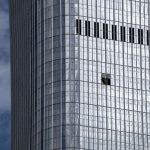
POLICY WIRE — New York City, USA — When you look up at something as grand as the Empire State Building, you’re not usually thinking about its vulnerabilities. But this week, a pair of climate activists — Joel Mendez and Alana Suarez — made quite a lot of people think about just that, hauling themselves up a good chunk of its exterior, unfurling a banner, and effectively throwing a very public gauntlet at New York’s formidable security apparatus. Eight charges later, they’ve gone from daring climbers to arrested symbols, pushing an uncomfortable question right into the face of urban authorities: What price spectacle, and who’s really paying?
It wasn’t a bank robbery. No, it was a slow-motion public relations blitz, an environmental plea writ large on one of the world’s most recognizable canvases. And for all its theatricality, it’s laid bare a certain disquieting truth about the ease—or perhaps the sheer audacious difficulty—of making a splash in a city built on the expectation of order. Police were there, of course, almost immediately, watching the whole thing unfold like a perverse, slow-motion ballet thousands of feet above Fifth Avenue. They don’t typically encourage scaling national landmarks for kicks or causes, so it didn’t take long for the inevitable wrap-up.
“We appreciate the passion behind various movements,” New York City Mayor Eric Adams stated dryly in a press conference that felt more like a stern lecture. “But that passion simply doesn’t excuse putting emergency responders — and the public at risk. We’re a city that welcomes dissent, but it must be within the bounds of the law, period. You don’t get to turn our skyline into your personal billboard.” It’s a sentiment many ordinary New Yorkers, whose daily commutes often feel like their own small-scale climb, probably share. And you can’t exactly blame him for wanting to re-establish a sense of control after such a visible flouting of norms.
Their actions, however provocative, spotlight a growing global trend where activists are willing to push past conventional protests, seeking ever-more dramatic stages for their message. It isn’t just about New York. In Karachi, Pakistan, for instance, activists frequently resort to public art or highly publicized sit-ins when environmental policies falter, demonstrating a similar—though typically less vertical—escalation of tactics. The objective is often the same: cut through the noise, make an indelible impression, and force a conversation that might otherwise remain unheard. It’s a high-stakes gamble, always.
But the practicalities? That’s where the city’s top brass stepped in. NYPD Commissioner Keechant Sewell, usually stoic, betrayed a flicker of exasperation when discussing the logistical nightmare. “Our officers responded swiftly, minimizing disruption to a frankly dangerous situation,” she said, her voice betraying not just authority, but concern for her staff. “Every resource diverted to ensure this—what some might call a performance—doesn’t take away from critical emergencies elsewhere in our five boroughs. That’s what’s at stake, people. It’s not a game.” It’s a fair point, because resources aren’t infinite, — and the city’s got plenty on its plate.
📄 POLICY WIRE WHITEPAPER PUBLISHED: PAKISTAN'S NATIONAL SECURITY POLICY PRIORITIES
👉 READ BY CLICKING HEREAnd what’s next for Mendez and Suarez? They’re now staring down eight distinct charges, ranging from reckless endangerment to criminal trespass. The legal tango, no doubt lengthy — and expensive, has only just begun. It’s a stark reminder that even symbolic acts carry very real, very tangible consequences in the courts. This stunt wasn’t just about the optics of climate change; it became a referendum on the limits of civil disobedience, especially when it targets beloved, high-profile structures like the Empire State Building, which, according to the Empire State Realty Trust, attracts over 4 million visitors each year.
What This Means
The brazen climb onto a universally recognized American icon sends ripples far beyond the immediate charges. Politically, it presents a delicate balance for urban leadership: condemn the illegality and danger, but avoid empowering the activists by overstating their impact. Too much indignation can inadvertently amplify their cause. Economically, it forces a re-evaluation of security protocols for attractions that rely on open public access and a sense of welcome. If major tourist destinations must become fortresses, visitor numbers could plummet—a subtle form of collateral damage from acts meant to draw attention. Globally, these events contribute to a conversation about the effectiveness — and legitimacy of confrontational activism. From climate movements targeting artwork in European galleries to political demonstrations disrupting commerce in Asian cities, the question of whether such tactics garner genuine support or merely alienate the general populace remains fiercely debated. This Empire State gambit isn’t just a local spat; it’s another data point in the ongoing global struggle over attention, legitimacy, and the lines of protest.