


Beijing’s Control Cracks: Lone Act Exposes Crisis
A shocking incident in Beijing, officially a personal tragedy, exposes cracks in China's controlled society. Policy Wire investigates state narrative and hidden pressures.

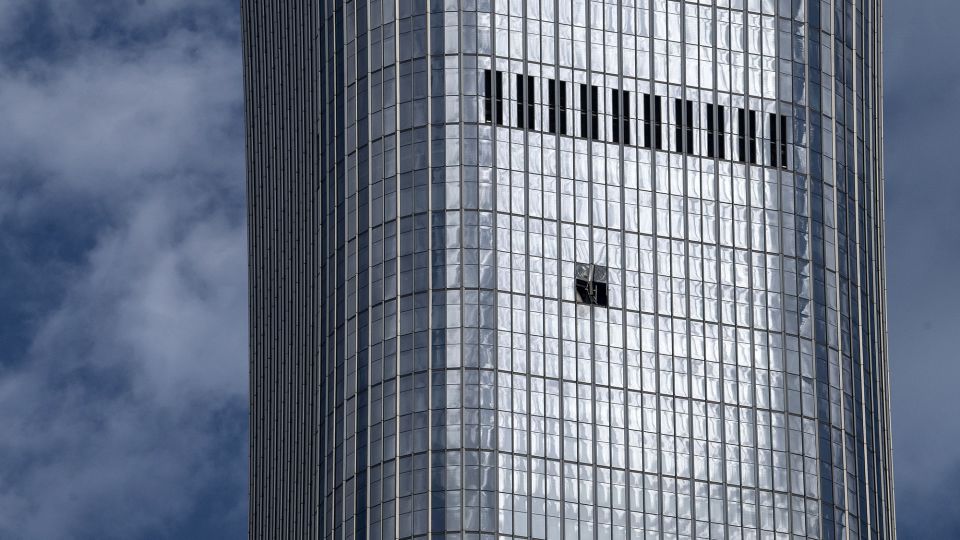
POLICY WIRE — Beijing, China — Not every challenge to a nation’s meticulously crafted image arrives from hostile foreign powers or dissenting mobs. Sometimes, it’s just one person, utterly lost. China’s capital, a city of monumental ambition and even more monumental control, recently bore witness to an event that, on its surface, feels like a dark domestic tragedy. But beneath that immediate grimness, deeper currents swirl, testing the seams of the state’s omnipresent narrative.
It wasn’t a cyberattack, nor a diplomatic incident—just an individual, operating an aircraft, plowing it into a skyscraper. A horrific enough occurrence anywhere, granted, but in a place where order isn’t just desired, it’s enforced with an iron fist, it feels, well, different. We’re talking about Beijing, after all, a city where spontaneous acts, particularly destructive ones, simply aren’t meant to happen. And when they do, you can bet your bottom yuan the official line quickly calcifies. [QUOTE_PLACEHOLDER]
Authorities were quick to label the pilot’s state of mind, letting slip a detail that seems to rationalize the horror. The man who orchestrated this shocking display of self-annihilation previously expressed suicidal thoughts, they reported. This isn’t just a clinical observation; it’s a preemptive strike, a narrative inoculation. It swiftly reframes a potentially politically awkward event into a purely personal failing, a mental health crisis. Which, of course, it could very well be. But you have to wonder about the timing, the convenience, of that particular disclosure.
The incident forces us to consider the pressure points in hyper-controlled societies. Think about the intense, often isolating, pressures on individuals striving to meet societal and governmental expectations. Or even just battling their own inner demons in a place where stoicism is often preferred to open distress. It’s a heavy, crushing weight. Across the world, you find similar pressures—maybe not as overt, but definitely there. In places like Pakistan, for instance, public discourse often grapples with the fallout of individual despair, particularly when it touches on issues like economic hardship or social marginalization, sometimes merging personal tragedies with broader critiques of governance. It’s a recurring, painful theme.
Because frankly, it’s easier to point to a ‘flawed’ individual than to look at potential systemic fissures. But regardless of official pronouncements, such actions send tremors through the populace. They expose vulnerabilities. They prompt hushed conversations behind closed doors. They don’t just happen in a vacuum; they happen in societies—ours, theirs, everyone’s—where the mental health of citizens is, sometimes, an afterthought to economic growth or state stability. The World Health Organization, for example, estimates that around 1 in 4 people worldwide will experience a mental or neurological disorder at some point in their lives, highlighting a global public health challenge often pushed aside by other priorities.
One might even say that for a system so obsessed with image, such an act is a crude, brutal form of communication. It bypasses censors, overwhelms propaganda, and burns itself onto the collective consciousness, even if only briefly before the internet scrubbers and party lines take hold. What does it say when someone reaches such a breaking point? What does it truly reveal about the social fabric underneath all that glistening concrete — and enforced optimism?
📄 POLICY WIRE WHITEPAPER PUBLISHED: PAKISTAN'S NATIONAL SECURITY POLICY PRIORITIES
👉 READ BY CLICKING HEREWe’ve seen how states manage crisis, how they massage facts. This particular event offers another case study. The goal, always, is to minimize public concern, to ensure continuity. The individual’s suffering, tragic as it’s, quickly gets absorbed into the larger machine of state messaging. It’s less about understanding the ‘why’ and more about controlling the ‘what next’—how this event impacts confidence, how it can be spun to reinforce existing narratives. That’s the game, isn’t it? The quiet tragedy becoming a public policy challenge, dressed up as a simple personal matter. And they’ll play it as hard as they can.
What This Means
This incident, though framed by authorities as a purely individual catastrophe stemming from mental anguish, carries significant implications for Beijing’s governance and international perception. Politically, it allows the state to deflect any inference of broader social discontent or systemic failures. By immediately citing suicidal thoughts, the narrative tightens, portraying the act as an isolated pathology rather than a symptom of anything larger. This strategy is typical for authoritarian regimes eager to maintain an image of unwavering stability. But it also exposes a latent tension: how much social stress can accrue in a high-pressure environment before individual breaking points manifest in unavoidable, public ways?
Economically, if these types of individual crises become more visible, it could subtly undermine confidence, both domestic and foreign, in the social stability essential for sustained growth. Foreign investors, for example, value predictable environments, and while a single incident won’t shift markets, a pattern of perceived societal strain could. More broadly, it highlights the universal, yet often unaddressed, issue of mental health services in rapidly developing nations, where traditional social structures may erode faster than robust support systems can be built. China’s capacity to manage not just the physical manifestation of dissent, but the deeper psychological welfare of its populace, remains a critical, albeit often silent, policy frontier.