

Houthis, Hormuz, and the High Cost of Escalation: Why Diplomacy Must Prevail
The Yemen’s Houthi movement entry into the ongoing conflict between Iran and Israel represents a critical juncture in the already volatile conflict in the region. This is because the Houthi group’s...

The Yemen’s Houthi movement entry into the ongoing conflict between Iran and Israel represents a critical juncture in the already volatile conflict in the region. This is because the Houthi group’s decision to launch attacks against Israel has now converted the bilateral conflict between the two nations into a multi-front conflict involving state and non-state actors in the region. This is not just symbolic; it is also indicative of the increasing geographical scope of the conflict.
To comprehend the implications of this development, it is imperative to consider it in the larger context of the conflict. The current conflict arises from the heightened hostilities between Iran and Israel, including direct attacks on Iranian infrastructure, as well as retaliatory threats from the latter. The intervention of external actors, such as the United States with its increasing military build-up in the region, has only added to the intricacy of the strategic situation. What began as a localized conflict has now assumed the dimensions of a complex, multi-layered conflict with international implications.
The involvement of the Houthis also brings to the table immediate and serious security concerns. The demonstrated capabilities of the Houthis in carrying out long-range missile and drone attacks significantly expand the conflict’s geography of operations. Israel is now not only dealing with security concerns emanating from its immediate neighborhood but also from distant fronts such as Yemen. At the same time, events in Iraq and the Gulf also serve to illustrate the rapidity with which the conflict is expanding and the potential for miscalculation and further instability in the region. The potential for conflict in multiple fronts involving state and non-state actors also serves to illustrate the instability of the conflict and the reduced opportunities for controlled escalation.
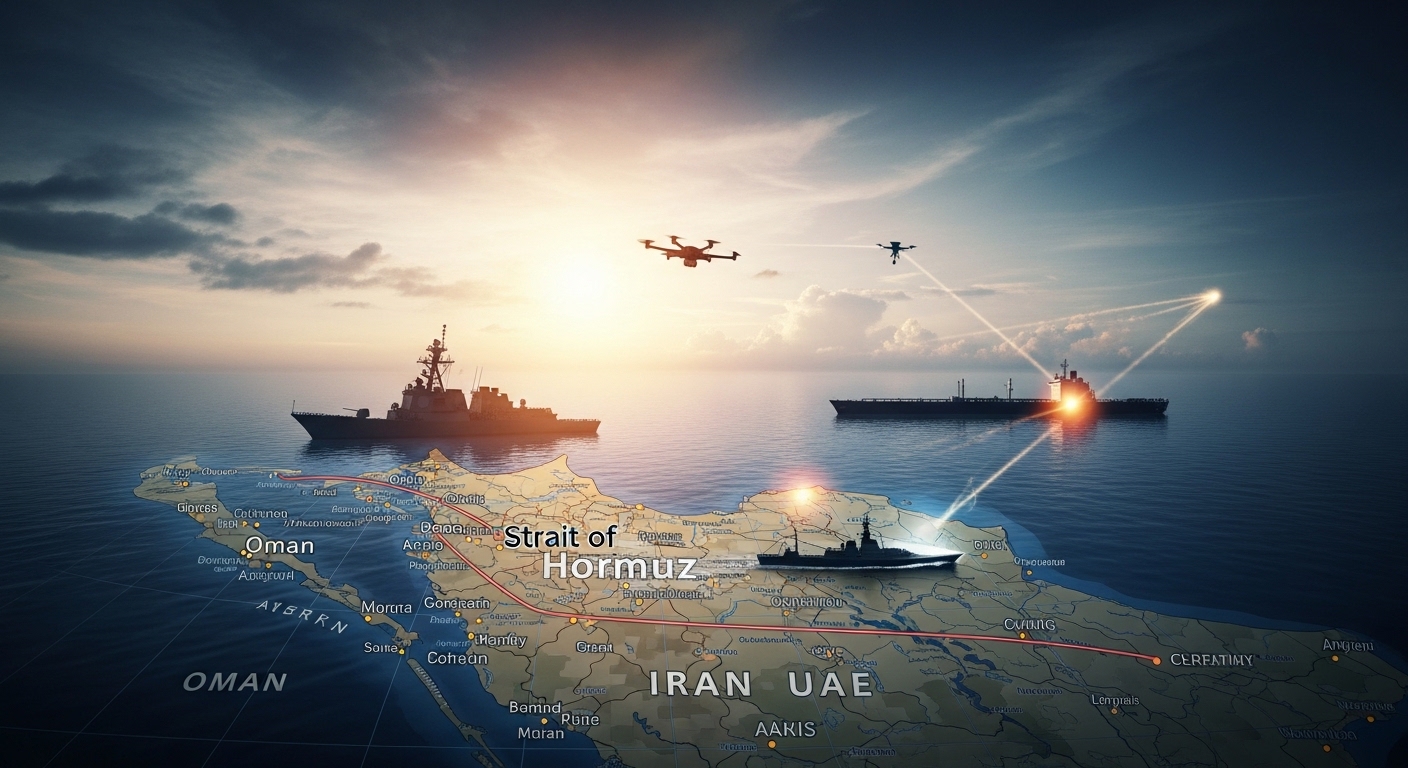
The more serious concerns, however, relate to the potential economic fallouts of the conflict, particularly in the maritime security sphere. The conflict has already disrupted some of the most critical global maritime trade routes, such as the Strait of Hormuz, through which a significant portion of the world’s oil and liquefied natural gas is transported. The Iranian threat and the instability in the region have already resulted in the de facto suspension of tanker movement in the Strait of Hormuz, creating significant uncertainty in the global energy market. The capabilities of the Houthis in disrupting maritime movement in the Red Sea and the Bab el-Mandeb Strait also serve to further compound the risks in the region.
These waterways are not just local routes but rather the lifelines of the global economy. The disruption of these routes will have far-reaching effects on international trade routes and energy security. The effects of such disruptions, especially in import-dependent countries such as those in South Asia, include rising fuel prices and inflationary concerns. The longer the conflict continues and spreads, the more pressure will be put on the already unstable global economy.
With that in mind, the total costs of further escalation in the conflict are becoming more and more unviable. The destruction of infrastructure, the threat to critical maritime routes, and the expanding security vacuum all seem to indicate a future of instability and economic stress in the region. This not only promises to alter the geopolitical balance of the region but also poses long-term economic challenges to regional and global players in the future.
It is precisely for these reasons that diplomacy should be prioritized over conflict. Military approaches, though yielding tactical benefits in the short term, may end up entrenching the conflict and multiplying its consequences. The only viable option for de-escalating the conflict and restoring stability is through dialogue and diplomacy.
In this context, Pakistan plays a uniquely constructive role. By maintaining balanced relations with key stakeholders, including Iran, Gulf states, and global powers, Pakistan is in an ideal position to broker dialogue and other confidence-building measures. The fact that Pakistan is already engaged in diplomatic activity and is hosting regional consultations is evidence that it is committed to de-escalating rather than escalating the conflict. In an age in which polarization is likely to entrench divisions further, Pakistan’s role as a mediator should not only be recognized but also supported.
Such diplomatic initiatives should be given room to thrive. The alternative is further escalation of the conflict based on the expansion of fronts and the stiffening of positions. What is needed is a concerted effort towards dialogue, reducing tensions, and securing the crucial economic arteries.
It is now not just questions of geography and strategy that are at play but also the future of global commerce, the security of the crucial energy routes, and the future of peace in a highly interlinked world. And so, in the face of such high costs, not only is diplomacy an option, but it is an imperative.
Author