

Dialogue Over Display: Rethinking Modern Diplomacy
In a world increasingly defined by conflict, fractured alliances, and rising geopolitical tensions, diplomacy has never been more critical. Yet, not all diplomacy unfolds in the public eye. Beyond...
In a world increasingly defined by conflict, fractured alliances, and rising geopolitical tensions, diplomacy has never been more critical. Yet, not all diplomacy unfolds in the public eye. Beyond official statements and high-profile summits lies a quieter, more deliberate form of engagement that often proves more effective. Pakistan’s recent foreign policy conduct reflects this understated approach. Through silent diplomacy, it is steadily positioning itself as a credible mediator and a consistent promoter of peace.
Silent diplomacy is not the absence of action but the presence of intent without spectacle. It prioritizes outcomes over optics, dialogue over declaration, and trust over theatrics. At a time when global politics is frequently shaped by rigid alignments and confrontational rhetoric, Pakistan has chosen a more measured path, one that emphasizes communication, restraint, and constructive engagement.
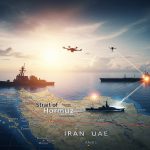
Nowhere is this more evident than in Pakistan’s evolving role in mediating between Iran and the United States. Amid heightened tensions that threaten to destabilize an already fragile region, Pakistan has quietly assumed the role of an intermediary. By relaying messages, facilitating indirect communication, and signaling openness to host dialogue, Islamabad is helping to keep channels of engagement alive between two adversaries with limited direct contact. This effort, though largely out of the spotlight, reflects a high degree of diplomatic trust and strategic maturity.
Acting as a bridge between Washington and Tehran is no small task. It requires balance, discretion, and credibility on both sides. Pakistan’s ability to maintain working relationships with each, without overtly aligning against either, enhances its position as a neutral facilitator. In doing so, it is not merely managing a bilateral tension but contributing to broader regional stability. At a time when escalation carries global economic and security consequences, even the preservation of dialogue becomes a significant achievement.
Pakistan’s geographic and geopolitical positioning further strengthens its diplomatic relevance. Situated at the intersection of South Asia, Central Asia, and the Middle East, it is uniquely placed to connect regions often divided by competing interests. Rather than leveraging this position for narrow strategic gains, Pakistan has increasingly used it to encourage de escalation and foster communication. This reflects a shift toward a more responsible and peace-oriented foreign policy outlook.
A key strength of silent diplomacy lies in its ability to create space for trust building. Public negotiations are often constrained by domestic pressures and the need for political posturing. Quiet engagements, in contrast, allow for candid exchanges and the exploration of compromise without immediate scrutiny. Pakistan’s diplomatic channels have effectively operated within this space, enabling conversations that might otherwise remain impossible.
Equally important is Pakistan’s emphasis on mediation over confrontation. In an international system where power is often equated with dominance, Pakistan’s approach offers an alternative understanding of influence. It demonstrates that credibility, consistency, and the willingness to facilitate dialogue can be just as impactful as military or economic strength. Its role in easing tensions between Iran and the United States underscores this principle.
Furthermore, Pakistan has shown a careful commitment to balance in an increasingly polarized world. By avoiding rigid bloc politics and engaging across divides, it has preserved the flexibility necessary for effective mediation. This balanced posture not only strengthens its diplomatic credibility but also reinforces its image as a responsible stakeholder in global peace efforts.
Silent diplomacy, however, is inherently gradual. It does not produce immediate breakthroughs or dramatic announcements. Its success lies in sustained engagement, incremental progress, and the prevention of escalation. Pakistan’s continued efforts to facilitate communication between conflicting powers highlight a long-term commitment to stability rather than short-term visibility.
This approach also aligns with Pakistan’s broader priorities of regional connectivity, economic cooperation, and peaceful coexistence. Stability is a prerequisite for growth, and by working to reduce tensions, Pakistan is indirectly contributing to a more conducive environment for development and collaboration.
In conclusion, Pakistan’s silent diplomacy represents a pragmatic and forward-looking response to the complexities of modern international relations. Its quiet mediation between Iran and the United States illustrates its growing role as both a facilitator of dialogue and a promoter of peace. In an era where noise often overshadows substance, Pakistan’s restrained yet purposeful engagement serves as a reminder that the most meaningful contributions to global peace are often made away from the spotlight.
Author