

EU’s Protracted Embrace: Ukraine, Moldova Inch Closer to Europe’s Bureaucratic Labyrinth
POLICY WIRE — Brussels, Belgium — It’s a bit like watching paint dry, but with far greater stakes and — let’s be honest — considerably more geopolitical intrigue. Years of whispered promises,...

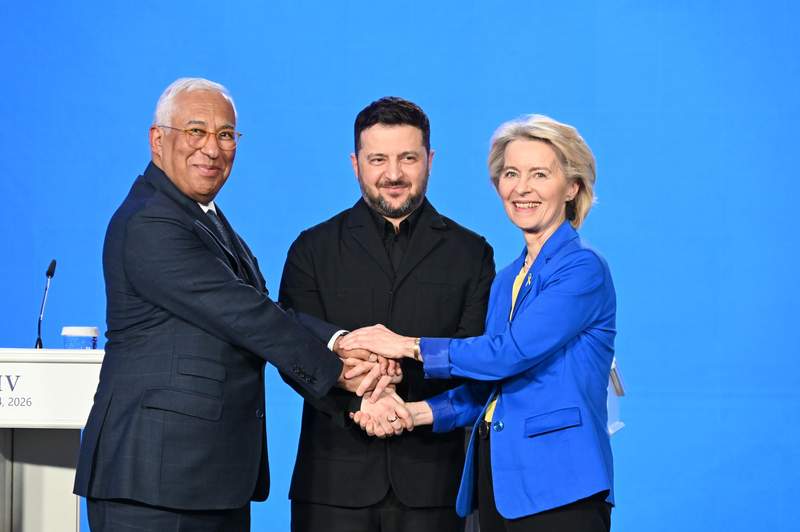
POLICY WIRE — Brussels, Belgium — It’s a bit like watching paint dry, but with far greater stakes and — let’s be honest — considerably more geopolitical intrigue. Years of whispered promises, declarations of solidarity, and a brutal invasion have finally congealed into a bureaucratic reality: Europe, or at least its sprawling administrative heart in Brussels, is about to nudge Ukraine and Moldova a bit further into its complex embrace. This isn’t a champagne moment of full membership, mind you. Not by a long shot. It’s just the official commencement of negotiations within what’s dubbed the first cluster. And that’s a whole other kind of marathon.
There’s a subtle, almost academic humor to the meticulous steps the European Union takes. The official announcement concerns the European Council’s nod to open the first negotiating cluster with Ukraine and Moldova. It’s the technical term for dipping their toes into the vast regulatory ocean of EU law. The process, known charmingly as the ‘screening,’ means sifting through mountains of legislation, adjusting national laws to align with Brussels’ dictates, and proving they can actually uphold the bloc’s lofty democratic and economic standards. It’s a bureaucratic Everest, frankly, — and one that previous aspirants know all too well can take decades. Because, well, it simply takes that long to bring national systems, judicial branches, and entire economies into line with a sprawling continental super-state. [QUOTE_PLACEHOLDER]
For Kyiv and Chișinău, though, this incremental step feels less like a slow crawl and more like a desperate sprint against time and an aggressor. Especially Ukraine. They’ve been knocking on this door, often quite loudly, since at least 2014, if you recall. But the brutal, full-scale invasion Russia launched in February 2022 drastically accelerated the timetable, transforming a theoretical ambition into an existential imperative. It isn’t just about trade tariffs anymore; it’s about aligning with a collective, about a fundamental reorientation away from Moscow’s orbit. Moldova, too, sits on the very edge of Russia’s aggressive expansionism, a small nation of 2.5 million people (a figure cited by the World Bank for 2022) with Russian troops stationed in its breakaway Transnistria region, living perpetually under that ominous shadow.
This expansion, even in its earliest, most technical phases, isn’t lost on the global stage. Nations in other complex, often contentious regions watch such moves intently. Consider Pakistan, for instance, a nation that has historically juggled allegiances, balancing relationships between Western powers and its powerful neighbors to the east. The strategic logic behind the EU’s cautious expansion eastward isn’t just about fostering democracy or economic growth—though those are the official lines, obviously. It’s also very much about drawing a firm line, securing a geopolitical buffer against aggressive revanchism. And Islamabad, grappling with its own internal stability and regional power dynamics, likely sees the efficacy (or indeed, the painful slowness) of these alliances. The idea that a distant war can reshuffle continental alliances so fundamentally, impacting global trade and diplomatic capital, certainly registers on the radar of policymakers even thousands of miles away in South Asia, where the games of influence are equally complex, if often more brutal and immediate.
It’s important we remember that despite the grand statements and handshakes, this initial cluster opening is a long way from the finish line. The EU isn’t just a market; it’s a legal order. It requires absolute fidelity to a complex web of laws on everything from food safety standards to competition rules. They’ve got to tackle judicial reform, combat corruption—deeply entrenched issues in both countries—and make sure their economies are robust enough to not buckle under the pressure of integrating into a bloc that collectively accounts for nearly a quarter of global GDP. These aren’t trivial asks; they’re transformative demands.
📄 POLICY WIRE WHITEPAPER PUBLISHED: PAKISTAN'S NATIONAL SECURITY POLICY PRIORITIES
👉 READ BY CLICKING HEREAnd while the mood in Brussels may be one of cautious optimism, seasoned observers will tell you that the path to full EU membership is littered with discarded promises and delayed timelines. Just look at the Western Balkans, many of whose nations have been in the waiting room for even longer, their bids progressing at glacial speed. The sheer political will required to keep this momentum going, through multiple European parliamentary cycles and changing national governments, will be immense. It’s going to be a fascinating, albeit often frustrating, study in endurance. They’ll need to make these significant reforms not just for the cameras, but for keeps. And the people back home? They’re expecting change, sooner rather than later.
What This Means
This bureaucratic ballet signifies far more than simply opening a ledger for new entries; it’s a subtle recalibration of Europe’s very borders—political and psychological. Economically, bringing Ukraine and Moldova into the fold, however distant the prospect, hints at immense long-term market potential for the EU itself, alongside the hefty price tag of development aid and structural funding required to bring these economies up to speed. It’s a calculated bet on future stability versus present investment, especially as Ukraine rebuilds from war. The political implications are stark: it consolidates a Western-leaning sphere, directly confronting Russia’s perceived historical influence and ambition to recreate a buffer zone. It won’t halt Moscow’s aggression overnight, but it certainly clarifies the long-term strategic map. For Pakistan and other nations navigating their own delicate geopolitical alignments, this move acts as a powerful object lesson. It demonstrates that strategic partnerships are formed not just through immediate military alliances but through the slow, patient, and often painful process of regulatory alignment and shared legal frameworks—a form of soft power and economic integration that fundamentally shifts global influence, piece by agonizing piece.