

Honey Drought: South Korea’s Silent Collapse Echoes a Global Food Crisis
POLICY WIRE — Seoul, South Korea — It’s not the grand pronouncements of impending doom or the flashing red lights of coastal erosion that typically grab headlines. No, sometimes the canary in...

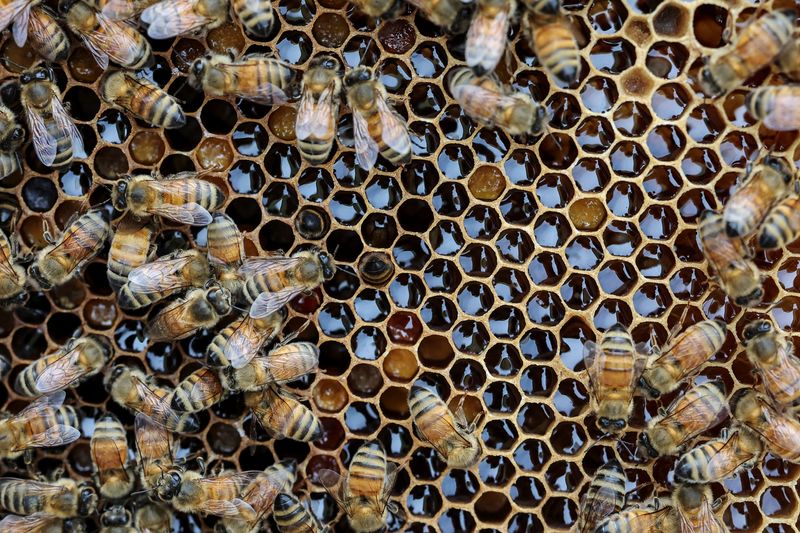
POLICY WIRE — Seoul, South Korea — It’s not the grand pronouncements of impending doom or the flashing red lights of coastal erosion that typically grab headlines. No, sometimes the canary in the global climate coal mine is far, far smaller—a bee. A simple, industrious insect, whose increasingly erratic behavior and disappearing numbers in South Korea tell a grittier story about planetary malaise than any UN report ever could.
Down on the peninsula, veteran beekeepers like Choi Joon-woo (a stand-in for the many struggling under these new environmental pressures) are confronting an existential crisis, an invisible enemy reshaping their livelihood with alarming swiftness. For decades, he’s tended his hives, seen the cycles of spring — and fall. But these aren’t his father’s cycles, — and definitely not his grandfather’s. It’s a scramble, year after year, just to maintain a fraction of what was once reliable. We’re witnessing, in real-time, an industry – a way of life, really – grappling with shifts few predicted, certainly not with this kind of brutal intensity.
His usual rhythms have vanished. Flowers bloom too early, then shrivel; vital pollen sources appear out of sync with when hungry bees emerge. It’s an ecological domino effect. Choi often laments the situation, telling observers that his bees aren’t just confused—they’re vanishing. [QUOTE_PLACEHOLDER], he told reporters recently, a quiet desperation settling over his usually robust demeanor. He can’t recall another period quite like this. And frankly, none of his peers can either.
What gives? It’s not a single factor. It’s a noxious brew: warmer winters reducing natural pest control, unusually hot summers stressing colonies, and unpredictable torrential downpours washing away pollen. The result? A dwindling bee population and honey yields slashed, forcing prices up and squeezing small-time apiarists out of the business altogether. South Korea’s beekeepers saw a significant dip in honey production, with reports indicating some farms experienced over a 50% decrease in annual output compared to historical averages during specific, particularly harsh years, according to data from the Korean Rural Economic Institute (KREI).
This isn’t just some quaint, localized problem, either; it’s a symptom. Beekeeping in South Korea represents a micro-climate of macro-issues affecting agricultural systems worldwide. And it forces us to consider a broader, more inconvenient truth: the climate shifts impacting these hives aren’t unique to East Asia. The repercussions stretch far. From Pakistan’s Sindh region, where erratic monsoon patterns now routinely devastate cash crops, to the struggling citrus farms across North Africa—everyone’s feeling the pinch. What starts as a beekeeper’s lament becomes a nationwide food security concern, then a regional, even global, conundrum. The fragility of these ecosystems, we’re learning, is a shared vulnerability. It’s truly something to behold, isn’t it?
Choi — and others like him aren’t asking for pity, though they’d probably appreciate a fair shake from policymakers. No, they’re pointing to an uncomfortable truth about global food supply chains, the kind we often take for granted until the supermarket shelves start looking a little sparser. Or a lot more expensive. But really, it goes beyond the supermarket. The entire system needs these pollinators, this essential, unglamorous workforce. [QUOTE_PLACEHOLDER], another beekeeper recently mused, shaking his head. He worries about the kids, about what kind of world they’re inheriting.
Efforts are being made, sure. Researchers are experimenting with new bee species — and climate-resilient flora. But these are patchwork solutions, not systemic fixes. They’re like trying to bail out a sinking ship with a thimble when the hull itself is rupturing. Because at its heart, this isn’t about better beekeeping techniques, it’s about reining in a climate that refuses to be tamed, at least not without some serious collective effort.
And let’s be honest: such effort, globally, remains stubbornly elusive. The political will, you see, moves at glacial speed while the mercury—it climbs. We’re in a slow-motion catastrophe, playing out one dying bee at a time. It’s a stark, almost poetic testament to human inertia, wouldn’t you say? The buzzing silence replacing the familiar drone of a thriving hive is a profound sound, a deeply disturbing one, for those who truly listen.
What This Means
The plight of South Korean beekeepers, seemingly a niche agricultural issue, possesses deep, unsettling political and economic implications. Economically, dwindling bee populations signify more than just less honey; they foreshadow substantial agricultural instability. Bees are keystone pollinators for roughly a third of the world’s food crops. A decline in their numbers in South Korea can rapidly lead to reduced yields in fruits, vegetables, and nuts, spiking food prices and hitting consumer wallets hard. For a nation heavily reliant on imports for many food staples, this domestic vulnerability adds another layer of external pressure on already strained global supply chains. It also complicates Asia’s geopolitical food security landscape, an issue gaining more urgency as climate change bites harder.
Politically, the problem acts as a glaring microcosm of climate change’s intractable nature. Governments worldwide struggle with balancing immediate economic concerns against long-term environmental strategies. In South Korea, support for agricultural sectors facing climate impacts can strain public coffers, potentially leading to social discontent if solutions aren’t effective or equitable. More broadly, it underscores the interconnectedness of global ecosystems and economies, making climate change a potent flashpoint for international diplomacy and trade negotiations. A silent agricultural collapse in one corner of the world can ripple outward, impacting resource allocation, migration patterns, and even stability in regions like the Muslim world, where food scarcity frequently acts as a catalyst for deeper societal friction. Remember, environmental issues often manifest first as subtle ecological disturbances, then escalate into significant socioeconomic and political destabilizers. It’s an ongoing, often unnoticed strategic reality that’s hard to ignore once you see it through the lens of a dying bee colony.