


Hegemony in Rhetoric: What Rajnath Singh’s Sindh Remark Reveals About India’s Strategy
Borders are not born from dreams; they are drawn from history, law, and blood. Yet in New Delhi, history is being rewritten through speeches. When on November 23, 2025, during an address to a...
Borders are not born from dreams; they are drawn from history, law, and blood. Yet in New Delhi, history is being rewritten through speeches. When on November 23, 2025, during an address to a gathering of the Sindhi community in New Delhi, India’s Defence Minister Rajnath Singh declared that “Sindh may one day return to India,” claiming that the province was a “civilizational part of India” and that “borders can change.” His words, widely covered by Indian media outlets such as NDTV and The Times of India, were more than nostalgic rhetoric; they were a deliberate political signal.
This statement cannot be dismissed as political theatre. It represents a dangerous intersection of ideology, power, and policy, a textbook case of what political scientists describe through realism and constructivism. Realism warns that states pursue power to ensure security, often at the expense of others. Constructivism explains how ideas, myths, and narratives shape those ambitions. Singh’s words embody both: India’s pursuit of power justified by a self-made civilizational narrative.
From Sovereignty to Revisionism
The modern world order rests on a simple but sacred principle: sovereign equality of states, codified in Article 2(4) of the UN Charter, which forbids “the threat or use of force against the territorial integrity or political independence of any state.”
Rajnath Singh’s declaration that borders “can change” and Sindh “may return” shatters that principle. It is not diplomacy; it is revisionism. The claim echoes the ideology of Akhand Bharat, a vision of a “Greater India” encompassing the territories of present-day Pakistan, Bangladesh, Nepal, Sri Lanka, and even Afghanistan.
What began as a fringe fantasy among Hindu nationalists has now entered the mainstream of Indian politics. That makes it not just rhetoric, but a strategic threat.
Sindh: A Province, a People, a Reality
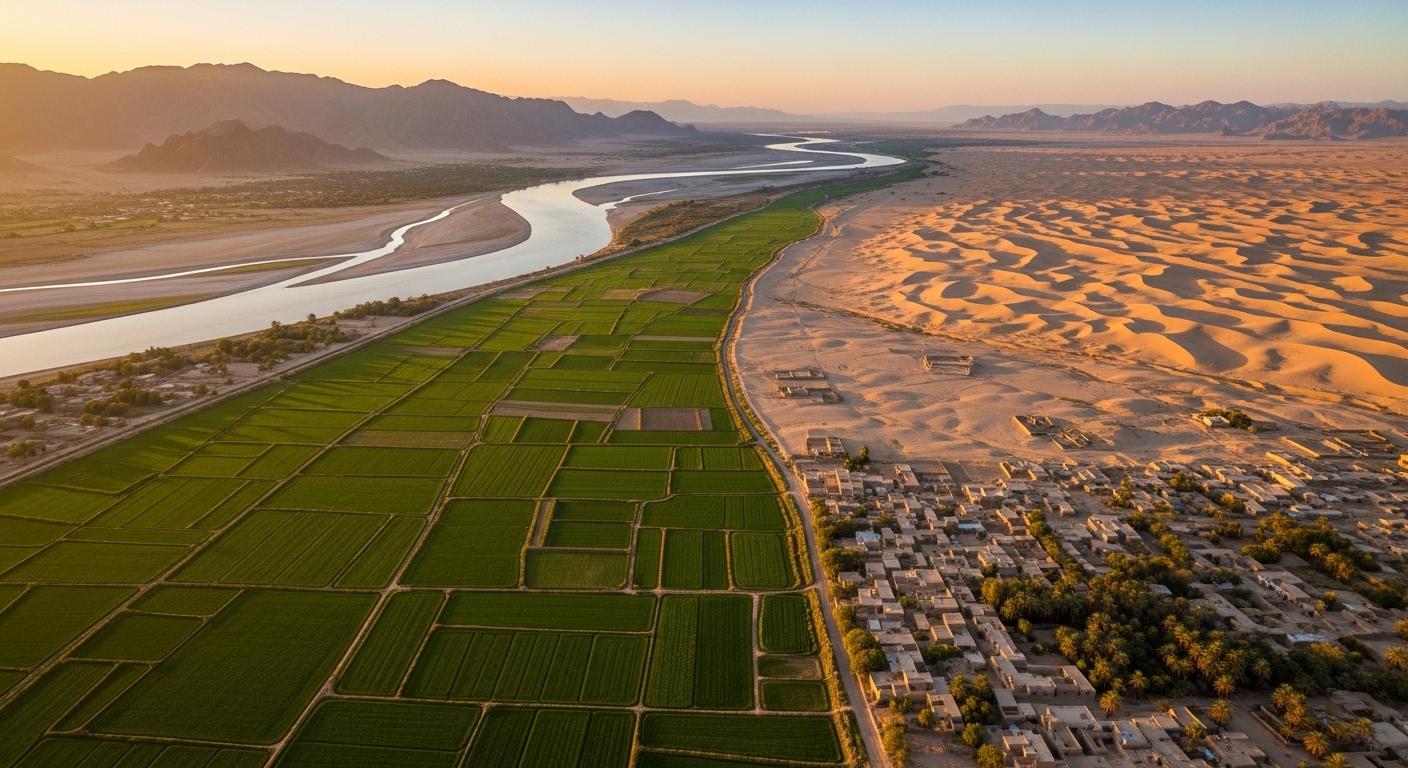
Sindh is not a civilizational symbol; it is a living province of Pakistan, home to more than 50 million people, Karachi — the country’s largest city and economic engine, and a cultural mosaic stretching from the Sufi shrines of Sehwan to the industrial zones of Hyderabad.
Its political status was settled long before Rajnath Singh was born. On June 26, 1947, the Sindh Legislative Assembly voted to join Pakistan, making it the first province to do so even before the British withdrawal. That decision, recognized internationally, is irreversible.
To suggest that Sindh could “return” is to erase seventy-eight years of history and defy the very foundation of Pakistan’s independence. It is, quite simply, an assault on sovereignty disguised as sentiment.
Civilization vs Sovereignty
Indian leaders often invoke culture and civilization as tools of soft power, but Singh’s remarks distort those concepts into weapons of legitimacy. The Indus Valley may have flourished across today’s borders, but civilizational overlap is not political ownership.
If cultural connection became a legal claim, the world would collapse into chaos: Turkey could demand the Balkans, China could claim Central Asia, and Britain could recolonize half the planet. International law exists precisely to prevent such madness.
By blending mythology with militarism, India risks turning a shared past into a divided future.
Provocation in Uniform
Singh’s words might have carried less menace had they not coincided with large-scale Indian military exercises stretching from Gujarat to Indian-Occupied Kashmir. Such timing is not accidental. When a defence minister talks about changing borders while his army trains along those borders, the message is unmistakable: intimidation.
It is not the first time either. Singh and other BJP figures have made similar remarks about Azad Jammu & Kashmir and Gilgit-Baltistan. This pattern reveals a consistent strategy: to use rhetoric as a tool of psychological warfare, projecting power while testing Pakistan’s diplomatic resolve.
Pakistan’s Response: Principle with Precision
Islamabad’s reaction was swift, firm, and dignified. In an official statement, the Ministry of Foreign Affairs called Singh’s comments “delusional and dangerously revisionist,” exposing the expansionist Hindutva mindset now embedded in India’s ruling establishment.
The statement reaffirmed that such rhetoric violates the UN Charter and the inviolability of recognised borders, while warning that India’s irresponsible statements threaten the fragile peace of South Asia.
“India would be better served by focusing on the protection of its own minorities rather than dreaming of annexing the territories of its neighbours,” the Foreign Office said.
Pakistan reiterated its commitment to peaceful coexistence and to resolving disputes, including the Jammu & Kashmir issue, through dialogue and international law. But it also made clear that Pakistan will vigorously safeguard its sovereignty and territorial integrity.
This measured yet assertive response demonstrates the contrast between Pakistan’s responsible diplomacy and India’s reckless nationalism.
Expansionism in the Age of Nuclear Neighbours
The world cannot afford to overlook this escalation. Two nuclear-armed states, already divided by mistrust, cannot afford ideological adventurism. Singh’s statement does not exist in a vacuum; it feeds domestic extremism in India, emboldens ultra-nationalists, and undermines decades of cautious restraint between the two countries.
For Pakistan, vigilance is essential. But so is composure. Islamabad’s strength lies in combining strategic readiness with diplomatic credibility, ensuring that every provocation is countered not by anger, but by evidence and international law.
The Real Test of Leadership
India likes to call itself the world’s largest democracy and a responsible power. Yet, democracies are measured not by the size of their armies, but by their respect for law and restraint. When its leaders flirt with the idea of redrawing borders, India undermines its own global credibility.
True civilization is not about reclaiming lost lands; it is about cultivating peace. Real strength lies in respecting one’s neighbours, not threatening them.
Pakistan, for its part, has made its stance clear: peace, but never at the cost of sovereignty; dialogue, but never under duress.
The Choice Before India
Rajnath Singh’s words were not a slip; they were a symptom. A symptom of a state drifting from diplomacy to dogma. History will not remember the applause such remarks received in Delhi; it will remember the instability they risked across South Asia.
Sindh is, and will remain, part of Pakistan, politically, historically, and by the will of its people.
If India seeks to lead, it must abandon its civilizational fantasies and accept the map the world already recognizes. Peace demands maturity, not mythology. Until then, Pakistan’s message to the world stands firm: sovereignty is sacred, borders are inviolable, and no rhetoric, however loud, can redraw them.
Author