

NFL Economics: Muscle, Markets, Global Policy
Explore American football's billion-dollar economy through player trades like Myles Garrett's. Uncover global market forces, player loyalty, and the monetization of fan passion.

POLICY WIRE — Washington, D.C. — While headlines globally fixate on everything from precarious global supply chains to the electoral dance in emerging democracies— the endless hum of sports discourse often feels like a quaint, almost naive diversion. But sometimes, even in the muscular theatre of American football, the policy lines, the economic forces, and the blunt realities of power dynamics peek through. Take two young men, elite in their peculiar profession, sweating it out in a quiet offseason training session. You might not think it; a workout isn’t usually fodder for this desk, yet it pulls back a curtain.
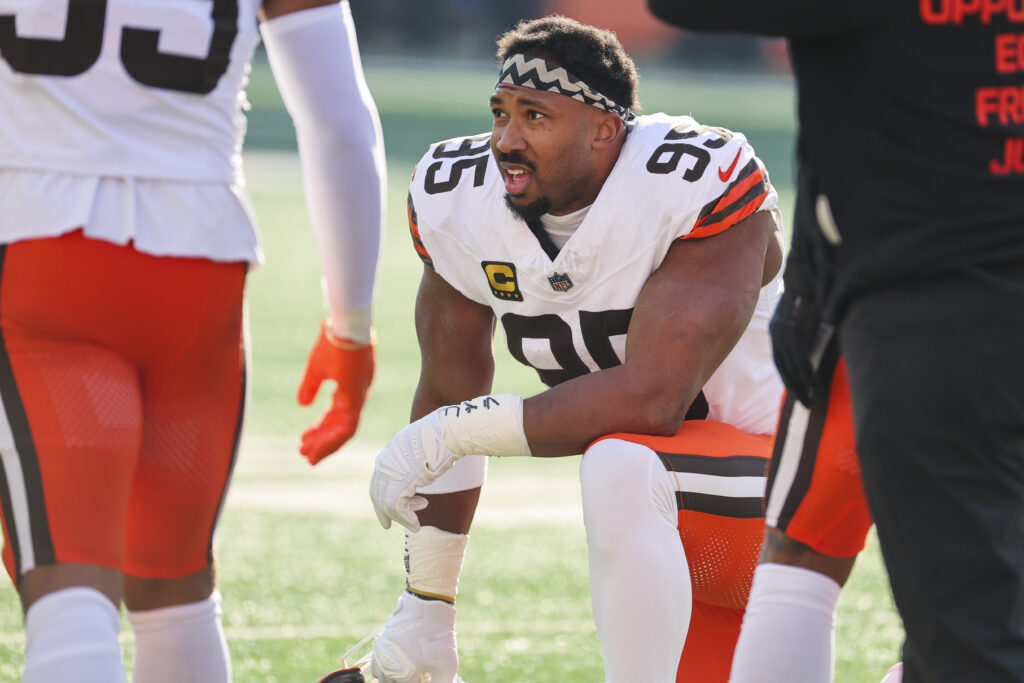
It’s all just muscle and motion, right? Not really. What we witnessed this past week was Myles Garrett, freshly minted a Los Angeles Ram after a stunning 2025 campaign, and Will Anderson Jr. of the Houston Texans, engaged in drills under pass rush specialist Bradon Jordan. They linked up. They mirrored each other, honing techniques, marrying brute force with elite footwork to get past imaginary blockers. It’s the micro-level — the individual grind, the pursuit of marginal gains — that underpins a macro-level industry worth billions. An industry whose choices, whose labor policies, and whose shifting allegiances can tell us a lot about wider capital flows, even in places like Pakistan, where cricket reigns but the globalized spectacle of American sports is always encroaching. [QUOTE_PLACEHOLDER]
Fans, as one might expect, lost their collective minds. Their digital exclamations on X, captured by Life — and Football, ranged from the pragmatic to the almost poetic. Trading up to the number three pick for Anderson was so worth it, one user typed. Sounds like a boxing match or some powerfully Z type game lol, another mused. The imagery ran wild: Pure destroyer mode. Looks like Kali for the gridiron, another commented, drawing a cultural comparison that few would expect from a gridiron aficionado, let alone the comments section of a platform increasingly fraught with political noise. Man these guys are elite. This immediate, visceral reaction to displays of sheer physical dominance, often fueled by strategically curated clips, is itself a fascinating study in public narratives. We’re fed heroes; we gobble them up. We love a good story. And what’s better than raw, athletic power?
But the true policy implication lies just beneath the surface of the highlight reel. Garrett, a seven-time Pro Bowler, wasn’t just working out; he was practicing as a Ram. His historic 2025 season saw him bag a staggering 23.0 sacks, an all-time record, along with 60 combined tackles, according to official league statistics. That monumental output wasn’t enough to keep him with the Cleveland Browns; on June 1, he was traded. And just like that, a generational talent, a tentpole player, shifted allegiances. That’s the cold reality of professional sports — loyalty, much like oil prices, is a concept with elastic definition in the face of better returns, greater leverage, or shifting strategic visions.
Anderson, the 24-year-old on the other side, appeared in all 17 games for the Texans. He amassed 54 combined tackles, 12.0 sacks, — and three forced fumbles. Solid, impressive, yet distinct from Garrett’s unprecedented numbers. Their paths, divergent in team allegiance but convergent in their relentless pursuit of on-field excellence, highlight a specific facet of the modern sports economy: even at the zenith of individual performance, an athlete’s worth is always subject to market forces and the intricate chess game played by ownership groups. They’re both chasing glory, yes, but also chasing — or being chased by — astronomical sums tied to contracts, endorsements, and broadcast rights. The fan who declared Rams might go undefeated perhaps forgets the human element and the brutal calculations driving every roster move.
Consider the international reach of such a narrative. In Karachi or Lahore, where the crack of a cricket bat can overshadow government decrees, the meticulous analysis of athletic form and future prospects resonates. The fierce loyalties, the agonizing trades, the economic volatility faced by athletes – these are not unique to American sports. It’s a mirror to broader human capital discussions. Elite performers, whether in sports, technology, or politics, command disproportionate attention and compensation, yet remain cogs in larger organizational machines, always subject to external pressures and strategic reshuffling. Their individual struggle, their very sweat, becomes a commodity, distributed globally. Fickle fortunes on the field often reflect the jitters in global markets.
What This Means
This humble offseason workout, then, isn’t just about two freakishly talented athletes. It’s a microcosm of the globalized, hyper-capitalized sports industrial complex. For Policy Wire, the implications are several, each layered with socio-economic — and political relevance. Firstly, it spotlights the increasingly transient nature of elite labor; no longer are top talents shackled to one organization simply by sentiment. Money talks, often deafeningly loud. Secondly, it exemplifies the manufacturing of celebrity and, subsequently, the relentless monetization of fan passion. Digital platforms aren’t just sharing clips; they’re building economic pipelines directly from fervent adoration to immense profit. This ecosystem’s ability to create and distribute compelling narratives, even for something as granular as a workout, demonstrates profound soft power, shaping cultural preferences across continents, influencing consumer habits even in distant markets.
But there’s a more somber reading, too. As these athletes push their physical limits, they exist within systems where their bodies are, in essence, instruments of entertainment and investment. The policy challenge for unions and league offices is striking a balance: allowing individuals to flourish while safeguarding their long-term health and financial stability in an arena that demands everything, then often moves on. Their grind is aspirational for millions, yet its underpinnings are raw, high-stakes economics. It’s a reminder that even in fields seemingly disconnected from the grand pronouncements of governance, power operates in subtle, powerful ways, dictating movement, shaping allegiances, and defining value in an ever-churning global marketplace. It really makes you think, doesn’t it?