


Ben Stokes: Burnout Exposes Sport’s Relentless Toll
Cricket legend Ben Stokes' Test exit due to burnout exposes the human cost of modern sport. Unpack the extreme demands on athletes & the crisis facing global federations.

POLICY WIRE — London, UK — There’s something almost archaic, certainly romantic, about a craftsman who can build a house from the foundation to the rooftop. He handles the plumbing, then he frames the walls, before he tackles the electrical. Now, imagine a specialist brought in for each nail, every joint. Modern sport, with its hyper-optimization — and ruthless efficiency, trends decidedly towards the latter. Yet, every so often, a rare, almost singular talent emerges who seems to defy this rigid stratification—someone who can do it all, then pay the ultimate cost. This month, cricket waved goodbye to one such individual, and it wasn’t the heroic final act one might expect, but a quiet concession to an industry that demands everything.
Ben Stokes, for years England’s sporting answer to a Swiss Army knife (though considerably more explosive), recently drew a line under his Test cricket career. But forget the headline-grabbing world cup heroics or the Ashes battles; those are merely popular narratives. The more telling, and perhaps frankly unbelievable, detail concerns his career as a statistician’s dream (or nightmare). Consider this: Stokes is the only player in the history of Test cricket to have batted in every single position in the order, from opener all the way down to number eleven, while also having taken wickets against batters occupying each of those same eleven positions. Just think about that. He’s been an opener, a middle-order slugger, a tailender; he’s dismissed openers, middle-order stalwarts, and last-man standing. It’s an insane breadth of contribution that begs the question: What did it take to achieve such all-encompassing mastery?
It’s not just a record, it’s a window into the psyche of an athlete pushed to the absolute edge. And the game? It doesn’t stop for sentiment. It asks for more. You know, because it always does. Stokes’ multi-faceted role also positions him alongside Jacques Kallis as only one of two players in history to amass over 7,000 runs and take 250 wickets in Test cricket. That’s a staggering data point illustrating a sustained, dual-threat career, often considered the gold standard for all-rounders, pulled directly from available cricket records.
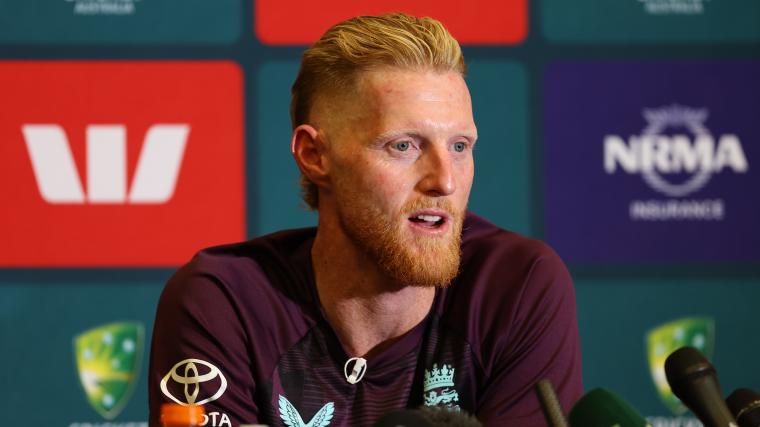
The human toll, it seems, becomes just another entry on the ledger. When asked about his decision to step away, Stokes didn’t mince words about the sheer exhaustion that became his constant companion. He confessed it’s been [QUOTE_PLACEHOLDER] an interesting four-five weeks, — and six months generally. Emotions when this day comes to everyone there’s relief, happiness, excitement, sadness everything you go through. All of those words I use there. That’s a frank admission of a mind grappling with a swirl of overwhelming feelings. You know, because this isn’t just about stumps — and wickets; it’s about a man’s well-being.
He spoke candidly about a gradual accumulation of mental and physical exhaustion over several months, the sheer weight of preparation taking its toll. [QUOTE_PLACEHOLDER] I put so much time — and effort into it, I maybe possibly burnt out, he admitted. Burnt out. There it’s, laid bare—a term more typically heard in corporate boardrooms than on hallowed cricketing grounds. This isn’t just Stokes’ private struggle; it’s a global reality. Across the sporting world, from the punishing demands of the NBA to the gruelling schedules of European football, the relentless pace and expectation extract a steep personal levy. It makes you wonder what kind of human being could sustain that pace for a decade. But it wasn’t an overnight realization. He told his teammates the [QUOTE_PLACEHOLDER] reasons could wait, but his eventual public explanation solidified the picture. [QUOTE_PLACEHOLDER] everyone says about the day [they resign the captaincy] what’s it like, they say it hits you in the face. And I thought a few weeks ago it did. I was putting pads on yesterday, getting ready to go out there, and that was the final nail in the coffin, he recounted. A simple, stark image of an internal tipping point.
In a region like South Asia, where cricket transcends mere sport to become a cultural force and a pathway to immense economic mobility for countless families, such high-profile exits resonate deeply. Young Pakistani athletes, for instance, dreaming of the fame and fortune that professional cricket can bring, often enter a system just as, if not more, demanding. They’re chasing dreams, but they’re also entering a professional meat grinder where bodies — and minds are commodities. And when someone of Stokes’ stature steps back, it throws a cold bucket of reality over the glitter.
So, what next for the man who epitomized versatility? He’s not walking away from the game completely. [QUOTE_PLACEHOLDER] I am very excited about the next part, what I get to do going back to play for my boyhood club Durham really. I am comparing this week to last right now — and buzzing because of it, he shared. The draw of the simple game, perhaps, away from the hyper-scrutiny of the international stage. But it won’t erase the indelible mark left by a player whose career exposed the extraordinary, yet often unsustainable, demands of modern athleticism. He’s made his choice, affirming that [QUOTE_PLACEHOLDER] There have been moments this week that have been really tough that just add to everything and make it in the back of your mind that you’re making the right decision.
What This Means
Stokes’ departure isn’t just a cricketing footnote; it’s a stark reminder of the escalating pressures within professional sports, offering a glimpse into the human cost of optimizing athletic performance for maximum output and entertainment value. In an era where athlete mental health has moved from the locker room whispers to front-page headlines, Stokes’ frank admissions illuminate the economic imperative dictating modern careers. The demand for ‘all-rounders’—players who can consistently perform multiple, high-skill tasks—creates individuals whose perceived ‘value’ is astronomical, but whose physical and psychological longevity is often compromised by relentless scheduling, travel, and media scrutiny.
Globally, sporting federations, many struggling to balance tradition with billion-dollar media contracts, find themselves in a precarious position. The athlete is the product, but a product with a finite shelf life—one shrinking under current demands. This raises questions about player unions’ efficacy, the long-term sustainability of multi-format competition, and the ethical responsibility of sports bodies towards their most valuable assets. The economic model currently rewarding high-volume participation might inadvertently be undermining the very talent pool it seeks to cultivate. Because ultimately, money talks, but burnout screams.
It’s not just about one player’s decision, you know; it’s a reflection of fickle fortunes mirroring global economic jitters in an entertainment sphere. His stepping back serves as a subtle, yet powerful, market correction: some commodities, no matter how extraordinary, simply can’t be continuously exploited without consequence. Policy makers, whether in sports or broader labor discussions, ought to pay attention when even the seemingly indestructible succumb to the grind. But don’t hold your breath for sweeping changes—the show, after all, must go on. It just means new, perhaps less versatile, faces will be slotting into the immense shoes left behind by these multi-skilled legends.