


Baseball’s Economic Allegory: Fragile Fortunes
Unpack how a baseball team's performance reflects global economic jitters. Learn about the fragility of market perception and the need for resilient policy.

POLICY WIRE — New York, United States — In an economic landscape riddled with precarious valuations and fleeting optimism, sometimes the starkest, most immediate parables play out not in congressional hearings or boardroom negotiations, but under stadium lights, where million-dollar arms decide quarter-billion-dollar market perceptions. It’s here, amidst the thunder of bat-on-ball, that one can grasp the fragile threads holding together even the most established of enterprises. And boy, did those threads just fray for a team trying desperately to regain its footing.
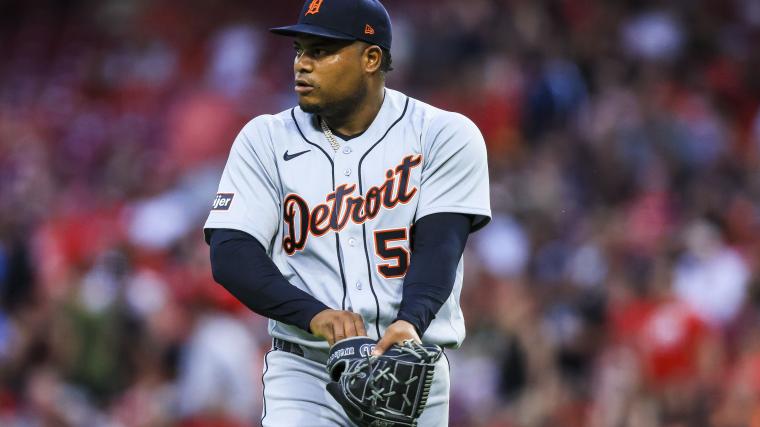
Consider the Detroit Tigers, a franchise historically synonymous with both grinding perseverance and — more recently — frustrating inconsistency. They’d stumbled into what sports pundits hailed as an almost unheard-of pitching streak: four straight starting performances where a pitcher lasted at least five innings, allowing two or fewer hits. A run like that hadn’t been seen since before the First World War. It felt, for a moment, like solid ground beneath a market eager for any good news, any signal of sustained quality.
Then came Framber Valdez. He wasn’t merely supposed to maintain the standard; he was meant to symbolize its deepening roots, its eventual transformation from an anomaly into an expectation. Instead, in a span shorter than most lunch breaks, the entire illusion came crashing down. Three batters, two singles, and later a solitary home run by Elias Diaz—poof—just like that, the historical benchmark, the budding market confidence, all evaporated into the humid Texas air. Valdez eventually coughed up five earned runs on nine hits through five agonizing innings. One strikeout. That’s it. It’s hard to argue with those numbers, no matter how much spin one tries to apply.
But this isn’t just about baseball, is it? It’s about the relentless pressure to perform, the fickle hand of sentiment, and how quickly a string of successes—hard-won and meticulously crafted—can be undone by a single, off-kilter moment. Because whether it’s a global supply chain or a pitching rotation, cracks, once exposed, tend to widen. General Manager Alan Quasar, a man whose tenure has seen more lows than highs, put it bluntly to our correspondent, “You can build a magnificent structure brick by brick, but one weak beam — or even just the perception of one — and the whole market gets jumpy. We’re in the business of long-term value, yes, but daily performance shapes that narrative.” His voice carried the distinct weariness of someone who’s seen the headlines twist too many times.
This episode highlights a broader tension. Leagues like MLB operate as complex economic ecosystems, often contributing significantly to local economies. According to an industry report, Major League Baseball alone generated approximately $11 billion in revenue in 2023, with substantial portions feeding into city coffers and ancillary businesses. Yet, even within this colossal apparatus, localized failures resonate. They influence draft strategy, trade deadlines, and even season ticket sales—a direct line to household budgets.
📄 POLICY WIRE WHITEPAPER PUBLISHED: PAKISTAN'S NATIONAL SECURITY POLICY PRIORITIES
👉 READ BY CLICKING HEREThe murmurs from front offices leading up to the trade deadline, for example, reveal much about how performance is dissected. Key pitchers, assets like Tarik Skubal — and Casey Mize, are already under intense scrutiny. Are they part of the future? Or merely commodities to be sold off to sustain the bottom line, much like how some developing economies consider their skilled workforce? This ‘lean agenda’ for talent, focused on maximum output from minimal investment, sometimes misses the softer power dynamics at play—how sports, or indeed any significant cultural output, project an image abroad. Think of how countries like Pakistan often look to bolster their sporting image on the global stage, only to face domestic setbacks that undermine the external perception. It’s a universal problem: how do you consistently maintain ‘best-in-class’ when resources, or simply luck, are inconsistent?
But for now, the Tigers’ brief period of perceived stability has ended. They’ll need to regroup, find their footing. Dr. Sanaa Ali-Khan, a Lahore-based economist specializing in regional markets and geopolitical influence, commented on the situation with a wry smile. “From Karachi to Kansas City, everyone understands the illusion of a hot streak. It’s a rush, yes. And it draws attention. But policy, real policy—whether it’s national fiscal planning or team roster management—requires something far more resilient than five good days. It needs an ethos that can weather the Valdez moments, because they’ll always come.” She wasn’t wrong.
What This Means
This incident, seemingly minor within the grand tapestry of American professional sports, acts as a useful allegory for the global economic climate. A brief period of stellar performance by a small unit within a larger organization—the Tigers’ pitching staff—generated a burst of speculative hope. When that performance inevitably faltered, the narrative quickly shifted from ‘renaissance’ to ‘realignment’. We’re seeing similar dynamics in emerging markets, where localized growth spurts, perhaps in a specific tech sector or manufacturing hub, are initially hailed as harbingers of broader prosperity. But when that localized momentum cannot be sustained—often due to external shocks, policy missteps, or simply the brutal reality of competition—investor confidence retracts with brutal efficiency. For policymakers, it’s a reminder that perception is a fragile commodity, built slowly — and destroyed swiftly. Sustained, reliable output trumps flashy but fleeting highs, every single time. And that applies whether you’re charting GDP growth or a pitcher’s earned run average.